






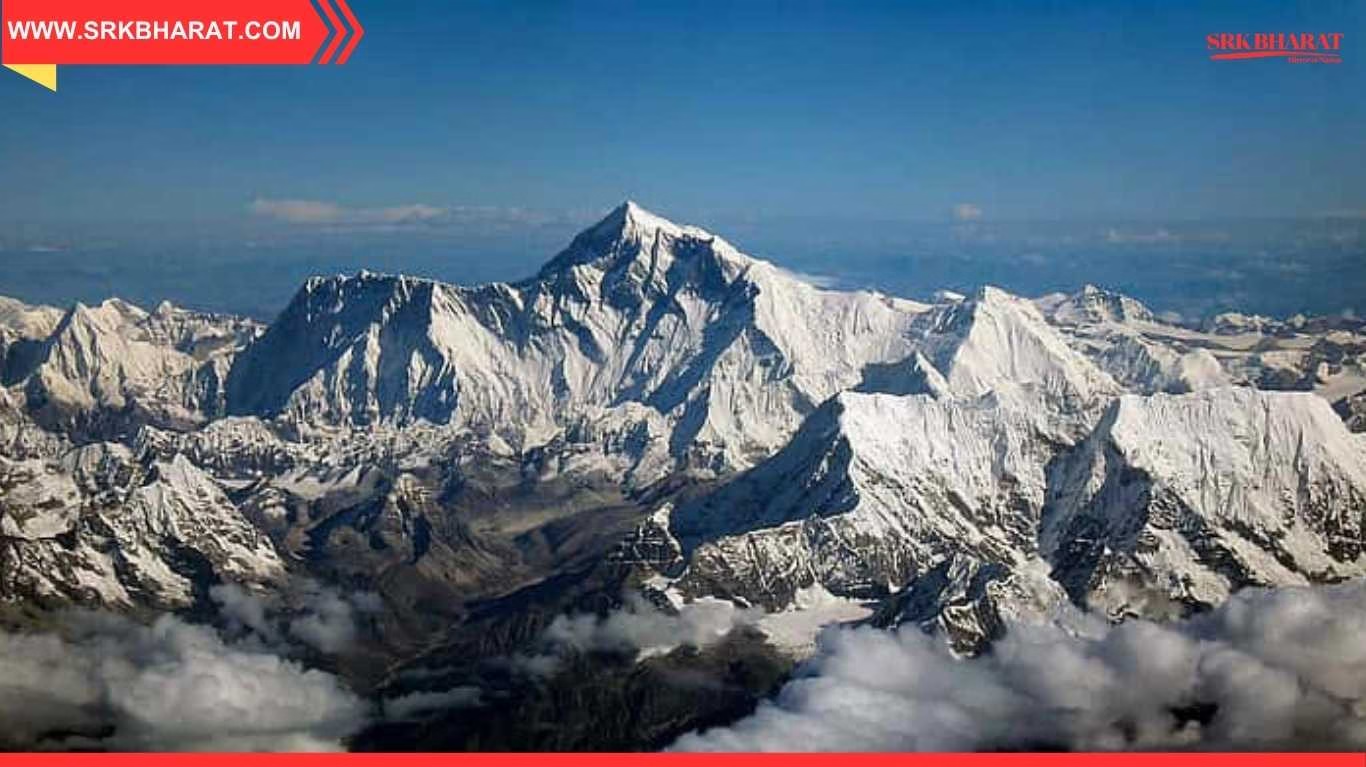
In a breathtaking moment that stunned residents and captivated social media, Mount Everest was reportedly visible from Jainagar in Bihar’s Madhubani district on October 8, 2025, following a spell of heavy rains that cleared the skies and drastically reduced pollution levels. The snow-capped peak of the world’s tallest mountain, located over 300 kilometers away in Nepal’s Solukhumbu district, was spotted by locals who shared photos and videos online, sparking a wave of awe, nostalgia, and environmental reflection.
This rare phenomenon, last witnessed during the COVID-19 lockdown in 2020, has reignited conversations about air quality, visibility, and the interconnectedness of nature across borders. Experts say such sightings are possible when air pollution drops significantly, humidity levels stabilize, and atmospheric clarity improves—conditions that aligned perfectly in Madhubani this week.
🧠 Why Mount Everest Became Visible from Bihar
| Factor | Impact on Visibility |
|---|---|
| Post-monsoon Rainfall | Washed away suspended particulate matter |
| Low Air Pollution Index | AQI dropped below 50 in Madhubani region |
| Clear Atmospheric Conditions | Enabled long-distance line-of-sight |
| Geographic Elevation | Jainagar’s terrain allowed unobstructed view |
| Seasonal Wind Patterns | Reduced haze and smog from Indo-Gangetic belt |
Meteorologists confirmed that the visibility was aided by northwesterly winds and low-pressure systems that cleared pollutants from the upper atmosphere.
📊 Timeline of Events and Online Reactions
| Date | Event Description |
|---|---|
| Oct 7, 2025 | Heavy rains lash Madhubani and surrounding areas |
| Oct 8, 2025 | Residents spot Everest from Jainagar |
| Oct 9, 2025 | Viral videos and photos flood social media |
| Oct 10, 2025 | Environmentalists call for sustained pollution control |
The viral moment was captured by local photographer Satyam Raj, whose image of the distant Himalayan peak was shared widely across platforms like X (formerly Twitter), Instagram, and Facebook.
🗣️ Internet Reactions and Public Sentiment
- @Kyangs_Thang: “Nature’s reminder that beauty lies beyond borders.”
- @EcoWatchIndia: “Proof that clean air isn’t just healthy—it’s magical.”
- @BiharDiaries: “From Madhubani to Everest, a view worth preserving.”
| Platform | Reaction Type |
|---|---|
| X (Twitter) | Trending hashtags #EverestFromBihar, #CleanAir |
| Photo shares and reels from Jainagar | |
| Local community groups celebrate sighting | |
| YouTube Shorts | Clips of Everest from rooftops |
The moment has sparked renewed interest in eco-tourism, air quality monitoring, and climate awareness campaigns in Bihar.
🧭 Environmental Lessons and Policy Implications
Experts say the visibility of Everest from Bihar is not just a visual marvel but a wake-up call for sustainable living. It highlights the urgent need for:
- Stricter pollution control in Indo-Gangetic plains
- Investment in green infrastructure and clean energy
- Public awareness on air quality and health
- Cross-border environmental cooperation between India and Nepal
| Policy Area | Recommended Action |
|---|---|
| Urban Emissions | Reduce vehicular and industrial pollutants |
| Rural Waste Management | Promote composting and biogas alternatives |
| Forest Conservation | Expand green cover in border districts |
| Air Quality Monitoring | Install real-time sensors in Madhubani |
Environmentalists have urged the Bihar government to declare October 8 as Clean Air Day, commemorating the rare sighting and promoting ecological responsibility.
Disclaimer
This news content is based on verified meteorological data, public statements, and media reports as of October 12, 2025. It is intended for editorial use and public awareness. The information does not constitute scientific endorsement, geographic confirmation, or environmental policy advice and adheres to ethical journalism standards.
Your article helped me a lot, is there any more related content? Thanks! https://accounts.binance.com/en-NG/register?ref=YY80CKRN
Can you be more specific about the content of your article? After reading it, I still have some doubts. Hope you can help me. https://www.binance.info/es-AR/register?ref=UT2YTZSU