
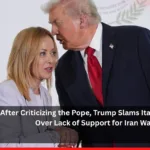
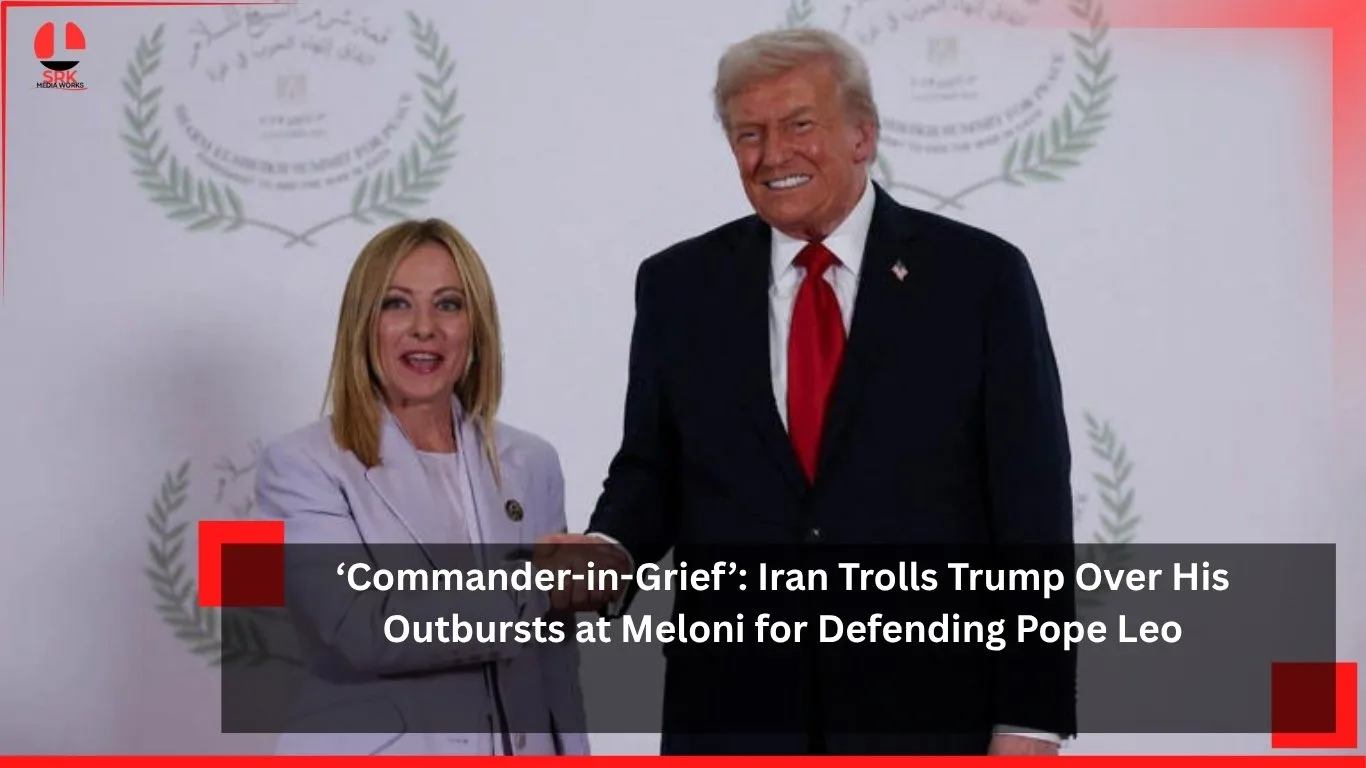
Iranian state media has mocked U.S. President Donald Trump, branding him “Commander-in-Grief” after his fiery outbursts against Italian Prime Minister Giorgia Meloni, who defended Pope Leo in a recent diplomatic exchange. The trolling highlights the growing use of satire and sharp rhetoric in international politics, where leaders are increasingly targeted not only for policy but also for their personal reactions.
The Exchange
Trump’s remarks came after Meloni defended Pope Leo’s legacy during a Vatican-related discussion, which reportedly angered the U.S. President. His sharp criticism of Meloni was quickly picked up by Iranian outlets, which portrayed Trump as overly emotional and unable to handle diplomatic disagreements.
Key Details:
- Trump criticized Meloni’s defense of Pope Leo.
- Iranian media labeled Trump “Commander-in-Grief.”
- The trolling emphasized Trump’s emotional reactions.
- The incident added fuel to ongoing U.S.-Iran tensions.
Iran’s Satirical Response
Iranian outlets used satire to frame Trump’s behavior as unbecoming of a world leader. By calling him “Commander-in-Grief,” they suggested that his leadership style is driven more by personal grievances than strategic vision.
Themes in Iran’s Response:
- Mockery of Trump’s emotional tone.
- Highlighting perceived instability in U.S. leadership.
- Reinforcing Iran’s narrative of U.S. weakness.
- Using satire as a diplomatic weapon.
| Satirical Label | Intended Message |
|---|---|
| Commander-in-Grief | Trump seen as emotional, reactive |
| Emotional Leader | Suggests lack of composure |
| Weak Strategist | Implies poor diplomatic judgment |
Global Reactions
The incident has drawn varied responses internationally, with some viewing Iran’s trolling as humorous and others as provocative.
| Stakeholder | Reaction Summary |
|---|---|
| EU Nations | Concerned about escalating rhetoric |
| U.S. Allies | Defended Trump’s position |
| Iran | Continued mocking tone |
| Neutral States | Called for focus on diplomacy |
Political Implications
The trolling underscores how political disputes can quickly escalate into personal attacks, shaping public perception of leaders. For Trump, the incident adds to his reputation for combative rhetoric, while for Iran, it reinforces its strategy of undermining U.S. credibility.
Political Outcomes:
- Increased polarization in U.S.-EU relations.
- Reinforcement of Iran’s anti-U.S. narrative.
- Potential strain on U.S.-Italy diplomatic ties.
- Greater focus on leaders’ personal conduct.
Comparative Analysis of Political Trolling
The use of satire in diplomacy is not new. Similar incidents have occurred globally, where leaders are mocked to weaken their image.
| Country/Leader | Incident | Outcome |
|---|---|---|
| Trump (USA) | Mocked as “Commander-in-Grief” | Reinforced Iran’s narrative |
| Boris Johnson (UK) | Mocked for Brexit blunders | Media ridicule, political fallout |
| Emmanuel Macron (France) | Mocked for protests response | Criticism of leadership style |
| Vladimir Putin (Russia) | Mocked for staged photo ops | Highlighted propaganda tactics |
Cultural Dimensions
The incident also reflects cultural differences in political communication. While Western leaders often rely on formal diplomacy, Iranian media frequently uses satire and symbolism to convey political messages.
Cultural Impact:
- Satire as a tool of resistance.
- Humor used to undermine authority.
- Public engagement through ridicule.
- Reinforcement of national narratives.
Future Outlook
The trolling episode is unlikely to have major diplomatic consequences but will remain part of the broader narrative of U.S.-Iran tensions. Trump’s reactions and Iran’s satirical framing may continue to shape public discourse.
Possible Scenarios:
- Continued Mockery: Iran persists in using satire against Trump.
- Diplomatic Strain: U.S.-Italy relations face challenges.
- Neutralization: Incident fades as focus shifts to policy.
- Escalation: Satire fuels further rhetorical clashes.
Disclaimer
This article is a detailed news analysis prepared for informational purposes only. It does not represent official government statements or confirmed diplomatic records. Readers are encouraged to verify details from credible sources before drawing conclusions. The content aims to highlight Iran’s satirical response to Trump’s outbursts at Giorgia Meloni and its broader implications for international politics and diplomacy.