








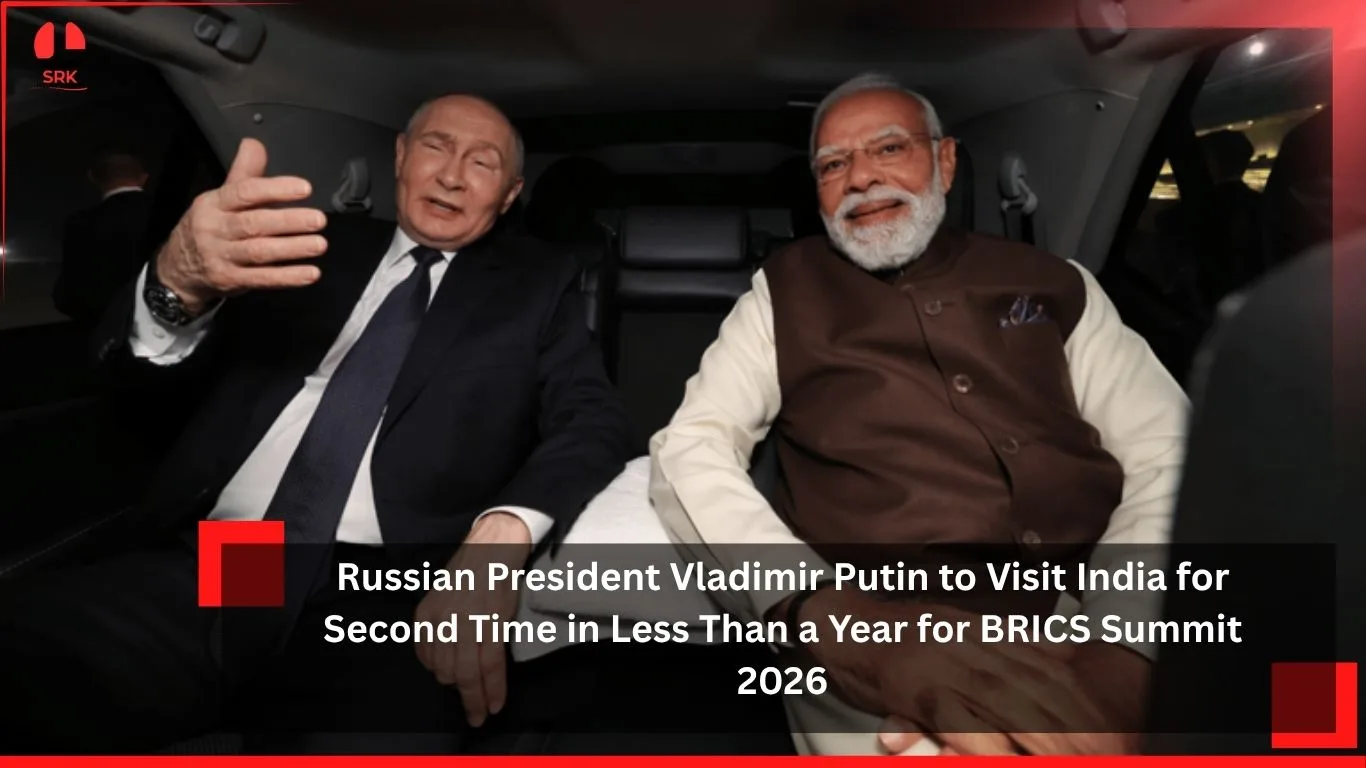
Russian President Vladimir Putin is set to visit India for the BRICS Summit 2026, marking his second trip to the country within a year. The visit underscores the growing importance of India-Russia relations and highlights the strategic role of BRICS in shaping global economic and political discourse.
Significance of the Visit
Putin’s upcoming visit demonstrates Russia’s commitment to strengthening ties with India and the broader BRICS bloc, which includes Brazil, Russia, India, China, and South Africa. The summit is expected to focus on economic cooperation, geopolitical challenges, and technological collaboration.
Key Objectives of the Visit:
- Strengthening India-Russia bilateral relations.
- Enhancing BRICS cooperation in trade and investment.
- Addressing global security and energy concerns.
- Promoting multipolarity in international politics.
India-Russia Relations
India and Russia share a long-standing strategic partnership, spanning defence, energy, and technology. Putin’s frequent visits highlight the depth of this relationship, especially at a time when global alliances are shifting.
Areas of Cooperation:
- Defence: Joint military exercises, arms trade, and technology transfer.
- Energy: Collaboration in nuclear energy and oil exploration.
- Technology: Partnerships in space research and digital innovation.
- Trade: Expanding bilateral trade in pharmaceuticals, agriculture, and machinery.
Comparative BRICS Engagements
BRICS summits have become platforms for member nations to discuss global economic reforms and political cooperation.
| Year | Host Country | Key Focus Areas |
|---|---|---|
| 2024 | South Africa | Trade, climate change, security |
| 2025 | Russia | Energy cooperation, digital economy |
| 2026 | India | Technology, multipolar world order |
India’s hosting of the 2026 summit positions it as a central player in shaping BRICS’ future agenda.
Economic Implications
Putin’s visit is expected to boost economic cooperation between India and Russia, as well as within BRICS.
Economic Outcomes:
- Increased trade agreements among BRICS nations.
- Greater investment in infrastructure and technology.
- Strengthening of alternative financial institutions to reduce reliance on Western systems.
- Expansion of energy partnerships to ensure global supply stability.
Geopolitical Dimensions
The summit comes at a time of heightened global tensions. BRICS nations are expected to discuss strategies to counterbalance Western influence and promote a multipolar world order.
Geopolitical Focus:
- Reforming global financial institutions.
- Enhancing South-South cooperation.
- Addressing conflicts in Asia, Africa, and the Middle East.
- Strengthening collective bargaining power in global forums.
Security and Defence Cooperation
India and Russia are likely to use the summit to deepen defence cooperation. Joint military projects and technology transfers remain central to their partnership.
| Defence Area | Cooperation Highlights |
|---|---|
| Military Hardware | Joint production of fighter jets |
| Naval Technology | Collaboration on submarines |
| Space Defence | Satellite monitoring systems |
| Cybersecurity | Joint initiatives against cyber threats |
Future Outlook
Putin’s second visit to India in less than a year reflects the urgency of strengthening ties amid global uncertainties. The BRICS Summit 2026 is expected to produce significant agreements on trade, technology, and security, reinforcing the bloc’s role in global governance.
Possible Developments:
- Expansion of BRICS membership.
- Creation of new financial mechanisms.
- Enhanced cooperation in renewable energy.
- Greater emphasis on digital transformation.
Disclaimer
This article is a detailed news analysis prepared for informational purposes only. It does not represent official government statements or confirmed diplomatic agreements. Readers are encouraged to verify details from credible sources before drawing conclusions. The content aims to highlight the significance of Vladimir Putin’s upcoming visit to India for the BRICS Summit 2026 and its broader implications for global politics and economics.