








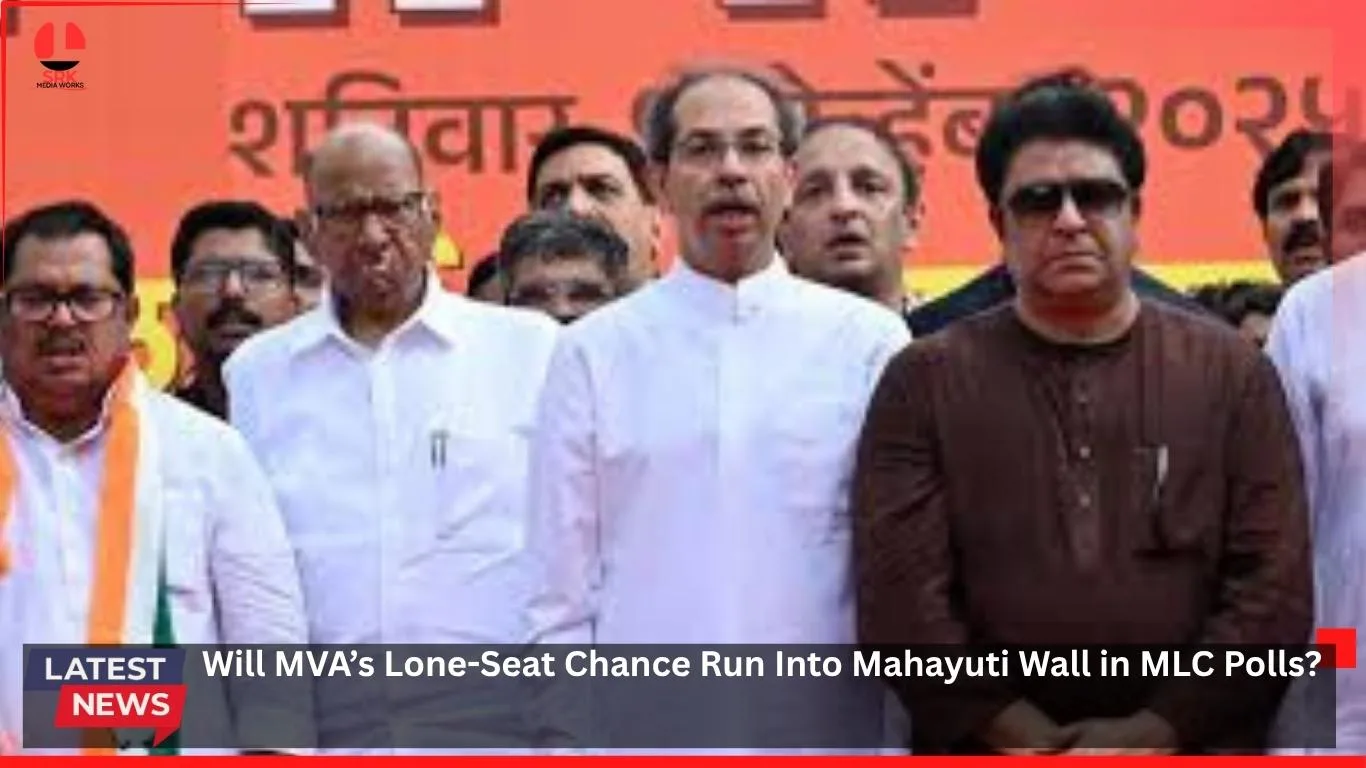
The upcoming Maharashtra Legislative Council (MLC) elections have set the stage for a high-stakes political battle between the Maha Vikas Aghadi (MVA) and the Mahayuti alliance. With the MVA eyeing a lone seat, questions loom large over whether its chances will be thwarted by the formidable wall of Mahayuti’s combined strength. The contest is not just about numbers but also about political strategy, alliances, and the shifting dynamics of Maharashtra’s legislative politics.
The Political Context
The MLC elections in Maharashtra are crucial as they reflect the balance of power between ruling and opposition alliances. The MVA, comprising Shiv Sena (Uddhav Balasaheb Thackeray faction), Nationalist Congress Party (Sharad Pawar faction), and Congress, is attempting to secure representation despite limited numbers. On the other hand, the Mahayuti alliance, which includes the BJP, Shiv Sena (Eknath Shinde faction), and Ajit Pawar’s NCP faction, is determined to consolidate its dominance.
Numbers Game in the MLC Elections
The arithmetic of seats and votes is central to the outcome. The Mahayuti alliance enjoys numerical superiority, but the MVA is banking on strategic voting and cross-party support to secure its lone seat.
| Alliance | Key Parties Involved | Strength in Assembly | MLC Seat Prospects |
|---|---|---|---|
| MVA | Shiv Sena (UBT), NCP (SP), Congress | Limited numbers | Targeting 1 seat |
| Mahayuti | BJP, Shiv Sena (Shinde), NCP (Ajit Pawar) | Strong majority | Multiple seats likely |
Strategic Challenges for MVA
- Numerical Disadvantage: With fewer MLAs, the MVA faces an uphill battle.
- Cross-Voting Risks: Past elections have shown that cross-voting can alter outcomes dramatically.
- Alliance Cohesion: Ensuring unity among Congress, NCP (SP), and Shiv Sena (UBT) is critical.
- Public Perception: Winning even a single seat could boost morale and signal resilience.
Mahayuti’s Strengths
The Mahayuti alliance has several advantages:
- Numerical Superiority: A clear edge in terms of MLA support.
- Organizational Machinery: BJP’s strong election management capabilities.
- Strategic Alliances: The inclusion of Shinde’s Shiv Sena and Ajit Pawar’s NCP faction strengthens their position.
- Unified Messaging: Presenting a consolidated front against MVA.
Historical Trends in MLC Elections
Maharashtra’s MLC elections have often been shaped by cross-voting and surprise outcomes. In past contests, alliances with fewer numbers have managed to secure seats through strategic maneuvering. The MVA hopes to replicate such strategies, while Mahayuti aims to prevent any cracks in its wall of support.
| Year | Key Contest | Outcome | Lessons for Current Polls |
|---|---|---|---|
| 2018 | BJP vs Opposition | BJP dominance | Numbers matter most |
| 2020 | MVA vs BJP | MVA managed surprise wins | Cross-voting crucial |
| 2022 | BJP resurgence | BJP secured majority | Strong alliances decisive |
Possible Scenarios Ahead
- MVA Secures Lone Seat: A morale booster for the opposition, signaling resilience despite odds.
- Mahayuti Sweep: Reinforces ruling alliance dominance, weakening MVA’s bargaining power.
- Cross-Voting Surprise: Could tilt the balance unexpectedly, reshaping political equations.
- Fragmented Outcome: Both alliances secure seats, maintaining competitive tension.
Expert Opinions
Political analysts suggest that while Mahayuti’s numerical advantage is undeniable, the MVA’s ability to mobilize support and exploit divisions could still give it a fighting chance. The elections are seen as a test of alliance discipline and strategic acumen.
Conclusion
The Maharashtra MLC elections represent more than just a contest for seats; they are a reflection of the state’s evolving political landscape. The MVA’s attempt to secure a lone seat against Mahayuti’s formidable wall is symbolic of the broader struggle between opposition resilience and ruling alliance dominance. Whether the MVA manages to break through or Mahayuti consolidates its grip will shape the narrative of Maharashtra politics in the months ahead.
Disclaimer
This article is a journalistic analysis based on current political developments and statements. It does not endorse or oppose any political party or leader. Readers are encouraged to consider multiple perspectives and follow official updates for accurate election results.