




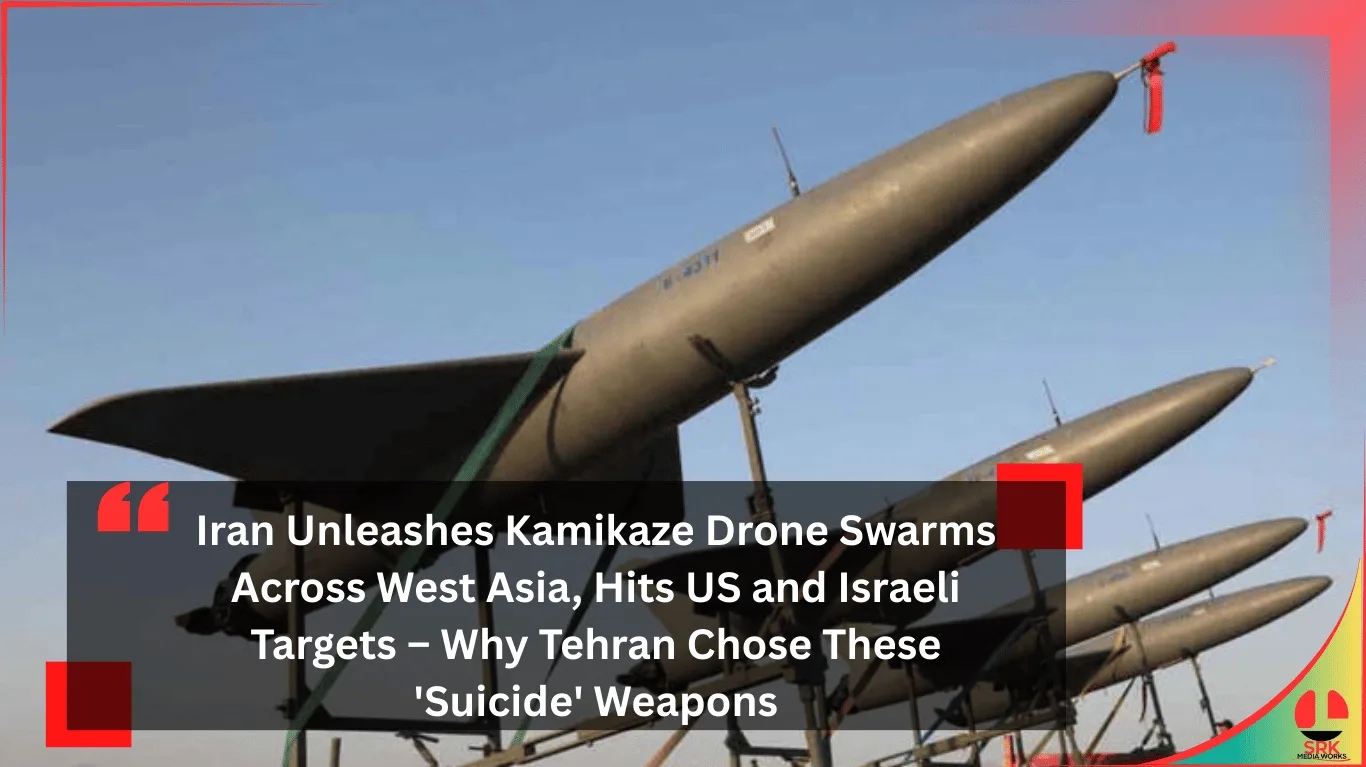
In a dramatic escalation of regional tensions, Iran has deployed kamikaze drone swarms across West Asia, striking US and Israeli targets. These “suicide drones,” designed to crash into their targets with explosive payloads, represent a strategic shift in Tehran’s military tactics. The attacks have raised alarm across global capitals, highlighting the growing role of unmanned aerial vehicles (UAVs) in modern warfare and the risks of asymmetric conflict.
What Are Kamikaze Drones?
Kamikaze drones, also known as loitering munitions, are unmanned aerial systems equipped with explosives. Unlike traditional drones that return after surveillance or strike missions, kamikaze drones are designed to destroy themselves upon impact.
Key Features:
- Low Cost: Cheaper than conventional missiles.
- Stealth: Small size makes them harder to detect.
- Precision: Can loiter over targets before striking.
- Swarm Capability: Multiple drones can overwhelm defenses.
Why Iran Chose Kamikaze Drones
Iran’s decision to unleash kamikaze drones is rooted in strategic, economic, and military considerations:
- Asymmetric Warfare: Allows Iran to challenge technologically superior adversaries like the US and Israel.
- Cost Efficiency: Producing drones is cheaper than maintaining advanced missile systems.
- Psychological Impact: Suicide drones create fear and uncertainty among targets.
- Operational Flexibility: Can be deployed quickly across multiple fronts.
Comparative Analysis of Drone Warfare
| Country | Drone Strategy | Key Targets | Global Impact |
|---|---|---|---|
| Iran | Kamikaze drone swarms | US, Israel | Escalates tensions in West Asia |
| US | Advanced UAVs, Reapers | Terror groups, surveillance | Maintains global dominance |
| Israel | Precision drones | Regional threats | Enhances defense capabilities |
| Russia | Loitering munitions | Ukraine conflict | Intensifies battlefield dynamics |
Pivot Analysis of Global Sentiment
| Sentiment Category | Impact on Iran | Impact on US & Israel | Impact on Global Politics |
|---|---|---|---|
| Military Strategy | Strengthened – asymmetric edge | Vulnerable to swarm tactics | Raises urgency for countermeasures |
| Diplomatic Relations | Isolated – condemned globally | Strengthens alliances | Polarizes international community |
| Public Perception | Nationalist pride in Iran | Fear and anger among citizens | Heightened anxiety worldwide |
| Media Coverage | Extensive – highlights drone warfare | Focus on retaliation | Global headlines dominate |
Impact of Drone Swarms
The use of kamikaze drones has immediate and long-term consequences:
- Military: Forces US and Israel to adapt defenses against swarm tactics.
- Economic: Oil markets react sharply to instability in West Asia.
- Diplomatic: Global powers call for restraint, but divisions persist.
- Technological: Accelerates arms race in drone development.
Challenges Ahead
- For Iran: Risk of retaliation and further isolation.
- For US & Israel: Developing effective counter-drone systems.
- For Global Powers: Preventing escalation into full-scale conflict.
- For Civilians: Rising fears of collateral damage and instability.
Opportunities Amid Crisis
- Innovation: Push for advanced anti-drone technologies.
- Diplomacy: Renewed calls for arms control agreements.
- Energy Diversification: Nations accelerate renewable energy adoption.
- Regional Cooperation: Gulf states may strengthen collective security.
Broader Implications
Iran’s kamikaze drone attacks underscore the changing nature of warfare:
- Shift to Asymmetry: Smaller nations leveraging low-cost weapons against powerful adversaries.
- Global Vulnerability: Critical infrastructure increasingly at risk.
- Arms Race: Accelerated development of drones and countermeasures.
- Geopolitical Polarization: Deepening divides between allies and adversaries.
Conclusion
Iran’s deployment of kamikaze drone swarms against US and Israeli targets marks a turning point in West Asian geopolitics. By choosing “suicide drones,” Tehran has demonstrated its ability to wage asymmetric warfare, challenging traditional military dominance. The attacks highlight the urgency of developing counter-drone defenses, the fragility of global energy markets, and the risks of escalating conflict. As the world watches, the crisis underscores how unmanned systems are reshaping the future of war.
Disclaimer
This article is a journalistic analysis based on publicly available information and geopolitical trends. It does not endorse or oppose any government, leader, or institution. Readers are encouraged to interpret the content as informative coverage and verify facts independently before forming opinions.