
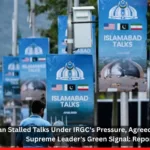
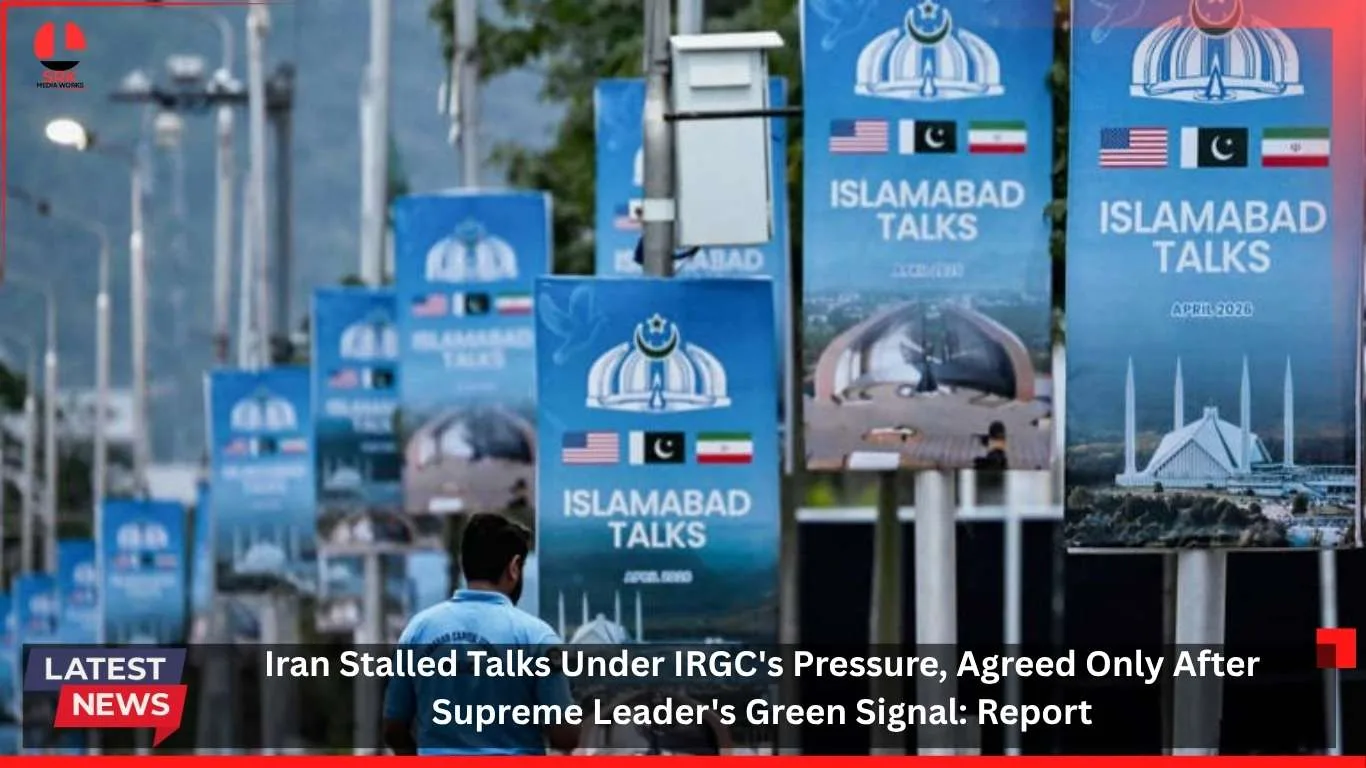
Reports emerging from Tehran suggest that Iran deliberately stalled critical negotiations under pressure from the Islamic Revolutionary Guard Corps (IRGC), only moving forward after receiving a green signal from the Supreme Leader. This revelation underscores the complex power dynamics within Iran’s political and military establishment, highlighting the decisive role of the Supreme Leader in shaping the country’s foreign policy.
IRGC’s Influence on Negotiations
The IRGC has long been a powerful force in Iran, wielding significant influence over both domestic and international affairs. Its pressure on the government to delay talks reflects concerns about concessions that might weaken Iran’s strategic position. Analysts believe the IRGC sought to ensure that any agreement aligned with its broader security and ideological objectives.
IRGC’s Key Concerns:
- Protecting Iran’s regional influence in the Middle East.
- Safeguarding military and defense interests.
- Ensuring sanctions relief does not compromise sovereignty.
- Maintaining leverage against Western powers.
Supreme Leader’s Decisive Role
The Supreme Leader remains the ultimate authority in Iran’s political system. Reports indicate that negotiations only resumed after Ayatollah Ali Khamenei gave explicit approval, signaling that the leadership had assessed the risks and benefits of moving forward. This decision reflects the balance between hardline military influence and the need for diplomatic engagement.
Supreme Leader’s Considerations:
- Preserving national unity amid internal divisions.
- Securing economic relief through sanctions negotiations.
- Maintaining Iran’s ideological stance while avoiding isolation.
- Balancing IRGC demands with international pressures.
Impact on Diplomatic Talks
The delay in negotiations created uncertainty among international stakeholders. Countries involved in the talks expressed frustration at the lack of progress, while markets reacted cautiously to the possibility of prolonged stalemate. The eventual resumption of talks, however, has revived hopes for a breakthrough.
| Stakeholder | Reaction to Delay | Reaction to Resumption | Strategic Interest |
|---|---|---|---|
| US | Frustration, increased pressure | Cautious optimism | Sanctions relief, regional stability |
| EU | Concern over stalled diplomacy | Renewed engagement | Trade opportunities, nuclear non-proliferation |
| Gulf States | Heightened security concerns | Monitoring cautiously | Regional balance of power |
| Iran | Internal divisions | Unified under Supreme Leader | Economic survival, sovereignty |
Pivot Analysis of Power Dynamics
| Institution | Role in Decision | Influence Level | Outcome |
|---|---|---|---|
| IRGC | Pressured government to stall | High | Delay in talks |
| Supreme Leader | Final approval authority | Very High | Talks resumed |
| Government | Negotiation facilitator | Moderate | Dependent on leadership |
| Public Opinion | Economic pressure | Low | Limited impact |
Regional Implications
The stalling and resumption of talks have significant implications for the Middle East. Neighboring countries are closely watching Iran’s moves, as any agreement could alter the regional balance of power. The IRGC’s involvement signals that Iran’s military establishment will continue to play a central role in shaping outcomes.
Key Regional Effects:
- Gulf states may strengthen defense cooperation with the US.
- Israel remains wary of Iran’s intentions despite diplomatic progress.
- Turkey and Russia may seek to leverage Iran’s position for their own strategic gains.
Historical Context
Iran’s negotiation strategy has often been influenced by internal power struggles. The IRGC’s resistance to concessions is consistent with past behavior, where military leaders prioritized security over diplomacy. The Supreme Leader’s intervention reflects a pattern of decisive authority in critical moments.
Possible Outcomes
- Comprehensive Agreement: Talks lead to a broad deal covering sanctions, nuclear commitments, and regional security.
- Partial Agreement: Limited progress on specific issues, with continued negotiations on others.
- Renewed Stalemate: Internal divisions resurface, leading to further delays and uncertainty.
Conclusion
Iran’s decision to stall talks under IRGC pressure and resume only after the Supreme Leader’s green signal highlights the intricate balance of power within its political system. The episode underscores the IRGC’s influence and the Supreme Leader’s decisive role in shaping foreign policy. As negotiations continue, the world watches closely to see whether Iran’s leadership can deliver a sustainable agreement that balances military interests with diplomatic engagement.
Disclaimer
This article is based on analytical reporting and historical context regarding Iran’s political and military dynamics. It does not represent official government positions or predict future events with certainty. Readers should consider multiple perspectives and consult authoritative updates for the latest developments.