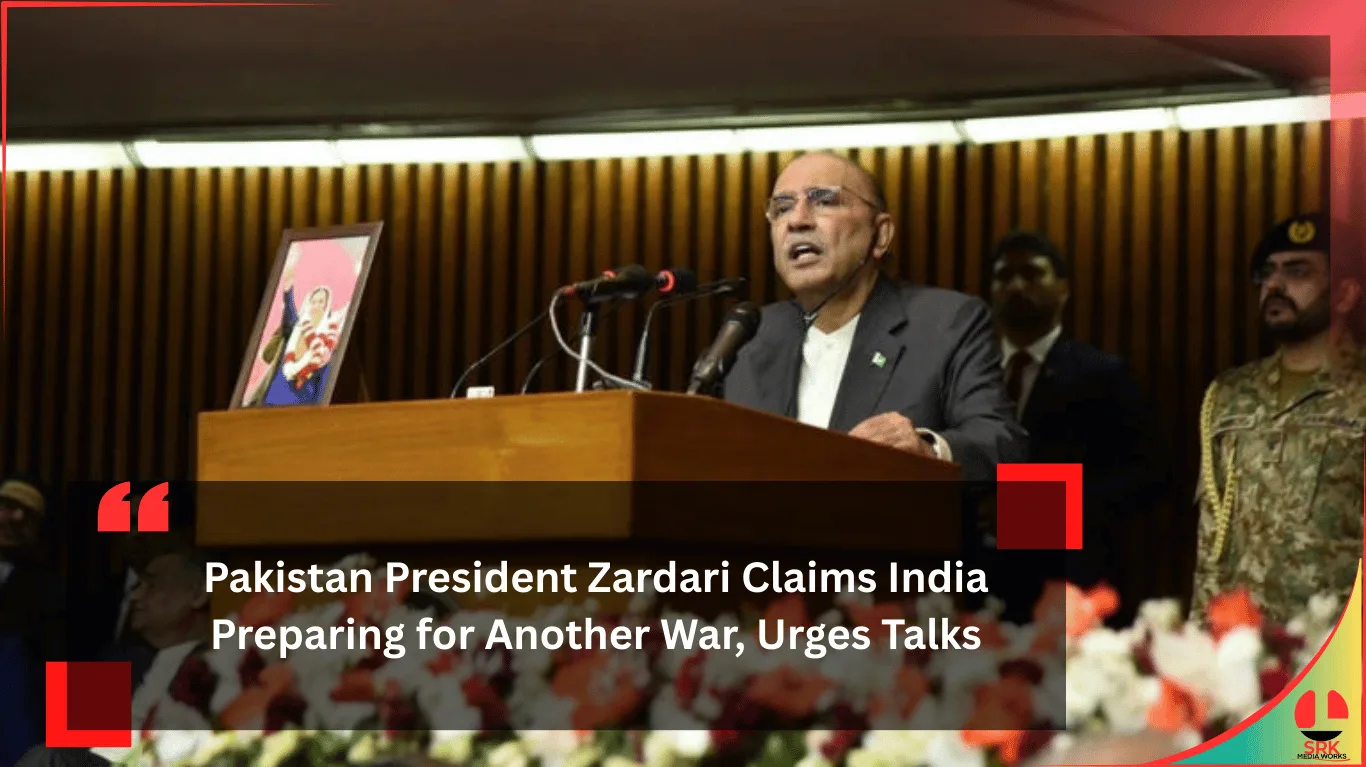
In a striking statement that has stirred regional and global attention, Pakistan President Asif Ali Zardari claimed that India is preparing for another war. He urged New Delhi to engage in dialogue instead of escalating tensions, emphasizing the importance of diplomacy in maintaining peace across South Asia. His remarks have reignited debates about the fragile relationship between the two nuclear-armed neighbors and the urgent need for conflict resolution mechanisms.
Context of Zardari’s Statement
Zardari’s comments came during a public address where he highlighted Pakistan’s concerns over India’s military activities and alleged preparations for confrontation. He stressed that war would bring devastation to both nations and urged India to return to the negotiating table.
Key Highlights
- Zardari’s Claim: India is preparing for another war.
- Call for Talks: Urged India to engage in dialogue to resolve disputes.
- Regional Concerns: South Asia remains a hotspot of geopolitical tension.
- Global Attention: International observers closely monitoring developments.
Comparative Analysis of India-Pakistan Relations
| Period/Incident | India’s Position | Pakistan’s Position | Global Impact |
|---|---|---|---|
| Kargil War (1999) | Defended territory | Claimed infiltration success | Global alarm, US intervention |
| Mumbai Attacks (2008) | Condemned terrorism | Denied involvement | Heightened tensions |
| Balakot Strikes (2019) | Asserted self-defense | Denied claims | International concern |
| Zardari’s Statement (2026) | Yet to respond | Warns of war, urges talks | Renewed global focus |
Pivot Analysis of Sentiment
| Sentiment Category | Impact on Pakistan | Impact on India | Impact on Global Politics |
|---|---|---|---|
| Supporter Morale | Boosted – Zardari seen as assertive | Defensive – India faces scrutiny | Sparks debate on diplomacy |
| Media Coverage | Extensive – highlights Zardari’s warning | Balanced – awaiting India’s response | Global headlines dominate |
| Public Perception | Divided – some support peace call, others skeptical | Mixed – concerns over credibility | Heightened anxiety worldwide |
| Diplomatic Response | Encourages dialogue | Pressured to clarify stance | Calls for restraint from global powers |
Why This Matters
The statement matters because it underscores:
- Fragile Peace: India-Pakistan relations remain volatile.
- Nuclear Risk: Both nations possess nuclear weapons, raising global stakes.
- Regional Stability: South Asia’s peace directly impacts global security.
- Diplomatic Pressure: International community may push for renewed talks.
Challenges Ahead
- For Pakistan: Convincing global powers of its concerns while avoiding escalation.
- For India: Responding to allegations without appearing aggressive.
- For Diplomats: Mediating between two nuclear-armed rivals.
- For Citizens: Managing fears of conflict and instability.
Opportunities Emerging
- Dialogue: Renewed push for peace talks.
- Regional Cooperation: Potential for confidence-building measures.
- Global Mediation: International organizations may step in.
- Public Engagement: Citizens advocating for peace across borders.
Broader Implications
Zardari’s statement reflects broader geopolitical realities:
- South Asia’s Volatility: Persistent disputes over borders and terrorism.
- Global Security Concerns: Any conflict could disrupt global trade and stability.
- Diplomatic Challenges: Balancing national interests with peace efforts.
- Public Narratives: Leaders shaping perceptions through bold statements.
Conclusion
Pakistan President Asif Ali Zardari’s claim that India is preparing for another war, coupled with his call for dialogue, highlights the fragile state of South Asian geopolitics. While his remarks have sparked debate, they also underscore the urgent need for diplomacy, restraint, and constructive engagement. The coming weeks will reveal whether the two nations move toward confrontation or seize the opportunity for peace.
Disclaimer
This article is a journalistic analysis based on publicly available information and political developments. It does not endorse or oppose any political party, government, or leader. Readers are encouraged to interpret the content as informative coverage and verify facts independently before forming opinions.