


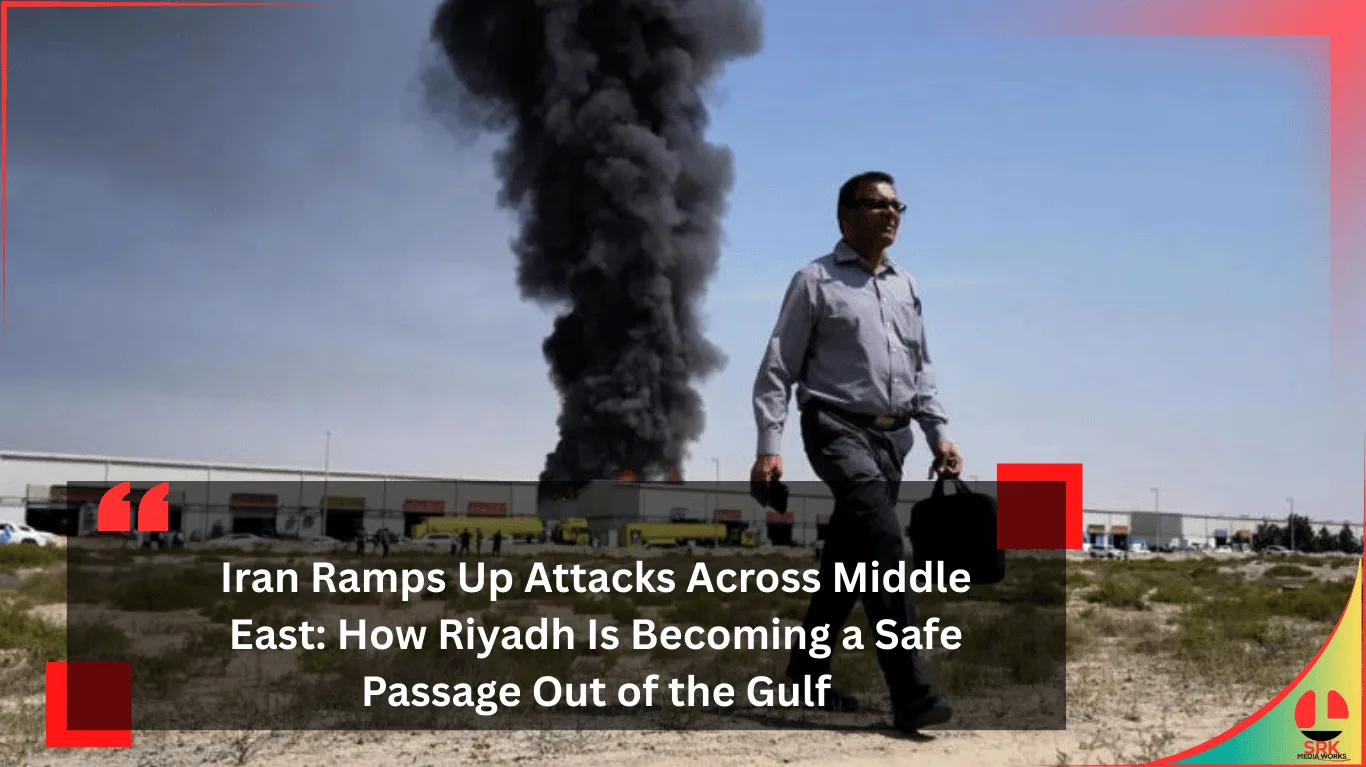
The Middle East is witnessing a surge in hostilities as Iran intensifies its attacks across the region, targeting strategic assets and raising fears of wider instability. Amid this turmoil, Riyadh, the capital of Saudi Arabia, is emerging as a critical safe passage out of the Gulf, offering both logistical and diplomatic channels for nations and businesses seeking stability.
Context of Iran’s Escalation
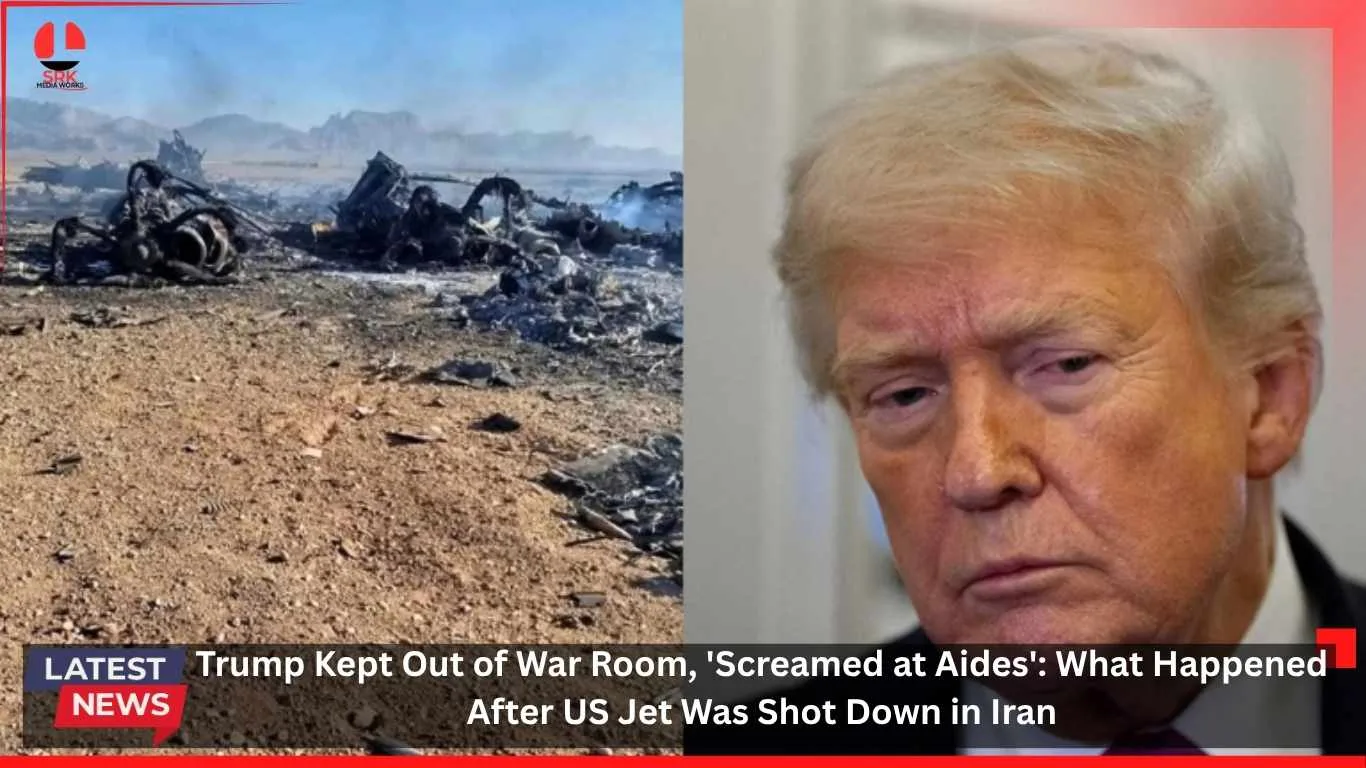
Iran’s recent military actions, including missile strikes, drone swarms, and threats to shipping routes, have disrupted trade and heightened tensions. These attacks are seen as part of Tehran’s broader strategy to assert dominance in the Gulf and challenge US and Israeli influence.
Saudi Arabia, however, has positioned itself as a stabilizing force, leveraging its infrastructure, diplomatic outreach, and geographic advantage to provide safe passage for goods, people, and energy supplies.
Key Highlights
- Iran’s Escalation: Intensified attacks across Middle East, targeting US and Israeli interests.
- Saudi Arabia’s Role: Riyadh emerging as a safe passage for trade and travel.
- Global Concerns: Disruption of oil flows through Strait of Hormuz impacts markets.
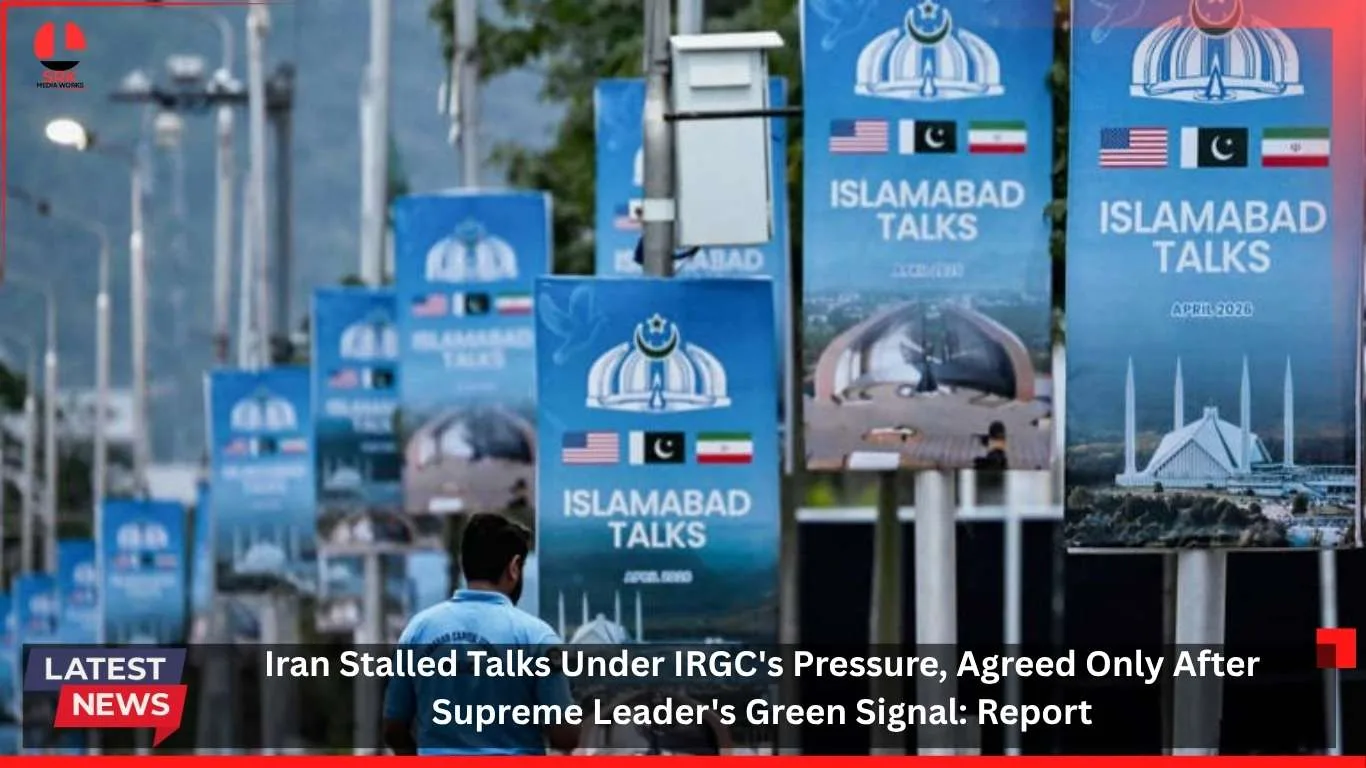
- Diplomatic Outreach: Riyadh engaging with global powers to ensure stability.
Comparative Analysis of Regional Strategies
| Country/Actor | Current Strategy | Impact on Region | Global Perception |
|---|---|---|---|
| Iran | Aggressive military escalation | Heightened instability | Viewed as disruptive |
| Saudi Arabia | Safe passage, diplomatic outreach | Stabilizing influence | Seen as responsible actor |
| US | Military presence, sanctions | Deterrence against Iran | Polarizing globally |
| Israel | Defensive measures, retaliation | Escalates tensions | Seen as vulnerable target |
Pivot Analysis of Sentiment
| Sentiment Category | Impact on Saudi Arabia | Impact on Iran | Impact on Global Politics |
|---|---|---|---|
| Investor Confidence | Strengthened – Riyadh seen as safe hub | Declines – Iran seen as risky | Global markets stabilize via Saudi role |
| Public Perception | Positive – Saudi seen as protector | Nationalist pride in Iran | Anxiety over escalation |
| Media Coverage | Extensive – highlights Riyadh’s role | Focus on Iran’s aggression | Global headlines dominate |
| Diplomatic Relations | Enhanced – Saudi builds alliances | Isolated – Iran faces backlash | Calls for restraint from world powers |
Why Riyadh Matters
Saudi Arabia’s emergence as a safe passage is significant for several reasons:
- Geographic Advantage: Located outside immediate conflict zones, Riyadh offers secure transit routes.
- Infrastructure: Advanced airports, ports, and logistics hubs facilitate movement of goods and people.
- Diplomatic Leverage: Strong ties with US, EU, and Asian economies enhance credibility.
- Energy Security: Alternative routes for oil exports reduce dependence on Strait of Hormuz.
Challenges Ahead
- For Saudi Arabia: Balancing neutrality with alliances while avoiding direct confrontation.
- For Iran: Managing global backlash while sustaining aggressive posture.
- For Global Powers: Preventing escalation into full-scale war.
- For Businesses: Navigating supply chain disruptions and rising costs.
Opportunities Emerging
- Trade Diversification: Riyadh can expand role as logistics hub for global commerce.
- Diplomatic Mediation: Saudi Arabia could act as mediator between Iran and rivals.
- Energy Innovation: Crisis accelerates investment in renewable energy and alternative routes.
- Regional Cooperation: Gulf states may strengthen collective security frameworks.
Broader Implications
The crisis underscores the fragility of global trade and energy supply chains:
- Geopolitical Volatility: Regional conflicts can disrupt global stability.
- Energy Dependence: Economies reliant on Gulf oil face immediate risks.
- Diplomatic Challenges: Balancing deterrence with peace remains difficult.
- Public Narratives: Leaders shaping perceptions through bold statements and actions.
Conclusion
Iran’s ramped-up attacks across the Middle East have thrown the region into turmoil, but Riyadh’s emergence as a safe passage out of the Gulf offers a glimmer of stability. By leveraging its infrastructure, diplomatic ties, and geographic advantage, Saudi Arabia is positioning itself as a critical hub for trade, travel, and energy security. The coming weeks will determine whether Riyadh’s role expands further, shaping the future of Gulf geopolitics and global commerce.
Disclaimer
This article is a journalistic analysis based on publicly available information and geopolitical developments. It does not endorse or oppose any government, leader, or institution. Readers are encouraged to interpret the content as informative coverage and verify facts independently before forming opinions.