





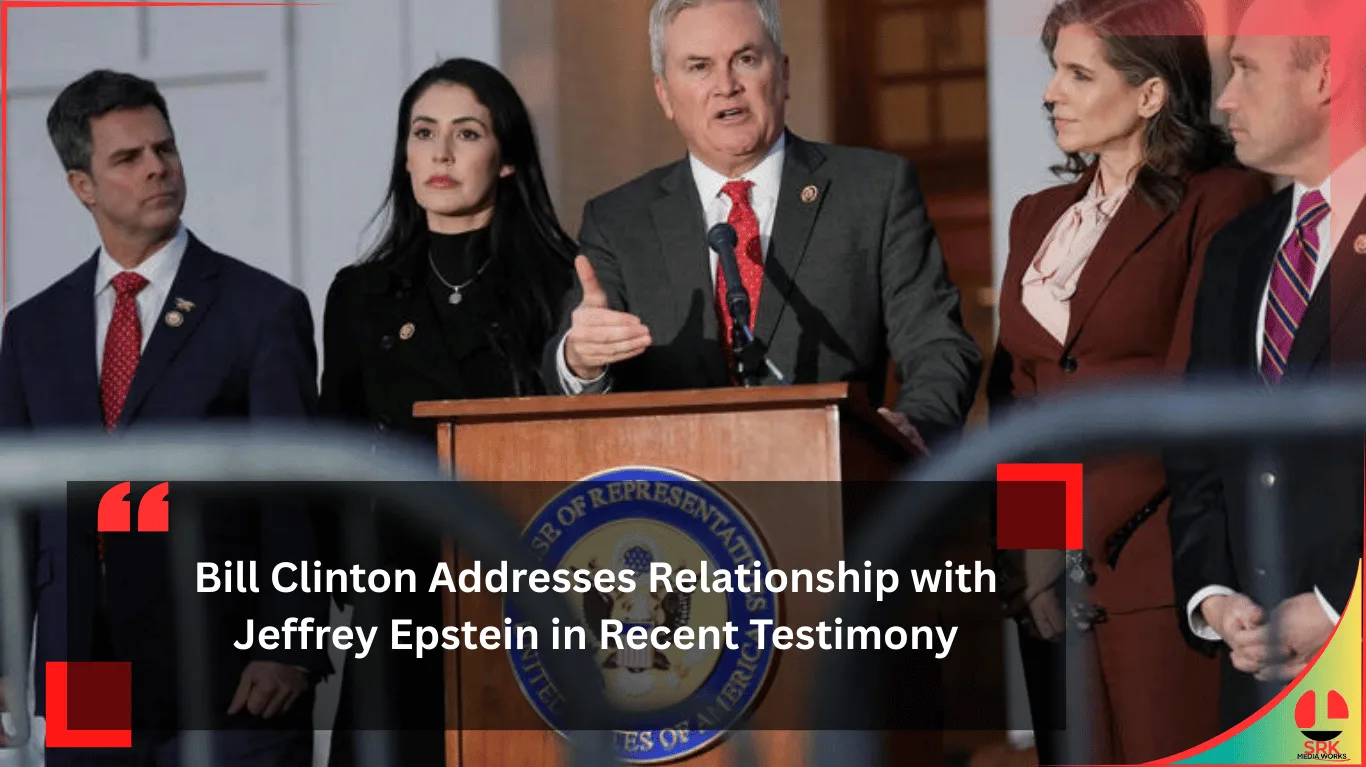
Former US President Bill Clinton has publicly addressed his past relationship with financier Jeffrey Epstein in newly released testimony before the House Oversight Committee. Clinton’s remarks, delivered in closed-door depositions and later made public, sought to clarify the nature of his interactions with Epstein and distance himself from the disgraced financier’s criminal activities.
Context of the Testimony
Clinton’s testimony was part of ongoing congressional investigations into Epstein’s network and its connections with high-profile figures. In the deposition, Clinton emphasized that he had no knowledge of Epstein’s crimes and insisted that he “did nothing wrong” during their association. He acknowledged limited social and professional interactions with Epstein in the early 2000s but stressed that ties were severed well before Epstein’s 2008 conviction for soliciting prostitution from a minor.
Key Highlights
- Clinton’s Denial: Stated he had no knowledge of Epstein’s trafficking activities.
- Limited Association: Confirmed occasional social interactions, including flights on Epstein’s plane.
- Severed Ties: Claimed he ended contact before Epstein’s 2008 guilty plea.
- Public Statement: “I did nothing wrong. I saw nothing that gave me pause.”
Comparative Analysis of High-Profile Associations with Epstein
| Public Figure | Nature of Association | Response in Testimony/Statements | Public Perception |
|---|---|---|---|
| Bill Clinton | Social/professional ties, flights | Denied knowledge, distanced himself | Mixed – skepticism vs. acceptance |
| Donald Trump | Social ties, golf events | Mentioned “great times” before distancing | Controversial – widely debated |
| Prince Andrew | Close ties, allegations | Denied wrongdoing, faced lawsuits | Negative – reputational damage |
| Other Associates | Varied – business/social | Mostly denials or silence | Public suspicion remains high |
Pivot Analysis of Sentiment
| Sentiment Category | Impact on Clinton | Impact on Investigation | Impact on Public Discourse |
|---|---|---|---|
| Supporter Morale | Boosted – Clinton seen as transparent | Provides clarity for investigators | Divided – some accept, others doubt |
| Media Coverage | Extensive – highlights distancing from Epstein | Keeps Epstein case in spotlight | Sparks renewed debate on accountability |
| Opposition Strategy | Critics question credibility | Adds pressure on oversight committees | Fuels political polarization |
| Public Perception | Clinton seen as cautious, defensive | Investigation gains momentum | Heightened scrutiny of elites |
Why This Matters
Clinton’s testimony matters because it touches on:
- Accountability: High-profile figures must clarify associations with Epstein.
- Public Trust: Citizens demand transparency from leaders.
- Legal Oversight: Congressional committees continue to probe Epstein’s network.
- Political Narratives: Statements shape perceptions of credibility and integrity.
Challenges Ahead
- For Clinton: Overcoming skepticism and maintaining credibility.
- For Investigators: Ensuring impartiality while probing elite networks.
- For Media: Reporting responsibly without sensationalism.
- For Public: Distinguishing fact from speculation.
Opportunities Emerging
- Transparency: Encourages leaders to clarify past associations.
- Legal Reform: Push for stronger safeguards against exploitation.
- Public Awareness: Renewed focus on accountability of powerful figures.
- Global Dialogue: Highlights need for international cooperation on trafficking cases.
Broader Implications
Clinton’s testimony reflects broader realities:
- Elite Scrutiny: High-profile figures face intense public examination.
- Legal Accountability: Investigations continue to uncover Epstein’s network.
- Public Narratives: Leaders’ reputations shaped by past associations.
- Global Impact: Epstein’s case remains a symbol of systemic failures.
Conclusion
Bill Clinton’s recent testimony addressing his relationship with Jeffrey Epstein underscores the ongoing scrutiny surrounding the late financier’s network. By distancing himself and denying knowledge of Epstein’s crimes, Clinton aims to protect his legacy while contributing to transparency in investigations. The testimony highlights the importance of accountability, public trust, and the need for continued vigilance against exploitation.
Disclaimer
This article is a journalistic analysis based on publicly available information and congressional testimony. It does not endorse or oppose any political party, government, or leader. Readers are encouraged to interpret the content as informative coverage and verify facts independently before forming opinions.


Если вы хотите совершить поездку в Париж и намерены изучить город с всевозможных сторон, обязательно загляните на блошиные рынки Парижа, где можно разыскать уникальные сувениры и антиквариат. Не упустите бесплатные музеи Парижа — многие из них предоставляют шанс познакомиться с искусством без финансовых вложений, а в Лувре стоит изучить самым известным экспонатам. Для тех, кто интересуется безопасными районами Парижа и хочет свободно перемещаться, полезно изучить карту округов и районы по критериям безопасности, чтобы уверенно и приятно гулять по городу.
Также, предлагаем осмотреть музей Массена в Ницце и виллу Массена, которые показывают богатую историю региона. Если вы решили поехать из Парижа в Версаль самостоятельно, просмотрите подробные советы, включая как добраться до Версаля из Парижа человек проходящий сквозь стену . Не забудьте о ключевых моментах — чаевые в Париже требуют понимания, и полезно знать сколько чаевых предлагать во Франции, чтобы избежать недоразумений. Весёлой поездки и увлекательных приключений!