




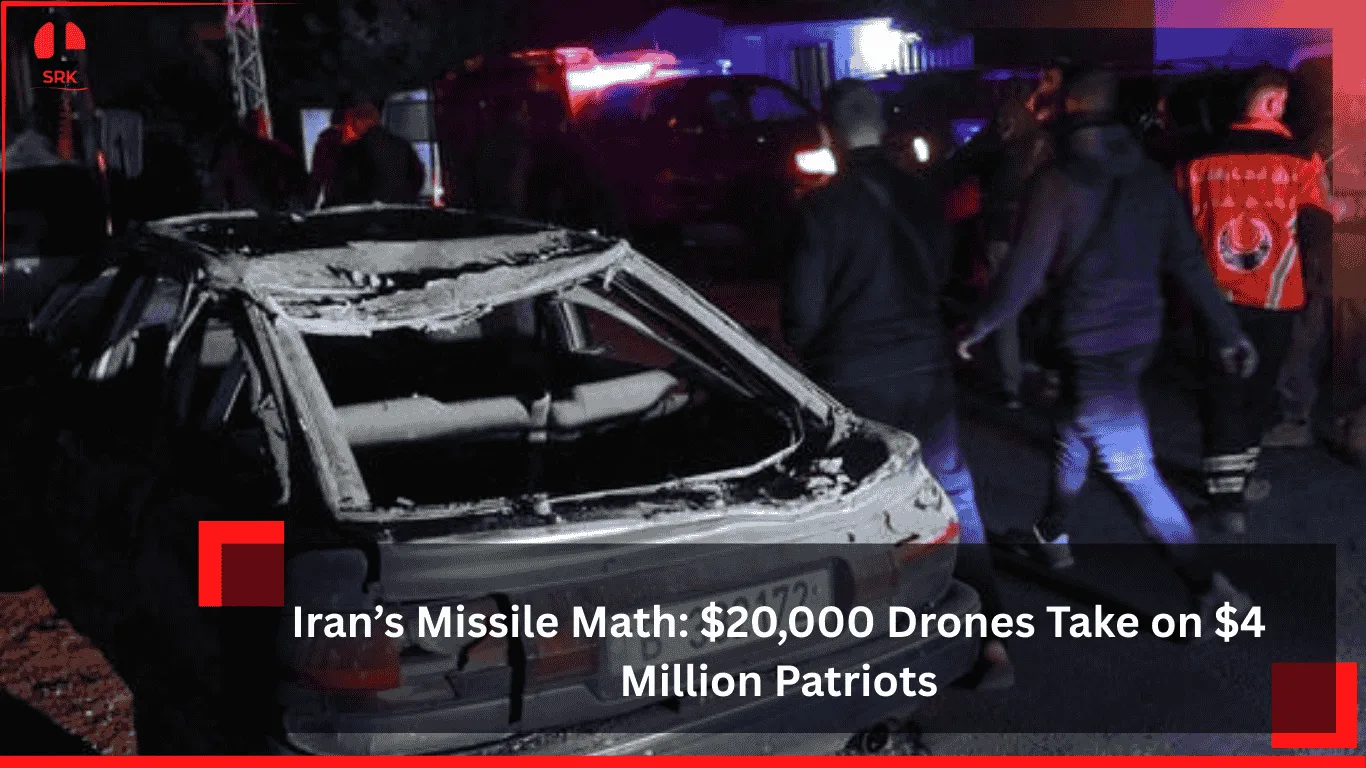
The evolving dynamics of modern warfare are increasingly defined by cost asymmetry, where inexpensive drones and missiles challenge sophisticated, high-cost defence systems. Iran’s deployment of drones priced around $20,000 against U.S.-made Patriot missile defence systems costing nearly $4 million per interceptor exemplifies this new reality. This “missile math” highlights the strategic, economic, and tactical implications of asymmetric warfare in the Middle East and beyond.
The Cost Asymmetry
- Iranian Drones: Low-cost, mass-produced drones are designed to overwhelm defences through sheer volume.
- Patriot Missiles: Advanced interceptors capable of neutralising high-speed threats, but each launch costs millions.
- Strategic Advantage: Iran leverages affordability, forcing adversaries to spend disproportionately more to defend against attacks.
Comparative Analysis of Weapon Systems
| System | Cost per Unit | Strengths | Weaknesses |
|---|---|---|---|
| Iranian Drones | ~$20,000 | Cheap, mass deployable, hard to track | Limited payload, lower precision |
| Patriot Missiles (U.S.) | ~$4 million | Advanced interception, proven reliability | Extremely expensive, limited stock |
| Iron Dome (Israel) | ~$50,000 per interceptor | Effective against rockets, scalable | High operational costs |
| Russian S-400 | ~$1 million per missile | Long-range, multi-target capability | Complex logistics, costly maintenance |
Business Impact Projection in Defence Terms
| Factor | Short-Term Impact | Long-Term Impact |
|---|---|---|
| Defence Budgets | Strain due to costly intercepts | Push for cheaper alternatives |
| Military Strategy | Increased reliance on drones | Shift toward asymmetric warfare |
| Regional Security | Heightened tensions | Redefinition of deterrence models |
| Global Arms Market | Surge in drone demand | Innovation in cost-effective defence |
Industry Context
- Asymmetric Warfare: Nations are increasingly adopting low-cost drones to challenge expensive defence systems.
- Economic Pressure: Defending against cheap drones with costly interceptors creates unsustainable defence economics.
- Global Trend: Similar tactics are being observed in Ukraine, Yemen, and other conflict zones.
Expert Insights
Military analysts argue that Iran’s drone strategy is not about precision but about economics. By forcing adversaries to spend millions to counter cheap drones, Iran achieves strategic disruption at minimal cost. Experts warn that this imbalance could reshape global defence procurement priorities.
Future Outlook
- Innovation in Defence: Nations may invest in cheaper counter-drone technologies, such as lasers and electronic warfare.
- Drone Proliferation: Expect wider adoption of drones by state and non-state actors.
- Strategic Shifts: Defence doctrines will increasingly account for cost asymmetry in planning and execution.
Conclusion
Iran’s “missile math” of deploying $20,000 drones against $4 million Patriot interceptors highlights the changing economics of warfare. The imbalance forces adversaries to rethink defence strategies, budgets, and procurement priorities. As cost-effective drones proliferate, the future of warfare may be defined less by technological superiority and more by economic sustainability.
Disclaimer
This article is intended for informational purposes only and should not be construed as military or investment advice. Defence strategies and weapon costs are subject to change based on evolving technologies, geopolitical conditions, and procurement policies. Readers are encouraged to follow credible updates for the latest developments.