

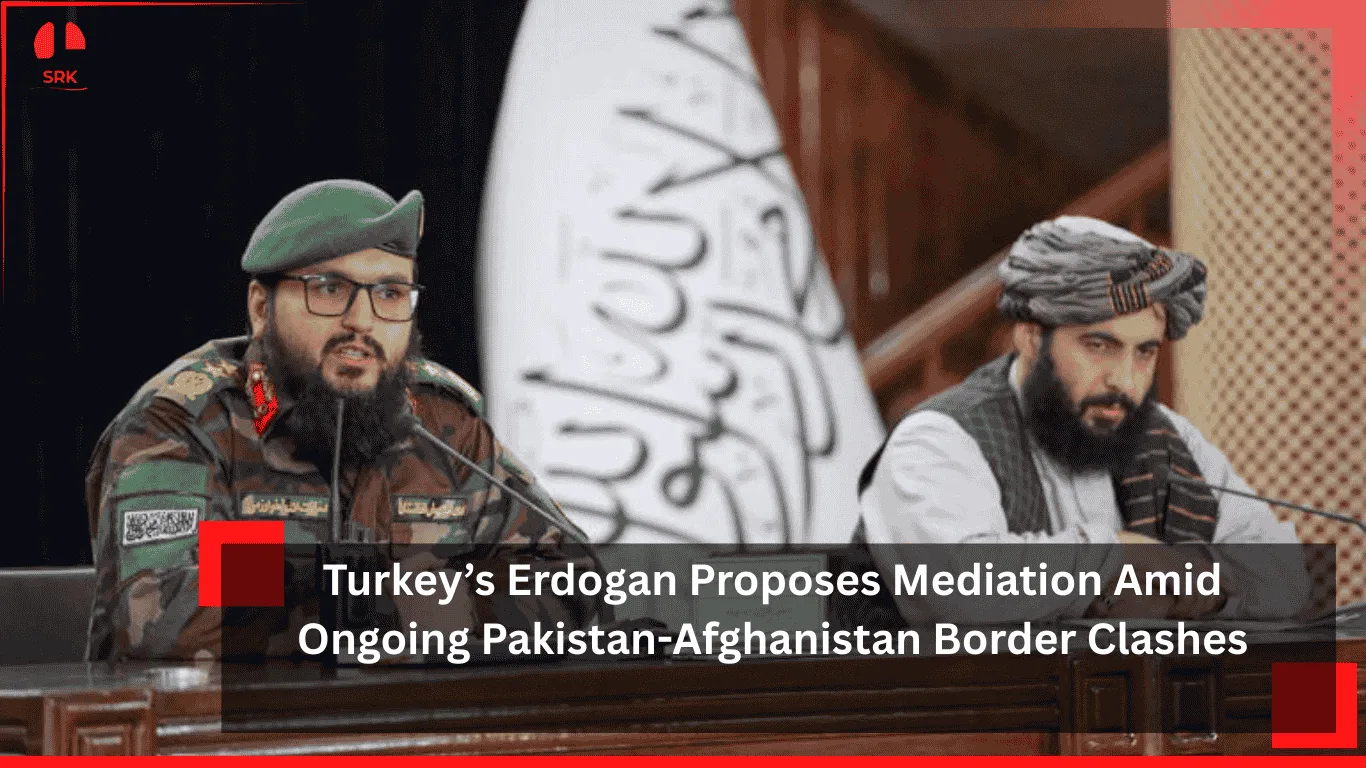
Amid escalating tensions along the Pakistan-Afghanistan border, Turkish President Recep Tayyip Erdogan has proposed mediation to ease hostilities and prevent further deterioration of regional stability. His call for dialogue comes at a time when cross-border clashes have intensified, raising concerns about humanitarian fallout, security risks, and the potential for wider regional instability.
Background of the Border Clashes
- Recent Escalations: Skirmishes between Pakistani forces and Afghan Taliban fighters have increased, particularly along disputed border areas.
- Civilian Impact: Reports indicate casualties among both military personnel and civilians, with local communities caught in the crossfire.
- Diplomatic Strain: Relations between Islamabad and Kabul have worsened, with each side accusing the other of provocation.
Erdogan’s Mediation Proposal
- Neutral Role: Erdogan has positioned Turkey as a neutral mediator, leveraging its historical ties with both Pakistan and Afghanistan.
- Diplomatic Outreach: Ankara has offered to host talks aimed at de-escalating tensions and fostering dialogue.
- Regional Stability: Erdogan emphasized that peace between Pakistan and Afghanistan is crucial for broader stability in South Asia and the Muslim world.
Comparative Analysis of Mediation Efforts
| Mediator/Actor | Approach | Strengths | Challenges |
|---|---|---|---|
| Turkey – Erdogan | Neutral mediation offer | Strong ties with both nations | Limited leverage over Taliban |
| United Nations | Calls for restraint | Global legitimacy | Slow processes |
| China | Economic diplomacy | Influence via Belt & Road | Perceived bias toward Pakistan |
| Iran | Regional engagement | Shared borders, cultural ties | Distrust from Pakistan |
Business Impact Projection in Geopolitical Terms
| Factor | Short-Term Impact | Long-Term Impact |
|---|---|---|
| Pakistan-Afghanistan Relations | Continued clashes | Potential reconciliation through mediation |
| Regional Security | Heightened tensions | Stability if talks succeed |
| Turkey’s Global Role | Enhanced diplomatic profile | Stronger influence in Muslim world |
| International Community | Concern over escalation | Support for mediation initiatives |
Industry Context
- Border Disputes: The Durand Line has long been a source of contention between Pakistan and Afghanistan.
- Taliban Factor: Since the Taliban’s return to power, cross-border tensions have increased due to militant activity.
- Regional Diplomacy: Turkey has sought to expand its diplomatic footprint in South Asia, positioning itself as a peace broker.
Expert Insights
Analysts suggest Erdogan’s mediation proposal reflects Turkey’s ambition to play a larger role in global diplomacy. While Pakistan may welcome Turkey’s involvement, Afghanistan’s Taliban-led government could be more cautious, wary of external influence. Experts warn that successful mediation will require trust-building and guarantees of neutrality.
Future Outlook
- Diplomatic Talks: If accepted, Turkey could host peace talks aimed at reducing border tensions.
- Regional Cooperation: Mediation may pave the way for broader cooperation on trade, security, and infrastructure.
- Global Support: International actors, including the UN and EU, may back Turkey’s initiative to prevent escalation.
Conclusion
President Erdogan’s proposal to mediate between Pakistan and Afghanistan amid ongoing border clashes highlights Turkey’s growing diplomatic ambitions. While challenges remain, the initiative offers a potential pathway to de-escalation and regional stability. The coming weeks will determine whether both sides accept Turkey’s role and move toward dialogue instead of confrontation.
Disclaimer
This article is intended for informational purposes only and should not be construed as political endorsement or advice. Diplomatic initiatives and border conflicts are subject to evolving circumstances, government decisions, and international mediation efforts. Readers are encouraged to follow credible updates for the latest developments.