





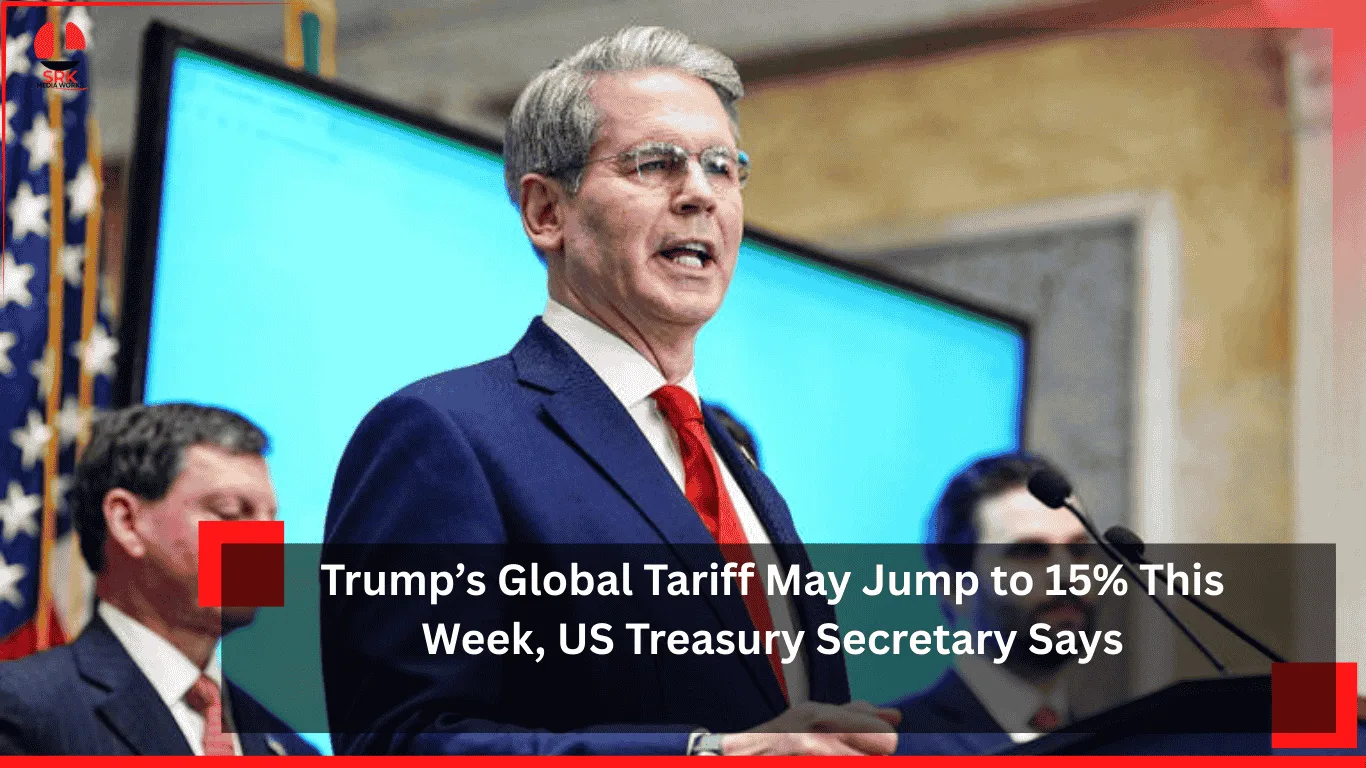
The global trade landscape is bracing for turbulence as U.S. Treasury Secretary confirmed that President Donald Trump’s administration is preparing to raise global tariffs to 15% this week. The announcement has sparked widespread debate among economists, business leaders, and international governments, with concerns about inflation, supply chain disruptions, and retaliatory measures dominating discussions.
Background of the Tariff Policy
- Initial Tariffs: The Trump administration had earlier imposed tariffs in the range of 10–12% on a wide array of imports.
- Proposed Increase: The new policy aims to raise tariffs to 15%, covering multiple sectors including technology, automobiles, steel, and consumer goods.
- Strategic Justification: Officials argue that the move is designed to protect American industries, reduce trade deficits, and encourage domestic manufacturing.
Strategic Importance of the Tariff Hike
- Domestic Industry Protection: Higher tariffs are expected to shield U.S. manufacturers from foreign competition.
- Revenue Generation: The increase could boost government revenues in the short term.
- Global Trade Tensions: The move risks escalating trade disputes with major economies such as China, the EU, and India.
- Inflationary Concerns: Economists warn that higher tariffs could raise consumer prices, impacting households.
Comparative Analysis of Tariff Policies
| Country/Region | Tariff Rate (Current) | Strategic Focus | Impact on Trade |
|---|---|---|---|
| United States (Trump Policy) | 15% (proposed) | Protect domestic industries | Risk of retaliation |
| European Union | 5–8% average | Balanced trade policies | Moderate impact |
| China | 10–12% average | Export-driven economy | Countermeasures likely |
| India | 7–10% average | Protect agriculture & industry | Potential adjustments |
Business Impact Projection
| Factor | Short-Term Impact | Long-Term Impact |
|---|---|---|
| US Manufacturers | Boost in competitiveness | Potential inefficiencies if imports restricted |
| Consumers | Higher prices on goods | Inflationary pressures |
| Global Trade Relations | Escalation of disputes | Possible trade realignment |
| Supply Chains | Disruption in imports | Push for diversification |
Industry Context
- Global Trade Wars: Tariff hikes have historically triggered retaliatory measures, leading to prolonged trade wars.
- Corporate Concerns: Multinational companies fear disruptions in supply chains and rising costs.
- Emerging Markets: Countries like India and Brazil may face indirect impacts due to shifts in global trade flows.
Expert Insights
Economists argue that while tariffs may provide short-term protection for domestic industries, they often lead to inefficiencies and higher costs for consumers. Analysts also warn that retaliatory tariffs from other nations could hurt U.S. exporters, particularly in agriculture and technology.
Future Outlook
- Global Retaliation: Countries affected by the tariff hike may impose counter-tariffs, escalating trade tensions.
- Domestic Politics: The move could become a key talking point in U.S. political debates, with supporters praising protectionism and critics warning of inflation.
- Economic Adjustments: Businesses may seek alternative supply chains, accelerating diversification away from traditional trade partners.
Conclusion
The Trump administration’s plan to raise global tariffs to 15% marks a significant escalation in trade policy. While aimed at protecting domestic industries, the move risks sparking retaliatory measures, disrupting supply chains, and raising consumer prices. The coming weeks will be critical in determining whether this bold strategy strengthens the U.S. economy or triggers a new wave of global trade conflicts.
Disclaimer
This article is intended for informational purposes only and should not be construed as financial or investment advice. Trade policies are subject to government decisions, international negotiations, and evolving global economic conditions. Readers are encouraged to follow credible updates for the latest developments.