








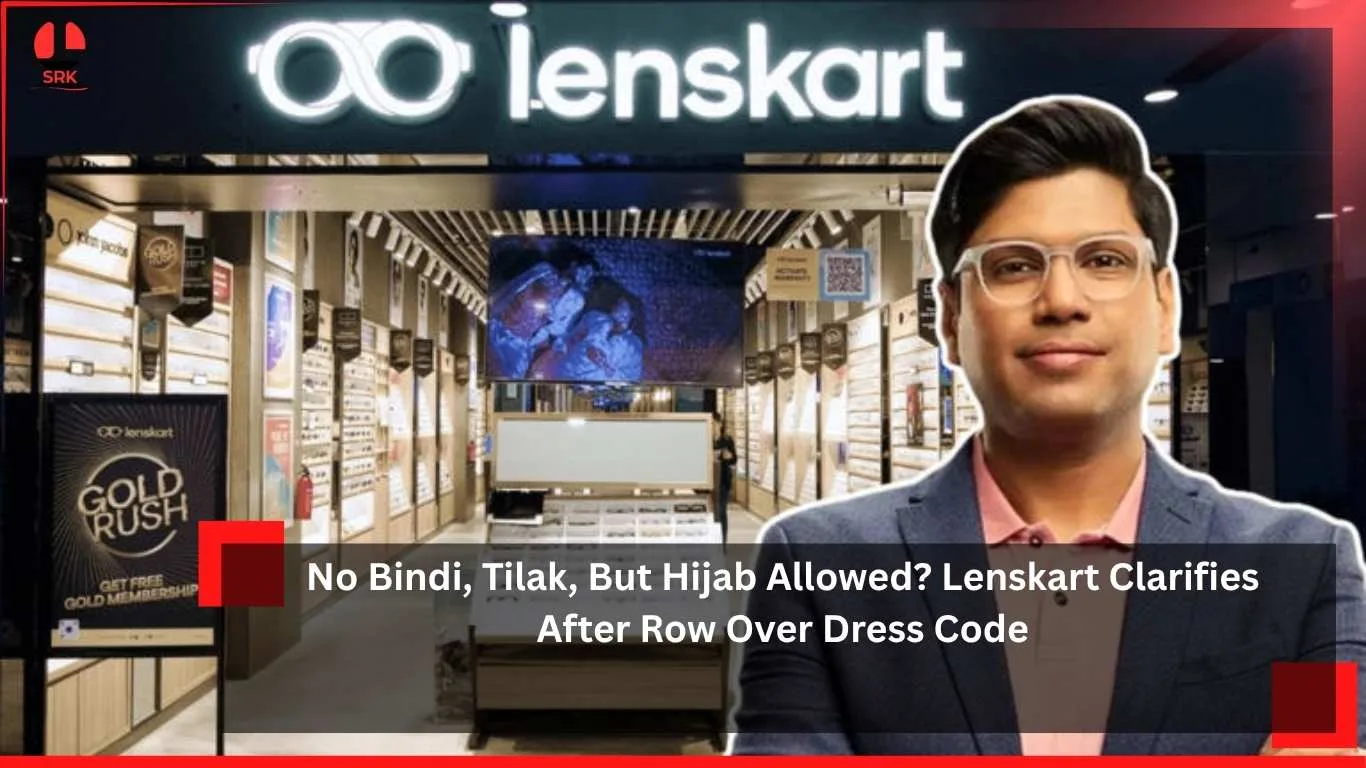
Eyewear giant Lenskart has found itself at the center of a heated debate after reports surfaced alleging that employees were discouraged from wearing traditional Hindu symbols such as bindi or tilak, while hijab was permitted under its dress code. The controversy quickly spread across social media, sparking outrage, memes, and calls for clarification. In response, Lenskart issued a statement denying discrimination and clarifying its workplace policy.
The Controversy
The row began when screenshots and employee testimonies circulated online, suggesting that Lenskart’s internal guidelines restricted certain religious symbols while allowing others. Critics accused the company of bias, arguing that such selective enforcement undermines India’s cultural diversity.
Key Allegations:
- Employees discouraged from wearing bindi or tilak.
- Hijab reportedly permitted under dress code.
- Accusations of religious favoritism.
- Social media backlash questioning corporate inclusivity.
Lenskart’s Clarification
In its official response, Lenskart emphasized that it does not discriminate against any religion or cultural practice. The company stated that its dress code is designed to maintain professionalism and uniformity, not to target specific communities.
Company Statement Highlights:
- No ban on bindi, tilak, or other cultural symbols.
- Hijab allowed as part of respecting religious freedom.
- Dress code focused on neatness and customer-facing professionalism.
- Commitment to inclusivity and diversity in the workplace.
Public Reaction
The clarification did little to quell the online storm. Social media users continued to debate whether corporate dress codes should regulate cultural or religious symbols at all.
| Sentiment Category | Percentage | Remarks |
|---|---|---|
| Critical | 55% | Accusations of bias, cultural insensitivity |
| Neutral | 25% | Awaiting further clarification |
| Supportive | 20% | Defending company’s right to set policies |
Comparative Corporate Dress Codes
The controversy has reignited discussions about how multinational and Indian companies handle religious and cultural attire in professional settings.
| Company | Policy on Religious Symbols | Notes |
|---|---|---|
| Lenskart | Clarified inclusivity, no bans | Focus on professionalism |
| Infosys | Allows cultural attire, no restrictions | Emphasis on diversity |
| TCS | Neutral dress code, symbols permitted | Encourages inclusivity |
| Global MNCs | Varies by region, often neutral | Policies shaped by local laws |
This comparison shows that most companies in India adopt inclusive policies, allowing employees to express cultural identity.
Cultural and Social Dimensions
The debate touches on broader issues of identity, inclusivity, and corporate responsibility. In India, where cultural symbols like bindi and tilak are deeply rooted in tradition, any perceived restriction can trigger strong reactions.
Cultural Concerns:
- Bindi and tilak seen as integral to Hindu identity.
- Hijab represents religious freedom for Muslim women.
- Selective restrictions perceived as cultural imbalance.
- Calls for equal respect for all traditions.
Political Implications
The controversy has also attracted political attention, with leaders and commentators weighing in on corporate responsibility. Some argue that companies must respect India’s cultural diversity, while others defend corporate autonomy in setting workplace standards.
Political Outcomes:
- Increased scrutiny of corporate policies.
- Potential debates in public forums.
- Pressure on companies to adopt transparent inclusivity guidelines.
Workplace Inclusivity
Experts suggest that companies should adopt clear, transparent policies that respect all cultural and religious practices equally. Inclusivity not only avoids controversy but also strengthens employee morale and brand reputation.
Recommendations for Corporates:
- Explicitly state inclusivity in dress codes.
- Allow cultural and religious symbols equally.
- Train managers to handle diversity sensitively.
- Engage employees in policy-making discussions.
Future Outlook
The Lenskart controversy may serve as a turning point for corporate India. As workplaces become more diverse, companies will need to balance professionalism with inclusivity, ensuring that employees feel respected regardless of cultural or religious identity.
Possible Scenarios:
- Policy Revision: Companies adopt clearer inclusivity guidelines.
- Continued Debate: Ongoing controversies over dress codes.
- Cultural Acceptance: Greater recognition of diversity in workplaces.
Disclaimer
This article is a detailed news analysis prepared for informational purposes only. It does not represent official corporate statements beyond reported clarifications. Readers are encouraged to verify details from credible sources before drawing conclusions. The content aims to highlight the controversy surrounding Lenskart’s dress code and its broader implications for workplace inclusivity in India.