





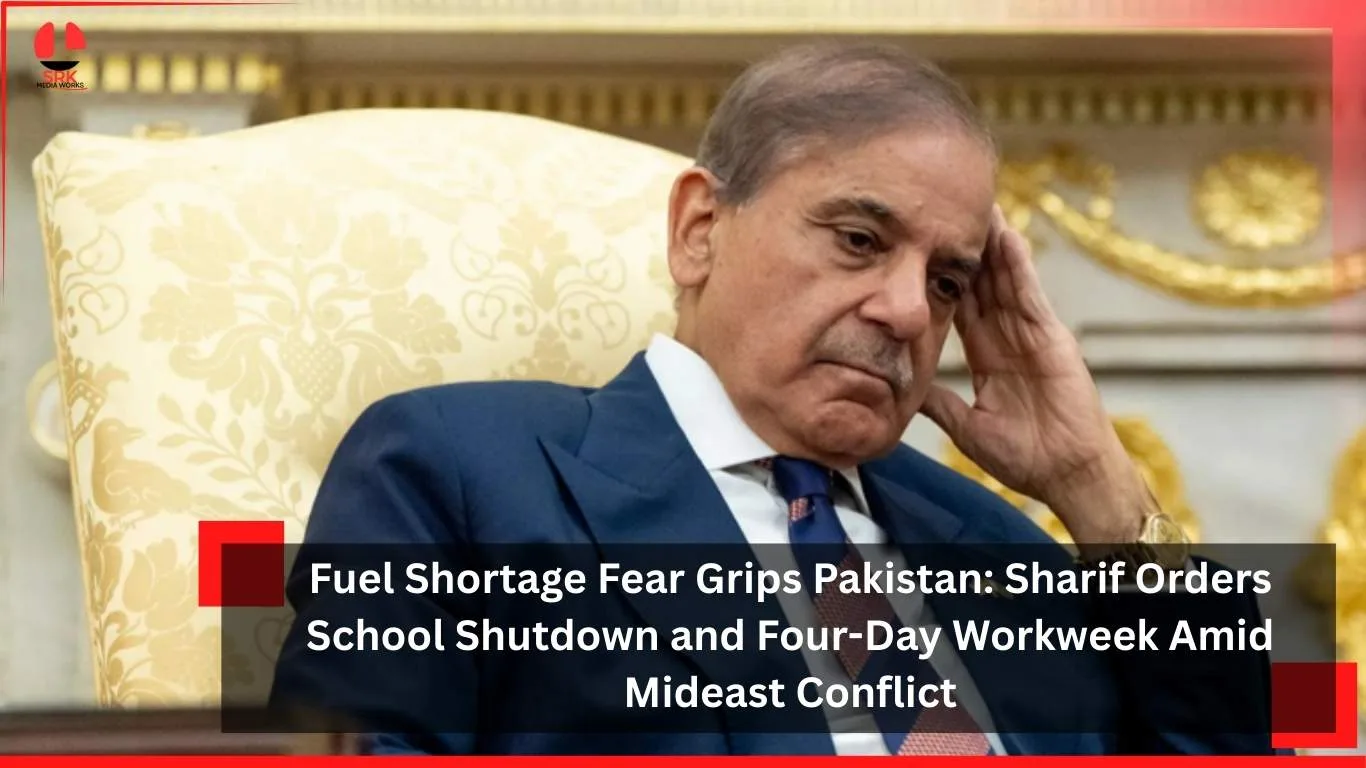
Pakistan is facing mounting concerns over a looming fuel crisis as Prime Minister Shehbaz Sharif announced emergency measures, including school closures and a four-day workweek. The decision comes amid escalating conflict in the Middle East, which has disrupted global oil supplies and triggered fears of shortages across South Asia.
The Announcement
In a televised address, Prime Minister Sharif emphasized the urgency of conserving fuel as international supply chains remain strained. Schools across the country will remain closed temporarily, while government offices and private businesses have been instructed to adopt a four-day workweek. These measures are aimed at reducing fuel consumption, easing pressure on the economy, and ensuring essential services remain functional.
Background: Pakistan’s Energy Dependence
Pakistan imports a significant portion of its fuel, making it vulnerable to global disruptions. The Middle East conflict has led to volatility in oil prices and supply routes, directly impacting Pakistan’s already fragile economy.
Key Challenges:
- High Import Dependence: Pakistan relies on Gulf countries for crude oil and refined petroleum.
- Currency Pressure: Rising oil prices strain foreign reserves.
- Inflation: Fuel shortages drive up transportation and food costs.
- Public Discontent: Citizens face longer queues at petrol stations and rising energy bills.
Comparative Analysis of Regional Fuel Policies
| Country | Emergency Measures | Impact on Economy | Public Reaction |
|---|---|---|---|
| Pakistan | School shutdown, four-day workweek | Reduced consumption, economic slowdown | Mixed reactions |
| India | Strategic reserves release | Stabilized supply | Public relief |
| Sri Lanka | Fuel rationing | Severe shortages | Public protests |
| Bangladesh | Energy conservation drives | Moderate impact | Acceptance |
This comparison highlights Pakistan’s reliance on drastic measures compared to its neighbors, reflecting the severity of its fuel crisis.
Pivot Analysis: Impact of Sharif’s Measures
| Stakeholder | Immediate Impact | Long-Term Outcome |
|---|---|---|
| Students | Disruption in education | Shift to online learning |
| Businesses | Reduced operating days | Lower productivity, cost savings |
| Government | Short-term fuel conservation | Political pressure to stabilize supply |
| Citizens | Longer queues, limited mobility | Growing frustration |
| Regional Trade | Slower logistics | Potential decline in exports |
Economic Dimensions
The fuel shortage has far-reaching economic consequences. Transportation costs are rising, food prices are climbing, and industrial output is slowing. The government’s measures may temporarily ease consumption but risk deepening economic stagnation.
Revenue and Cost Implications:
- Transport Sector: Higher fares and reduced services.
- Agriculture: Increased costs for irrigation and logistics.
- Industry: Production delays due to limited fuel availability.
- Households: Rising electricity and cooking fuel expenses.
Public Sentiment
Reactions to the government’s measures have been mixed. While some citizens support conservation efforts, others criticize the disruption to daily life. Parents are concerned about school closures, while businesses worry about reduced productivity. Social media has become a platform for both support and criticism, reflecting the nation’s divided mood.
Global Context
The Middle East conflict has disrupted oil supply routes, impacting countries far beyond the region. Pakistan’s crisis is part of a broader global challenge, with nations scrambling to secure energy supplies.
Global Comparisons of Fuel Crisis Responses
| Country | Strategy | Effectiveness |
|---|---|---|
| Pakistan | School closures, four-day workweek | Short-term relief, long-term uncertainty |
| Japan | Diversification of imports | Stable supply |
| Germany | Renewable energy push | Reduced dependence |
| USA | Strategic reserves release | Temporary stabilization |
Conclusion
Pakistan’s fuel shortage crisis underscores the vulnerability of energy-dependent economies during global conflicts. Prime Minister Sharif’s emergency measures—school shutdowns and a four-day workweek—reflect the severity of the situation. While these steps may conserve fuel in the short term, they also risk disrupting education, business productivity, and public life. The coming weeks will determine whether Pakistan can stabilize its energy supply or face deeper economic turmoil.
Disclaimer
This article is based on publicly available reports and expert analysis. It is intended for informational purposes only and does not represent official government statements or policy documents. Readers should note that energy crises are dynamic, and interpretations may vary across different sources.