





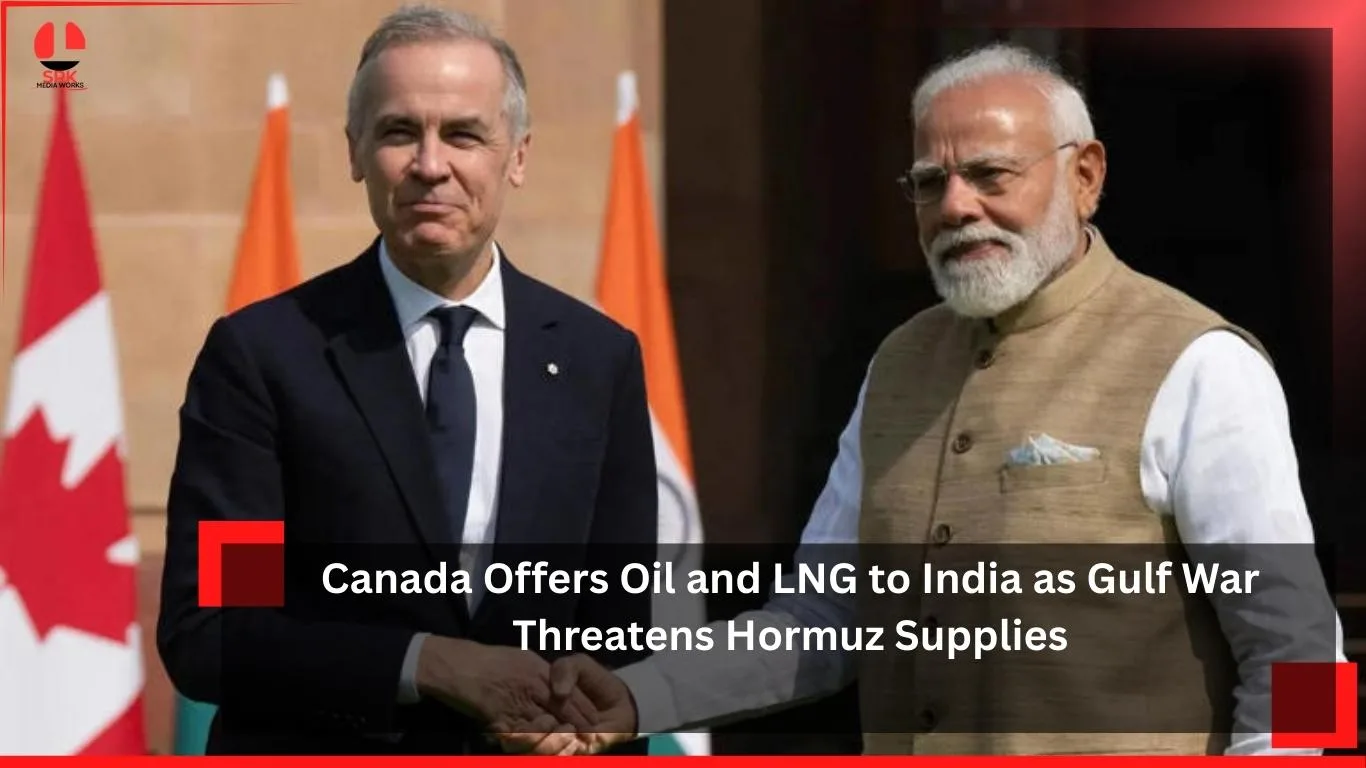
In a significant geopolitical and economic development, Canada has offered oil and liquefied natural gas (LNG) supplies to India as the ongoing Gulf War threatens to disrupt shipments through the Strait of Hormuz. This move underscores Canada’s intent to strengthen energy ties with India while providing a reliable alternative to Middle Eastern supplies that are at risk due to escalating conflict.
The Strategic Importance of the Strait of Hormuz
The Strait of Hormuz is one of the world’s most critical energy chokepoints, with nearly 20% of global oil and LNG shipments passing through it. The Gulf War has raised concerns about blockades, attacks on tankers, and supply chain disruptions. For India, which imports a significant portion of its crude oil and LNG from the Gulf, the situation poses a major risk to energy security.
Canada’s Offer to India
Canada’s proposal includes:
- Crude Oil Supplies – Leveraging its vast reserves in Alberta, Canada aims to provide India with stable long-term contracts.
- Liquefied Natural Gas (LNG) – Canada’s LNG projects in British Columbia are positioned to export to Asia, offering India an alternative to Gulf-based LNG.
- Strategic Partnerships – Canada seeks to deepen bilateral energy cooperation, including investments in infrastructure and technology.
- Diversification of Supply Chains – Helping India reduce dependence on volatile Gulf routes.
Comparative Analysis of India’s Energy Imports
| Source Region | Share of India’s Imports | Risk Level During Gulf War | Alternative Potential |
|---|---|---|---|
| Middle East (Gulf) | ~55% | High (Hormuz disruption) | Limited |
| Africa | ~15% | Moderate | Growing |
| North America (Canada, USA) | ~10% | Low | Expanding |
| Others (Russia, SE Asia) | ~20% | Variable | Moderate |
This table highlights how Canada’s offer could reduce India’s reliance on Gulf supplies and diversify its energy portfolio.
Economic and Strategic Impact on India
- Energy Security: Canada’s supplies would provide India with a stable alternative during geopolitical crises.
- Price Stability: Diversification could help India manage volatility in global oil and gas prices.
- Infrastructure Development: Investments in LNG terminals and pipelines would strengthen India’s energy ecosystem.
- Geopolitical Balance: Strengthening ties with Canada enhances India’s global partnerships beyond traditional suppliers.
Analytical Perspective
From an analytical standpoint, Canada’s offer is both strategic and opportunistic. For India, it represents a chance to secure long-term energy stability amid Gulf tensions. For Canada, it is an opportunity to expand its energy exports to Asia, diversify markets, and strengthen ties with one of the fastest-growing economies in the world.
Key Themes Emerging
| Theme | Explanation |
|---|---|
| Energy Diversification | India reduces dependence on Gulf supplies by tapping Canadian resources. |
| Geopolitical Strategy | Canada positions itself as a reliable partner amid Gulf instability. |
| Economic Resilience | Stable supplies help India manage inflation and industrial growth. |
| Bilateral Cooperation | Strengthens India–Canada ties through energy and infrastructure projects. |
Public and Policy Reactions
- Indian Government: Welcomed Canada’s offer as a step toward energy diversification.
- Industry Leaders: Highlighted the need for infrastructure investments to handle LNG imports.
- Global Analysts: Viewed the move as part of Canada’s broader strategy to expand its energy footprint in Asia.
- Citizens: Expressed optimism that stable supplies could help control fuel prices.
Future Outlook
India is expected to explore long-term contracts with Canada, focusing on both crude oil and LNG. The partnership may also extend to joint ventures in renewable energy, technology transfer, and infrastructure development. If successful, Canada could become a major player in India’s energy mix, reducing reliance on Gulf supplies and enhancing resilience against global crises.
Conclusion
Canada’s offer of oil and LNG to India amid the Gulf War and threats to Hormuz supplies is a landmark moment in global energy diplomacy. It reflects India’s urgent need for diversification and Canada’s ambition to expand its role in Asia. As the Gulf conflict continues to disrupt traditional supply chains, this partnership could redefine India’s energy security strategy and strengthen bilateral ties between the two nations.
Disclaimer
This article is a journalistic analysis based on publicly available information and government statements. It is intended for informational purposes only and does not represent endorsement of any political party, government, or corporate entity. Readers should interpret the content as part of ongoing global energy discourse rather than a definitive forecast.