



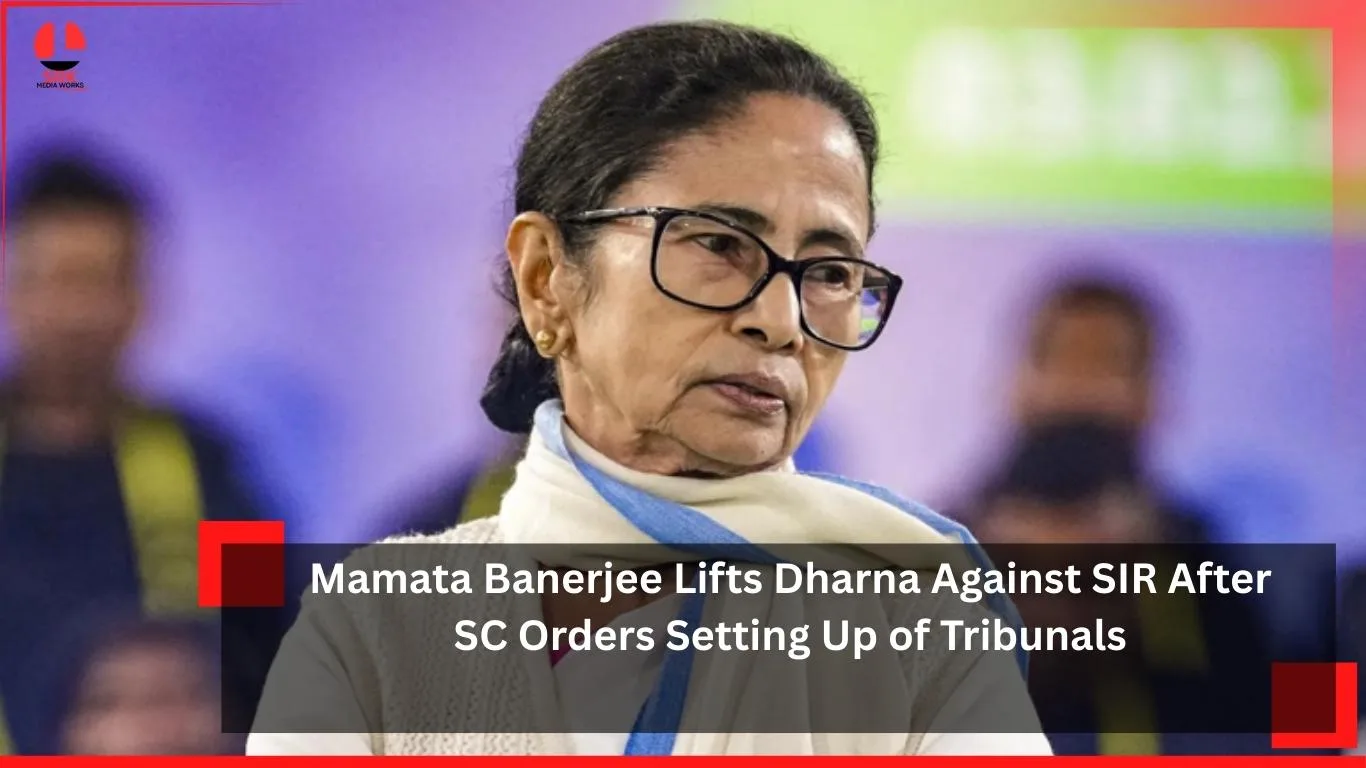
West Bengal Chief Minister Mamata Banerjee has announced the lifting of her dharna against the Special Investigation Regime (SIR) following the Supreme Court’s directive to establish dedicated tribunals. The decision marks a significant turning point in the ongoing confrontation between the state government and central authorities over investigative mechanisms and judicial oversight.
Background of the Dharna
Mamata Banerjee had staged a dharna to protest what she described as the misuse of investigative agencies under the SIR framework. Her contention was that the system lacked transparency and accountability, leading to political targeting. The dharna drew widespread attention, with opposition parties supporting her stance and ruling party leaders dismissing it as political theatrics.
Supreme Court’s Intervention
The Supreme Court’s order to set up tribunals is seen as a balancing measure. The tribunals will:
- Ensure Judicial Oversight – Providing checks and balances on investigative powers.
- Speedy Resolution – Handling cases efficiently to reduce delays.
- Transparency – Offering a structured mechanism for appeals and reviews.
- Fairness – Safeguarding against arbitrary actions by investigative agencies.
Comparative Analysis of Judicial Oversight Mechanisms
| Mechanism | Country/Region | Key Features | Impact on Governance |
|---|---|---|---|
| SIR Tribunals (India) | India | Judicial oversight, appeals process | Ensures accountability, reduces misuse |
| Ombudsman System | Europe | Independent watchdog | Protects citizens’ rights |
| Inspector General Oversight | USA | Agency-specific monitoring | Enhances transparency in investigations |
| Anti-Corruption Courts | Africa | Specialized judicial bodies | Focused on corruption cases |
This comparison shows how India’s move aligns with global practices of ensuring oversight in investigative processes.
Political Reactions
- TMC Leaders: Welcomed the SC’s directive, calling it a victory for democratic accountability.
- Opposition Parties: Some expressed support, while others questioned the effectiveness of tribunals.
- Central Leaders: Maintained that the SIR framework was necessary but agreed to abide by judicial orders.
- Public Response: Citizens expressed relief that the confrontation had ended, hoping for more transparent governance.
Analytical Perspective
From an analytical standpoint, Mamata Banerjee’s decision to lift the dharna reflects the importance of judicial intervention in resolving political disputes. The Supreme Court’s directive provides a middle ground, ensuring that investigative agencies operate within a framework of accountability while addressing concerns of political misuse.
Key Themes Emerging
| Theme | Explanation |
|---|---|
| Judicial Oversight | Tribunals ensure checks on investigative powers. |
| Political Accountability | Dharna highlighted concerns about misuse of agencies. |
| Democratic Balance | SC intervention reinforces separation of powers. |
| Public Trust | Citizens expect greater transparency and fairness. |
Broader Implications
The episode underscores the role of the judiciary as a stabilizing force in India’s democracy. It also highlights the growing demand for institutional reforms that balance investigative powers with accountability. For Mamata Banerjee, lifting the dharna signals a willingness to respect judicial authority while continuing to advocate for transparency.
Conclusion
Mamata Banerjee’s decision to lift her dharna against the SIR following the Supreme Court’s order to set up tribunals marks a significant moment in India’s political and judicial landscape. It reflects the power of judicial intervention in resolving contentious issues and sets the stage for greater accountability in investigative processes. As the tribunals begin functioning, their effectiveness will be closely watched by political leaders, citizens, and analysts alike.
Disclaimer
This article is a journalistic analysis based on publicly available information and political statements. It is intended for informational purposes only and does not represent endorsement of any political party or leader. Readers should interpret the content as part of ongoing democratic discourse rather than a definitive evaluation.