
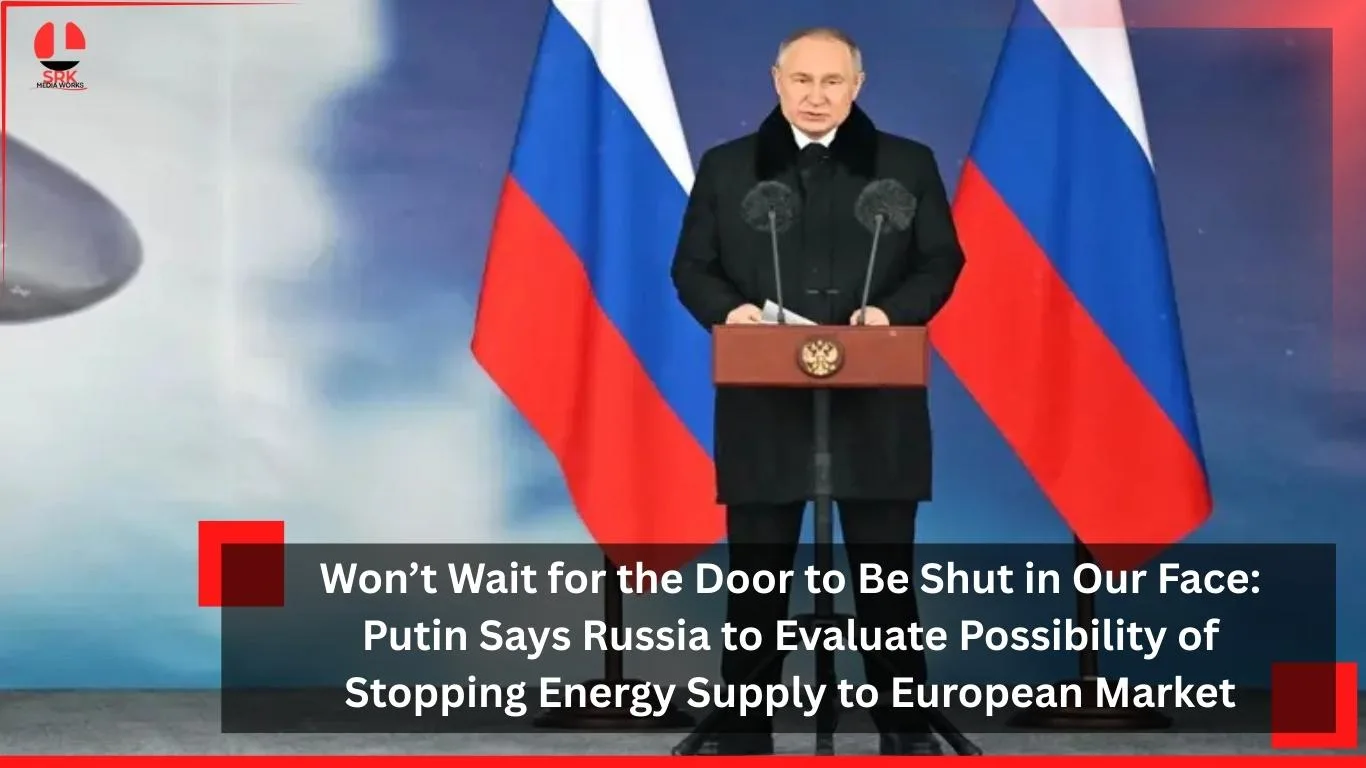
Russian President Vladimir Putin has issued a strong warning to Europe, declaring that Moscow will not “wait for the door to be shut in our face” and will evaluate the possibility of halting energy supplies to the European market. This statement comes amid ongoing geopolitical tensions, sanctions, and Europe’s attempts to diversify its energy sources away from Russia.
Background of the Statement
Putin’s remarks highlight Russia’s growing frustration with European policies aimed at reducing dependence on Russian oil and gas. Since the Ukraine conflict, Europe has accelerated efforts to secure alternative energy supplies, including LNG imports from the US and renewable energy investments. Moscow, however, remains a major supplier of natural gas to several European countries, making any disruption a potential economic shock.
Why Russia Is Considering Energy Supply Cuts
- Sanctions Pressure – Western sanctions have targeted Russia’s energy sector, limiting revenues and access to technology.
- Strategic Leverage – Energy remains one of Russia’s most powerful tools to influence European policy.
- Market Diversification – Russia is increasingly turning to Asia, particularly China and India, as alternative markets.
- Political Messaging – Putin’s statement is designed to remind Europe of its vulnerability.
- Economic Retaliation – Cutting supplies could be used as retaliation against further sanctions or military support to Ukraine.
Comparative Analysis of Europe’s Energy Dependence
| Country | Dependence on Russian Gas/Oil | Alternative Sources | Vulnerability Level |
|---|---|---|---|
| Germany | ~40% (pre-war) | LNG, renewables | High |
| Italy | ~30% | North Africa, LNG | Moderate |
| France | ~20% | Nuclear, renewables | Low |
| Poland | ~50% | LNG, Norway | High |
| UK | ~5% | North Sea, LNG | Low |
This table shows how different European countries vary in their reliance on Russian energy, with Germany and Poland being among the most vulnerable.
Analytical Perspective
From an analytical standpoint, Putin’s warning reflects a strategic recalibration. Russia recognizes that Europe is actively reducing dependence on its energy exports, and Moscow wants to preemptively shift focus to Asian markets rather than wait for European demand to collapse. The statement also serves as a political weapon, reminding Europe that despite diversification, Russian energy remains critical in the short term.
Key Themes Emerging
| Theme | Explanation |
|---|---|
| Energy Leverage | Russia uses energy supplies as a geopolitical tool. |
| Market Diversification | Moscow seeks to expand exports to Asia. |
| European Vulnerability | Despite diversification, Europe remains exposed to supply shocks. |
| Political Messaging | Putin’s rhetoric underscores Russia’s defiance against sanctions. |
Public and Political Reactions
- European Leaders: Expressed concern but reiterated commitment to reducing dependence on Russian energy.
- Russian Officials: Framed the statement as a necessary response to Western hostility.
- Global Analysts: Warned that halting supplies could trigger energy price spikes worldwide.
- Citizens in Europe: Fear rising energy costs and potential shortages during winter months.
Broader Implications
- Economic Fallout: Energy prices could surge, affecting industries and households.
- Geopolitical Realignment: Russia’s pivot to Asia may reshape global energy flows.
- Climate Policy Impact: Europe may accelerate renewable energy adoption.
- Global Energy Security: Disruptions could destabilize markets beyond Europe.
Conclusion
Putin’s warning that Russia may stop supplying energy to Europe marks a significant escalation in the geopolitical energy battle. While Europe is working to reduce its reliance on Russian oil and gas, Moscow’s leverage remains potent in the short term. The statement underscores the fragile balance between energy security, political confrontation, and global economic stability.
Disclaimer
This article is a journalistic analysis based on publicly available information and expert commentary. It is intended for informational purposes only and does not represent endorsement of any government or policy. Readers should interpret the content as part of ongoing geopolitical discourse rather than a definitive judgment.