







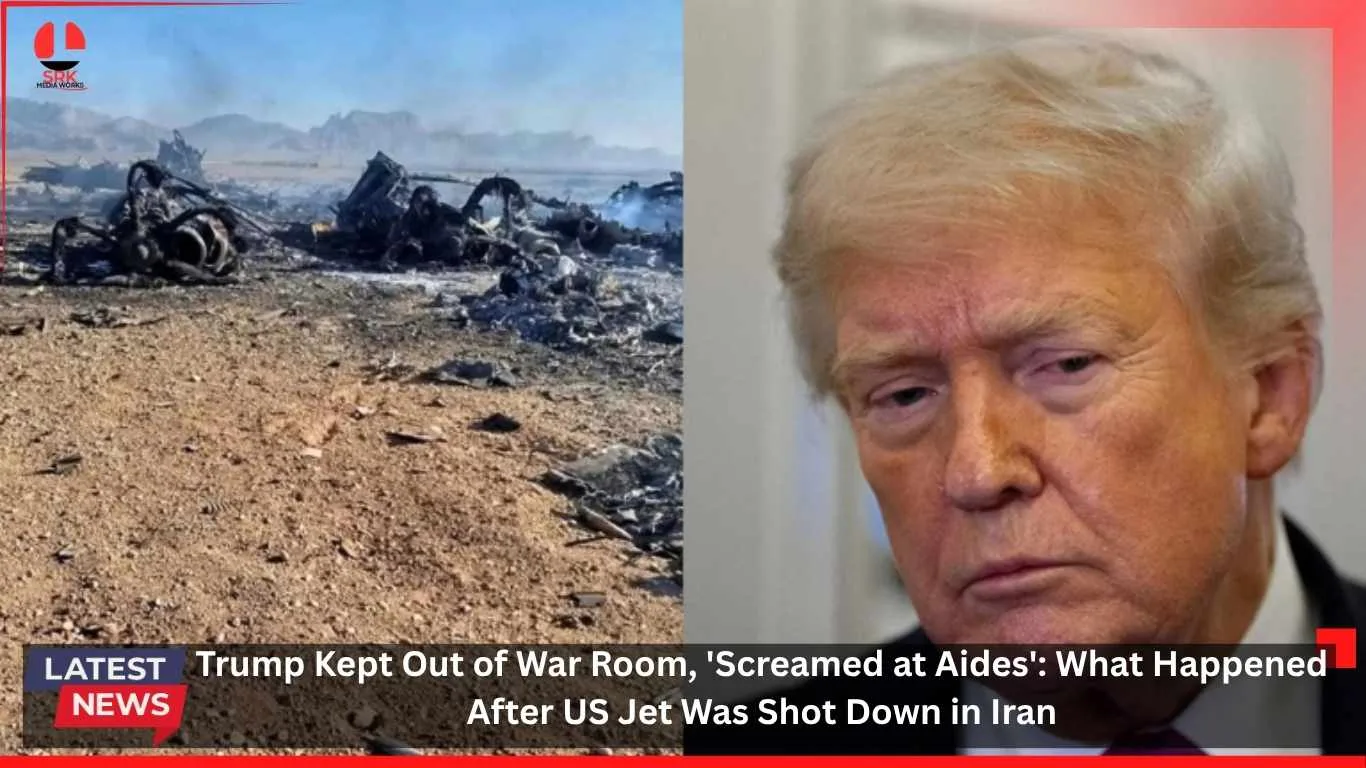
A dramatic series of events unfolded in Washington after a US military jet was reportedly shot down in Iranian territory, sparking chaos inside the White House. According to insider accounts, former President Donald Trump was kept out of the war room during critical decision-making moments, leading to a heated confrontation with aides. Reports suggest Trump “screamed at aides” after being sidelined, highlighting deep divisions within the administration over how to respond to the crisis.
The Incident
The downing of the US jet by Iranian forces immediately escalated tensions between Washington and Tehran. Military officials rushed to assess the situation, while intelligence agencies scrambled to verify details. The war room became the center of activity, but Trump’s exclusion from the initial discussions raised eyebrows and fueled speculation about internal disagreements.
Key Developments:
- US jet shot down in Iranian territory.
- Trump reportedly excluded from war room deliberations.
- Heated exchanges between Trump and senior aides.
- Military and diplomatic channels activated to prevent escalation.
Internal White House Dynamics
The decision to keep Trump out of the war room was reportedly made by senior military and national security officials who feared impulsive reactions. This move, however, triggered anger from Trump, who demanded immediate retaliation and accused aides of undermining his authority.
| Actor | Role | Reaction | Impact |
|---|---|---|---|
| Trump | Commander-in-Chief | Anger, demanded retaliation | Heightened internal conflict |
| Military Officials | Crisis managers | Advocated caution | Prevented immediate escalation |
| National Security Team | Advisors | Focused on diplomacy | Balanced military response |
| Aides | Mediators | Faced Trump’s fury | Strained relationships |
Pivot Analysis of Decision-Making
| Factor | Military Position | Trump’s Position | Outcome |
|---|---|---|---|
| Retaliation | Advocated restraint | Immediate strike | Delay in response |
| Diplomacy | Engage allies | Skeptical | Limited outreach |
| Public Messaging | Controlled narrative | Aggressive rhetoric | Mixed signals |
| Long-Term Strategy | Avoid escalation | Show strength | Policy uncertainty |
Global Reactions
The incident drew swift responses from international stakeholders. Allies expressed concern over the potential for escalation, while adversaries monitored Washington’s internal divisions. The European Union called for restraint, China urged dialogue, and Russia criticized US military presence in the region.
International Responses:
- EU: Urged de-escalation and diplomatic talks.
- China: Called for dialogue and stability.
- Russia: Criticized US military operations near Iran.
- Gulf States: Heightened security measures amid fears of regional conflict.
Military Context
The downing of the US jet underscored the volatility of the Gulf region. Iran’s Revolutionary Guard claimed responsibility, framing the act as defense against perceived aggression. US military officials, however, viewed it as a deliberate provocation.
| Scenario | US Military View | Iranian View | Regional Effect |
|---|---|---|---|
| Defensive Action | Provocation | Protection of sovereignty | Heightened tensions |
| Escalation Risk | High | Controlled | Regional instability |
| Diplomatic Path | Necessary | Conditional | Possible de-escalation |
Economic Implications
Global markets reacted sharply to the news. Oil prices surged amid fears of supply disruptions, while investors sought safe havens. The uncertainty surrounding Washington’s response added to volatility.
| Scenario | Oil Price Impact | Global Economic Effect |
|---|---|---|
| Immediate Retaliation | Sharp increase | Inflationary pressures |
| Diplomatic Resolution | Stabilization | Market confidence |
| Prolonged Stalemate | Continued volatility | Investor uncertainty |
Historical Context
US-Iran relations have been marked by decades of mistrust, sanctions, and military confrontations. The latest incident echoes past crises where miscalculations risked spiraling into full-scale conflict. Trump’s exclusion from the war room reflects concerns about leadership style and decision-making under pressure.
Possible Outcomes
- Military Escalation: Direct confrontation between US and Iranian forces.
- Diplomatic Engagement: Allies push for talks to prevent war.
- Internal Division: Continued rift within Washington over strategy.
- Stalemate: Prolonged tension without resolution.
Conclusion
The exclusion of Trump from the war room and his reported outburst after the US jet was shot down in Iran highlight the fragility of decision-making during crises. The incident underscores the risks of internal divisions at the highest levels of power, with global implications for security, diplomacy, and economic stability. The coming days will determine whether restraint or retaliation defines Washington’s response.
Disclaimer
This article is an analytical overview of reported events following the downing of a US jet in Iran. It is based on available accounts and historical context, and does not represent official government positions. Readers should follow authoritative updates for the latest developments.