




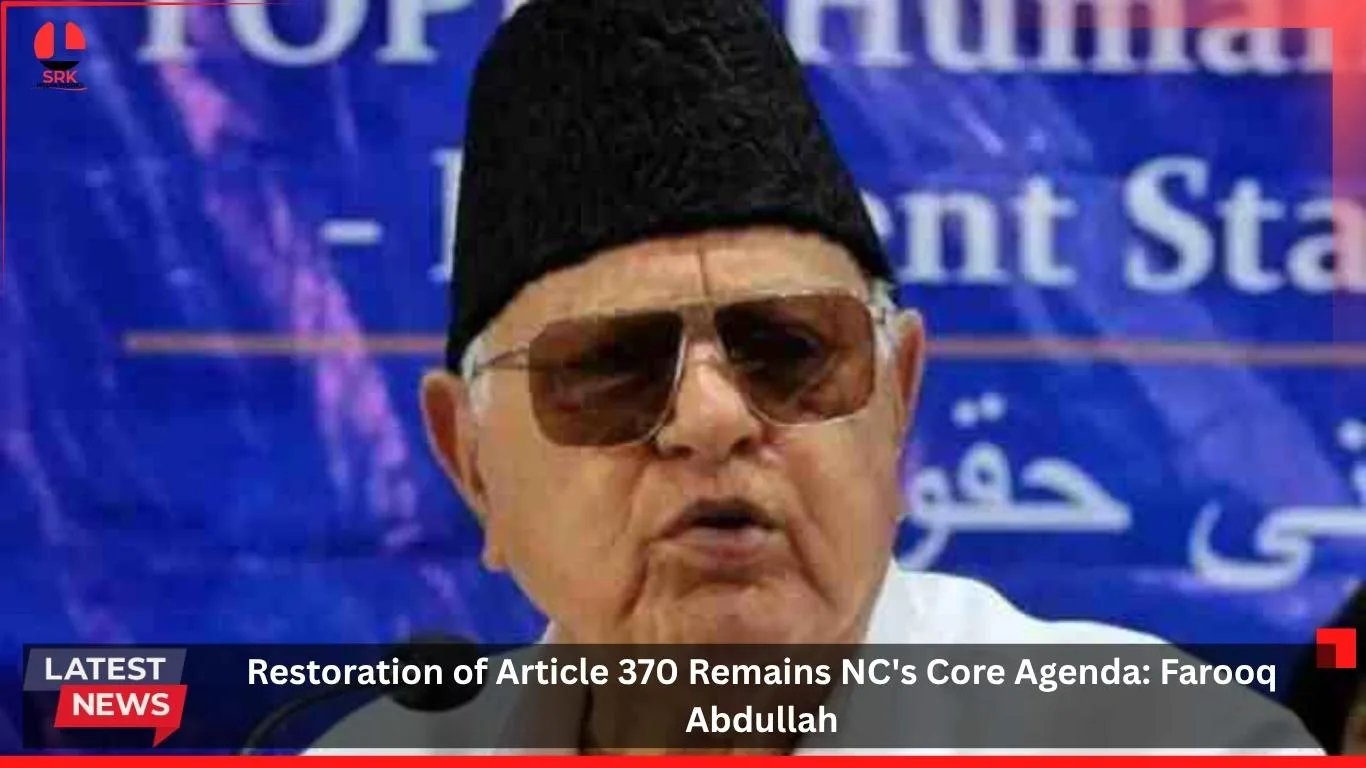
National Conference (NC) president Farooq Abdullah has reiterated that the restoration of Article 370 continues to remain the party’s core political agenda. Speaking at a public gathering, Abdullah emphasized that the abrogation of Article 370 in August 2019 had stripped Jammu and Kashmir of its special constitutional status, and the NC would persist in its demand for reinstatement.
Key Highlights
- Farooq Abdullah’s Statement: Restoration of Article 370 is NC’s central agenda.
- Political Context: Article 370 abrogated in 2019, revoking J&K’s special status.
- NC’s Position: Party vows to continue political and legal struggle.
- Public Sentiment: Mixed reactions, with supporters backing NC’s stance and critics questioning its feasibility.
- Electoral Impact: Restoration remains a defining issue in J&K politics.
Why Article 370 Matters
Article 370 granted Jammu and Kashmir special autonomy within the Indian Union. Its abrogation in 2019 by Parliament was seen as a historic move by the central government, but it also triggered widespread debate and political opposition in the region.
- Autonomy: Allowed J&K to have its own constitution and legislative powers.
- Identity: Seen as a safeguard for cultural and political uniqueness.
- Economic Impact: Critics argue abrogation opened doors for investment, while supporters of restoration claim it undermined local rights.
Snapshot of NC’s Agenda
| Category | Details |
|---|---|
| Party | National Conference (NC) |
| Leader | Farooq Abdullah |
| Core Agenda | Restoration of Article 370 |
| Strategy | Political and legal struggle |
| Public Reaction | Divided – support and skepticism |
Farooq Abdullah’s Position
Abdullah stressed that NC’s fight is not merely political but also constitutional. He argued that the abrogation was carried out without the consent of the people of Jammu and Kashmir and undermined the federal structure of India.
- Legal Challenge: NC continues to pursue the matter in courts.
- Political Mobilization: Party rallies emphasize restoration as a central theme.
- Symbolic Appeal: Abdullah frames Article 370 as a matter of dignity and identity.
Opposition and Criticism
Other political parties in Jammu and Kashmir have taken varied positions:
- PDP: Supports restoration, aligning with NC’s stance.
- BJP: Strongly opposes restoration, calling abrogation a step toward integration.
- Regional Parties: Divided, with some focusing on development rather than constitutional status.
Comparative Political Positions
| Party | Position on Article 370 |
|---|---|
| National Conference | Full restoration |
| PDP | Restoration with autonomy |
| BJP | Opposes restoration |
| Regional Independents | Mixed views |
Public Sentiment
The issue continues to polarize public opinion in Jammu and Kashmir:
- Supporters of Restoration: Argue it is essential for preserving identity and autonomy.
- Opponents: Believe abrogation has brought integration and development opportunities.
- Neutral Voices: Call for focus on jobs, infrastructure, and peace rather than constitutional debates.
Electoral Impact
Restoration of Article 370 remains a defining electoral issue in Jammu and Kashmir. NC’s insistence on making it the centerpiece of its campaign reflects its strategy to consolidate traditional support bases.
- Youth Engagement: Younger voters divided between identity politics and development priorities.
- Regional Balance: Kashmir Valley shows stronger support for restoration compared to Jammu.
- National Debate: The issue continues to resonate in wider Indian politics.
Electoral Dynamics Overview
| Region | Sentiment |
|---|---|
| Kashmir Valley | Strong support for restoration |
| Jammu | Mixed, leaning toward integration |
| Ladakh | Focus on separate identity post-2019 |
| National Politics | Divided along party lines |
Conclusion
Farooq Abdullah’s reaffirmation that restoration of Article 370 remains NC’s core agenda underscores the continuing centrality of the issue in Jammu and Kashmir’s political discourse. While the abrogation reshaped the region’s constitutional status, NC’s persistence highlights that the debate over autonomy, identity, and integration is far from settled.
Disclaimer
This article is a political news analysis created for informational purposes only. It reflects reported statements and interpretations of Farooq Abdullah’s position on Article 370. Official policy decisions, legal outcomes, and electoral results are subject to confirmation by the Government of India, judiciary, and Election Commission.