




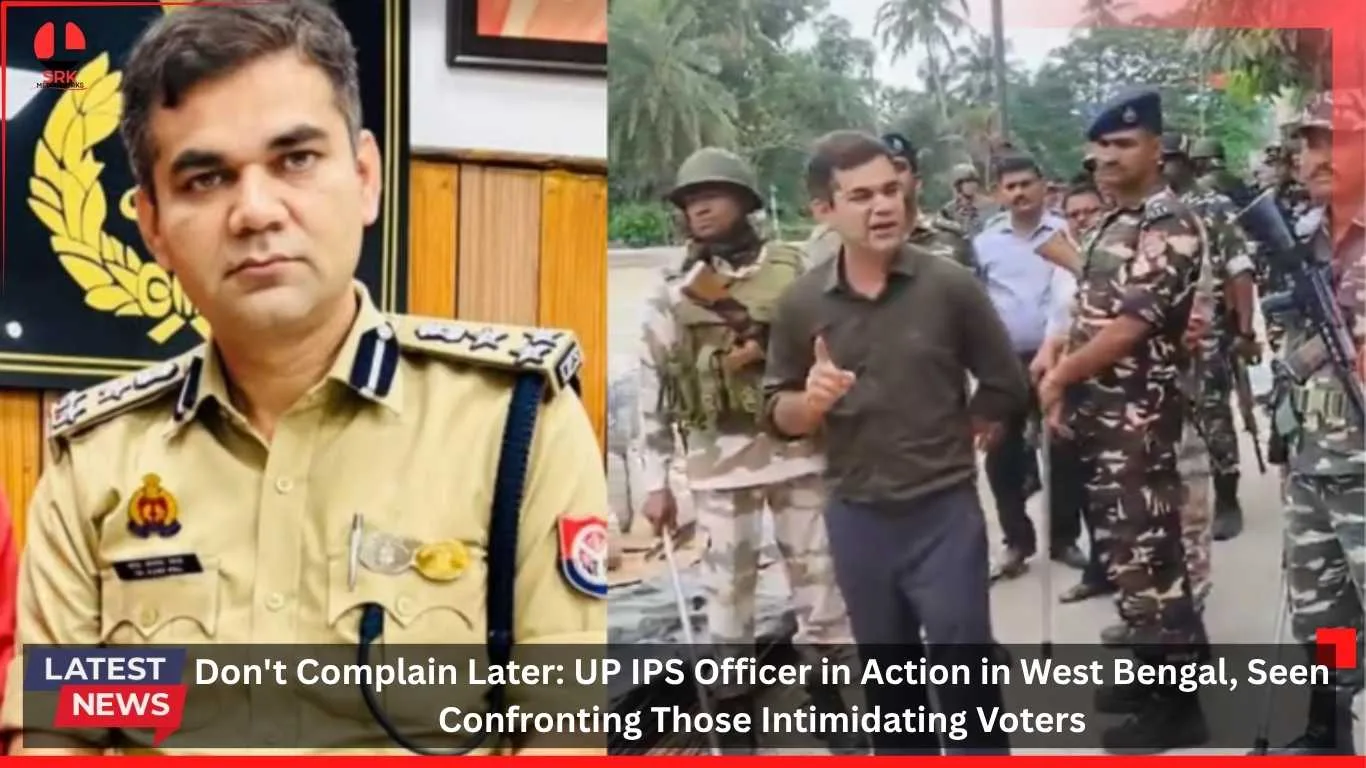
An IPS officer from Uttar Pradesh, deployed in West Bengal for election duty, has drawn attention for his firm stance against voter intimidation. The officer was seen confronting individuals allegedly attempting to scare voters away from polling booths, warning them bluntly: “Don’t complain later.” His actions have sparked debate about law enforcement’s role in ensuring free and fair elections in politically sensitive states.
Key Highlights
- Officer’s Origin: Senior IPS officer from Uttar Pradesh, deployed in West Bengal.
- Incident: Confronted individuals accused of intimidating voters.
- Message: “Don’t complain later” – a warning against unlawful conduct.
- Impact: Reinforced Election Commission’s commitment to free and fair polls.
- Public Reaction: Mixed – praised by some, criticized by others.
Why the Incident Matters
Election duty officers are tasked with maintaining law and order during polling. In states like West Bengal, where elections often witness high tensions, the presence of officers from outside the state is meant to ensure neutrality.
- Neutral Policing: Officers from other states are seen as less influenced by local politics.
- Deterrence: Visible action against intimidation reassures voters.
- Symbolism: The officer’s words reflect a proactive approach to law enforcement.
Snapshot of Election Duty
| Category | Details |
|---|---|
| Officer Origin | Uttar Pradesh |
| Deployment Location | West Bengal |
| Role | Election duty, law enforcement |
| Incident | Confrontation with intimidators |
| Message | “Don’t complain later” |
Voter Intimidation in Focus
Voter intimidation has long been a concern in West Bengal elections. Allegations of booth capturing, threats, and violence have often marred the democratic process.
- Historical Pattern: Reports of clashes during polling in past elections.
- Current Scenario: Election Commission deploying central and state forces to ensure safety.
- Public Confidence: Strong policing seen as essential for voter turnout.
Voter Intimidation Overview
| Factor | Impact |
|---|---|
| Threats at Booths | Reduced voter turnout |
| Violence | Fear among communities |
| Police Action | Restores confidence |
| Neutral Deployment | Ensures fairness |
Public Reaction
The officer’s actions have drawn mixed responses:
- Supporters: Applaud his courage and direct approach.
- Critics: Argue that such confrontations may escalate tensions.
- Neutral Observers: See it as a reflection of the challenges in conducting elections in volatile regions.
Political Context
West Bengal elections are often fiercely contested, with high stakes for both ruling and opposition parties. The deployment of officers from outside states reflects the Election Commission’s attempt to maintain impartiality.
- Ruling Party’s View: May see external officers as interference.
- Opposition’s View: Welcomes neutral policing to prevent malpractice.
- Election Commission’s Role: Ensures free and fair elections through strict monitoring.
Comparative Snapshot of Election Policing
| State | Strategy Used | Outcome |
|---|---|---|
| West Bengal | Deployment of external officers | Neutral enforcement |
| Uttar Pradesh | Heavy police presence | Reduced booth violence |
| Bihar | Central forces deployment | Improved voter turnout |
Conclusion
The incident of a UP IPS officer confronting voter intimidators in West Bengal highlights the challenges of conducting elections in politically charged environments. His warning, “Don’t complain later,” symbolizes the proactive role of law enforcement in safeguarding democracy.
Disclaimer
This article is a political news analysis created for informational purposes only. It reflects reported updates and interpretations of law enforcement actions during elections in West Bengal. Official statements, voter turnout data, and election outcomes are subject to confirmation by the Election Commission of India and relevant authorities.