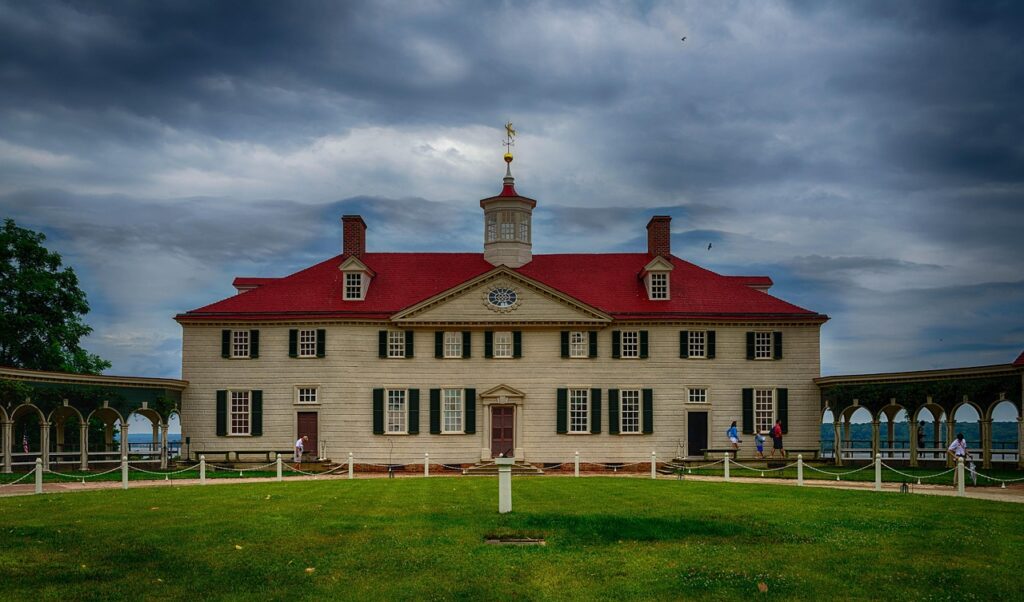

As the United States approaches its 250th anniversary, visitors are flocking to Mount Vernon, the Virginia estate of George Washington, to reconcile the first president’s vision with the complexities of modern American life. National correspondent Robert Costa reports that the site, which remains the most-visited historic house in the nation, has become a focal point for public discourse regarding the country’s founding principles and its current political trajectory.
The Weight of History at the Semiquincentennial
The upcoming 250th anniversary, or Semiquincentennial, serves as a catalyst for national self-reflection. Mount Vernon stands as a physical touchstone for this exercise, offering a tangible link to the late 18th century. Historians note that the site provides a unique opportunity to examine the evolution of the American identity through the lens of its primary architect.
While millions traverse the grounds annually, the questions posed by visitors have shifted over the decades. Modern tourists are increasingly focused on the paradoxes of the revolutionary era, specifically the tension between the pursuit of liberty and the realities of institutionalized slavery at Washington’s own home. This evolution in inquiry reflects a broader societal shift toward a more comprehensive and critical interpretation of American history.
Bridging the Gap Between Eras
Scholars argue that Washington’s world was defined by agrarian values, localized power, and a nascent democratic experiment. In contrast, today’s America is a globalized, technological superpower defined by rapid information exchange and intense political polarization. The central question for many visitors is whether the institutions designed by the Founding Fathers possess the elasticity required to survive these contemporary pressures.
Data from recent surveys suggests that public interest in founding-era history remains high, yet trust in the institutions created during that period is fluctuating. By engaging with the physical reality of Mount Vernon—the architecture, the landscape, and the preserved artifacts—visitors attempt to ground their understanding of modern citizenship in the original intent of the 1787 Constitutional Convention.
Expert Perspectives on the American Identity
Historians point out that Washington himself was deeply concerned with the longevity of the republic. His Farewell Address specifically warned against the dangers of factionalism and regional partisanship, themes that resonate with modern observers. Experts suggest that by studying his life, citizens are not merely looking backward, but are actively engaging in a process of defining what it means to be American in the 21st century.
The preservation efforts at Mount Vernon are not merely about maintaining a structure, but about maintaining a narrative. Organizations overseeing the site have moved toward a more transparent presentation of the enslaved community’s contributions, ensuring that the legacy of the estate is represented in its entirety. This approach addresses the demand for a more nuanced history that acknowledges both the achievements and the profound flaws of the founding generation.
Future Implications for National Discourse
As the 250th anniversary celebrations move closer, the role of historic sites will likely become more prominent in the national conversation. Analysts expect that public interest will shift toward how the nation intends to move forward rather than just how it began. The challenge for curators and educators will be to remain objective while facilitating a conversation that satisfies a public hungry for meaning in an era of rapid transformation.
Observers should watch for how the Semiquincentennial programming balances celebration with critical analysis. The success of these commemorative efforts will depend on their ability to weave disparate threads of American experience into a cohesive narrative that speaks to a diverse, modern audience. Ultimately, the question of whether Washington would recognize his creation remains secondary to the question of whether modern Americans can recognize themselves in his legacy.