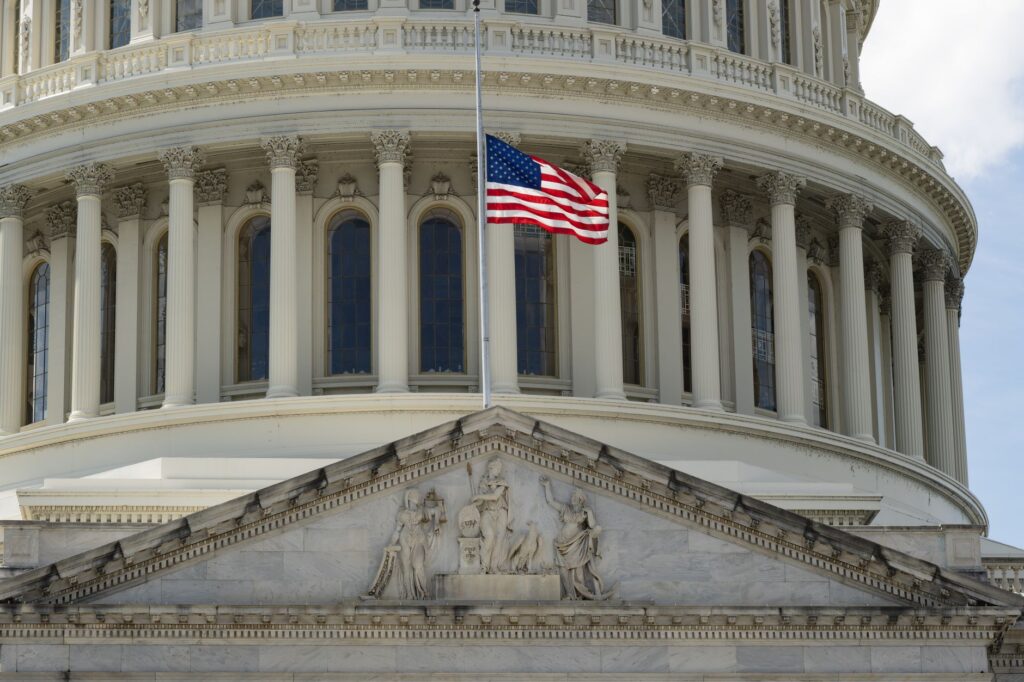

Following the sudden death of veteran U.S. Senator Lindsey Graham late Saturday in Washington, D.C., South Carolina Governor Henry McMaster faces the immediate constitutional duty of appointing a temporary successor, igniting a high-stakes scramble within the Republican Party to fill the coveted Senate seat.
The Constitutional Framework and Timeline
Under South Carolina state law, the governor holds the authority to appoint an interim senator to serve until a special election is conducted. Because the vacancy occurred mid-term, state statutes dictate that a special election must be held to determine who will serve the remainder of Graham’s term, which was set to expire in January 2027.
Political analysts expect Governor McMaster to act swiftly to ensure South Carolina maintains its full representation in the upper chamber. The appointee will hold the seat during a period of intense legislative battles in Washington, making the selection highly consequential for the national Republican agenda.
According to the South Carolina State Election Commission, the timing of the special election will depend on the official declaration of the vacancy. Historically, these elections are scheduled to align with the next statewide general election cycle to maximize voter turnout and minimize administrative costs.
A Legacy of Influence and Controversy
First elected to the Senate in 2002 after serving in the U.S. House of Representatives during the Clinton impeachment, Graham built a reputation as a defense hawk. Alongside the late Senator John McCain, he traveled the globe advocating for a muscular American foreign policy and robust military funding.
In his later years, Graham transitioned from a vocal critic of Donald Trump to one of his most trusted confidants in Congress. This shift alienated some moderate supporters but solidified his standing among the conservative base in South Carolina, enabling him to easily win re-election in 2020 against a well-funded Democratic challenger.
His death leaves a void in the Senate Judiciary Committee, where he served as the ranking member. His aggressive defense of conservative judicial nominees, most notably during the contentious confirmation hearings for Supreme Court Justice Brett Kavanaugh, cemented his status as a hero to the right and a primary target for the left.
Potential Successors in the Spotlight
The sudden vacancy has thrust several prominent South Carolina political figures into the national spotlight as potential contenders for the appointment. Among the frontrunners is U.S. Representative Nancy Mace, who has cultivated a high-profile national brand representing the state’s 1st Congressional District.
Mace’s independent streak and frequent television appearances have made her a household name, though her occasionally turbulent relationship with the state party leadership could complicate her prospects. Conversely, Representative Ralph Norman of the 5th Congressional District offers a staunchly conservative alternative aligned with the House Freedom Caucus.
State Attorney General Alan Wilson is also widely considered a top-tier candidate. Having served as the state’s chief legal officer since 2011, Wilson possesses deep roots within the state’s Republican establishment and a proven track record of winning statewide elections.
Other names circulating in political circles include former Governor Nikki Haley, though insiders suggest she may decline to seek a return to public office at this juncture. Lieutenant Governor Pamela Evette is also viewed as a viable dark-horse candidate who would provide continuity for McMaster’s administration.
National Implications and Senate Balance
The loss of Senator Graham, who served in the Senate since 2003, fundamentally alters the landscape of the chamber. As a senior member of the Senate Judiciary Committee and a leading voice on foreign policy, Graham wielded immense influence over judicial confirmations and defense spending.
“Senator Graham was a master legislative strategist who bridged different factions of the Republican Party,” said Dr. Gibbs Knotts, a political science professor at the College of Charleston. “Replacing his institutional knowledge and committee leverage is an impossible task for any freshman senator.”
With the Senate currently divided on razor-thin margins, the temporary vacancy briefly reduces the Republican voting bloc. While Governor McMaster’s appointee will undoubtedly be a Republican, the transition period could temporarily stall key committee votes where Graham’s presence was pivotal.
The Trump Factor in the Selection
Any decision made by Governor McMaster will inevitably be viewed through the lens of national Republican politics, particularly the influence of former President Donald Trump. Graham maintained a complex but ultimately close relationship with Trump, acting as a key liaison between the populist wing and the traditional establishment of the party.
McMaster, an early and loyal supporter of Trump, is expected to consult closely with the former president’s advisors before finalizing his decision. A candidate who secures Trump’s endorsement would immediately become the prohibitive favorite in the subsequent special election primary.
Data from recent South Carolina primary elections highlights the decisive power of a Trump endorsement in the state. In the 2022 primaries, candidates backed by the former president won their contests by an average margin of over 15 percentage points, underscoring the necessity of alignment with the national party brand.
What to Watch Next
In the coming days, Governor McMaster is expected to hold a press conference to outline the official timeline for the appointment. Behind closed doors, intense lobbying efforts are already underway as candidates position themselves for both the interim appointment and the grueling campaign that will follow.
The fast-approaching special election primary will serve as a critical test of the state’s political direction. Observers will closely watch whether South Carolina Republicans lean toward a populist outsider or a traditional establishment figure to succeed one of the most influential senators in the state’s modern history.