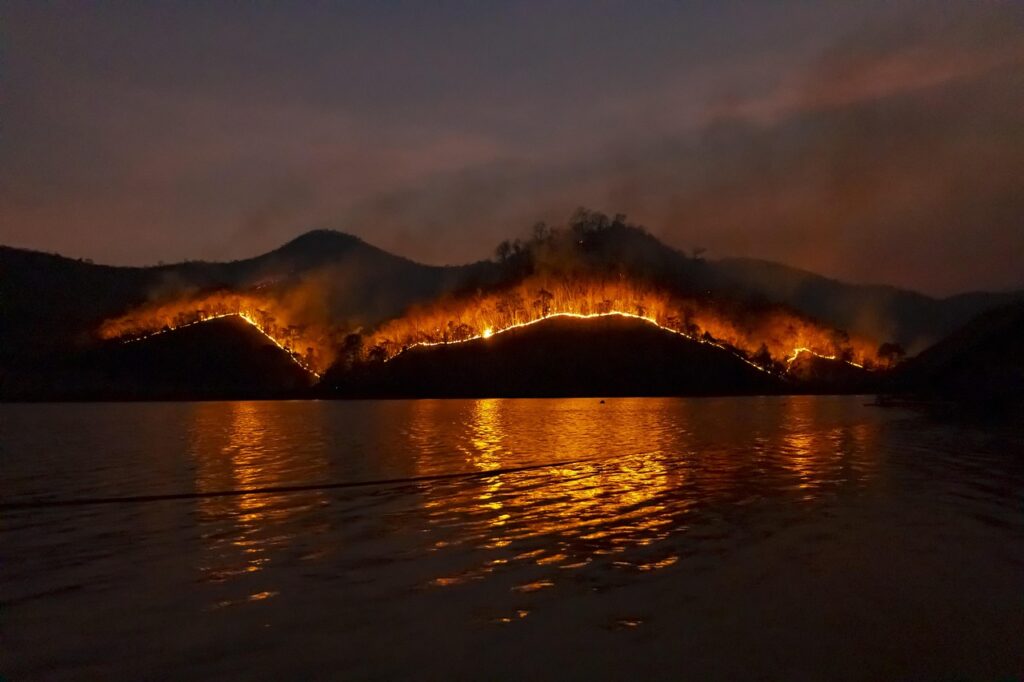

A catastrophic wildfire currently ravaging Utah, known as the Cottonwood Fire, has turned deadly, claiming the lives of three elite federal firefighters over the weekend. As high winds and record-breaking temperatures continue to accelerate the blaze’s spread, thousands of emergency personnel are mobilizing across the American West to combat nearly 100 active wildfires currently burning throughout the region.
A Growing Crisis in the American West
The situation in Utah represents the most severe fire event in the state’s recent history, according to Governor Spencer Cox. State and federal agencies have shifted resources to the Cottonwood Fire, which has already incinerated vast tracts of land and forced mandatory evacuations for numerous communities.
This surge in wildfire activity follows a prolonged period of drought and extreme heat that has left forest floors tinder-dry. The National Interagency Fire Center (NIFC) reports that the current fire season has been characterized by longer durations and higher intensities than the historical average, complicating containment efforts significantly.
Operational Challenges and Resource Deployment
Fire crews are battling not only the flames but also erratic wind patterns that frequently shift the fire’s direction, making it difficult to establish effective containment lines. Elite hotshot crews—highly trained teams that specialize in fighting remote, high-intensity fires—are currently operating at their capacity limits.
Meteorologists warn that the combination of low humidity and high-velocity gusts creates a ‘perfect storm’ for fire expansion. Rob Marciano noted that the immediate weather forecast offers little relief, as hot, dry conditions are expected to persist throughout the week, further stressing the exhausted ground crews.
The Human and Environmental Cost
The loss of three federal firefighters has sent shockwaves through the emergency management community, highlighting the escalating dangers faced by those on the front lines. These elite units often work in rugged terrain with limited access to water, relying instead on manual fireline construction and controlled burns to starve the fire of fuel.
Data from the NIFC indicates that the cumulative acreage burned across the U.S. this year is trending significantly higher than the ten-year average. Beyond the immediate threat to life and property, the fires are releasing massive amounts of carbon into the atmosphere and permanently altering local ecosystems, which may take decades to recover.
Looking Ahead
The immediate future remains precarious for residents of the American West as fire officials monitor shifting wind models and prepare for potential new ignitions. Industry experts are now calling for a fundamental shift in land management policies, focusing on long-term forest thinning and the integration of advanced satellite monitoring to detect ignitions before they reach an unmanageable scale.
Observers should watch for upcoming federal budget adjustments regarding wildfire suppression, as the current rate of spending is rapidly outpacing historical allocations. Additionally, as the fire season extends into later months, the strain on national mutual aid agreements between states will likely serve as a primary indicator of whether current firefighting strategies remain sustainable in an era of climate volatility.