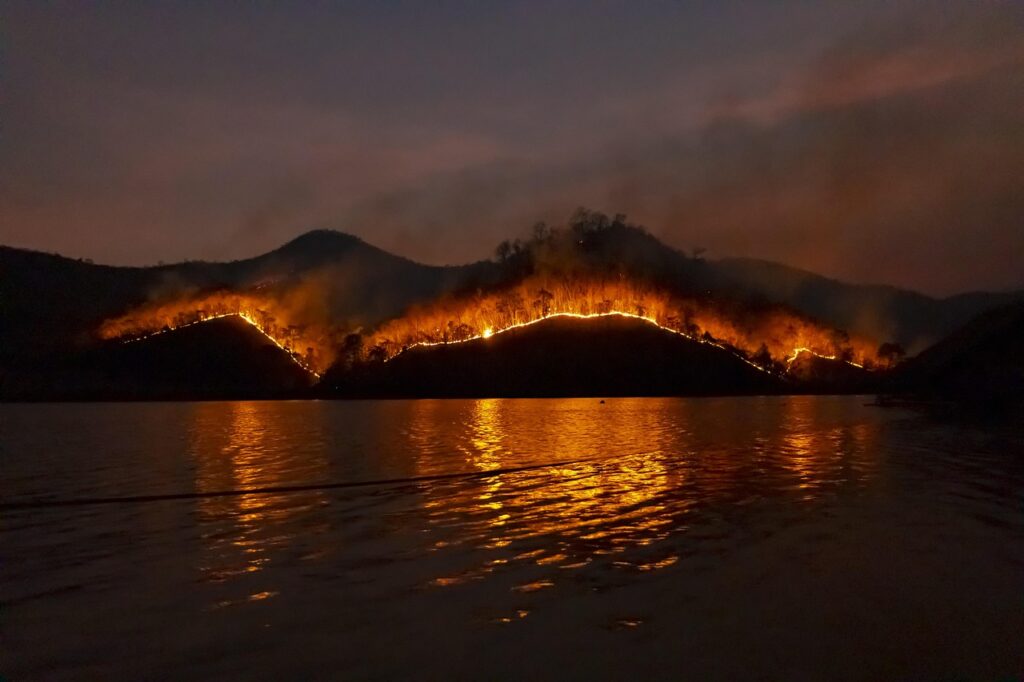

A catastrophic wildfire outbreak across the American West reached a tragic turning point this weekend as three elite federal firefighters lost their lives while battling the rapidly spreading Cottonwood Fire in Utah. State officials, including Governor Spencer Cox, have warned that the blaze, fueled by record-high temperatures and relentless wind gusts, currently threatens to become the most destructive wildfire in the state’s recorded history.
As of Monday, nearly 100 active wildfires are currently burning across the western United States, stretching federal, state, and local emergency response agencies to their limits. Thousands of additional personnel have been deployed to the front lines, joining the ongoing effort to contain flames that have already consumed vast swaths of forest and brushland.
A Season of Unprecedented Risk
The current wildfire conditions are the result of a long-term convergence of environmental factors that have plagued the region for several months. Prolonged drought conditions have left vegetation in the intermountain West critically dry, creating what fire ecologists describe as “tinderbox” conditions across high-elevation timber zones.
Meteorologists indicate that the current weather pattern, characterized by low humidity and high-velocity winds, is preventing containment efforts. These “red flag” conditions allow small embers to travel miles ahead of the main fire front, starting new spot fires and making traditional firebreaks ineffective.
The Human Toll of Escalating Wildfires
The deaths of the three federal firefighters have prompted a national conversation regarding the increasing danger of wildfire suppression in an era of climate volatility. The National Interagency Fire Center (NIFC) reports that fire seasons are now lasting weeks longer than they did just two decades ago, placing a consistent, high-level strain on elite crews.
“The intensity we are seeing with the Cottonwood Fire is not an anomaly, but rather a reflection of the new normal,” said a spokesperson for the Bureau of Land Management. Data from the National Weather Service suggests that the combination of heat waves and wind events is occurring with greater frequency, complicating tactics for incident commanders who must prioritize the safety of their crews over property protection.
Economic and Environmental Consequences
The destruction of infrastructure and local ecosystems poses a significant long-term challenge for Utah’s rural communities. Beyond the immediate loss of property, the scorched earth risks massive soil erosion and the contamination of water watersheds that support local agriculture and municipal water supplies.
Insurance analysts note that the increasing frequency of these “mega-fires” is forcing a re-evaluation of property premiums in the Western United States. With fire perimeters expanding more rapidly than in previous decades, the financial burden on state emergency funds is reaching record levels, requiring federal intervention to manage recovery costs.
Future Outlook and Vigilance
As the Cottonwood Fire continues to challenge containment efforts, authorities are urging residents in surrounding counties to maintain high levels of situational awareness. Forecasts for the coming week suggest little relief, with high temperatures expected to persist through the weekend, potentially exacerbating fire behavior.
Stakeholders will be closely monitoring how these fires influence state wildfire mitigation policies and federal funding allocations for the next fiscal year. Observers should look for updates on containment percentages and potential evacuation orders, as shifting wind patterns remain the primary variable in the fire’s unpredictable trajectory.