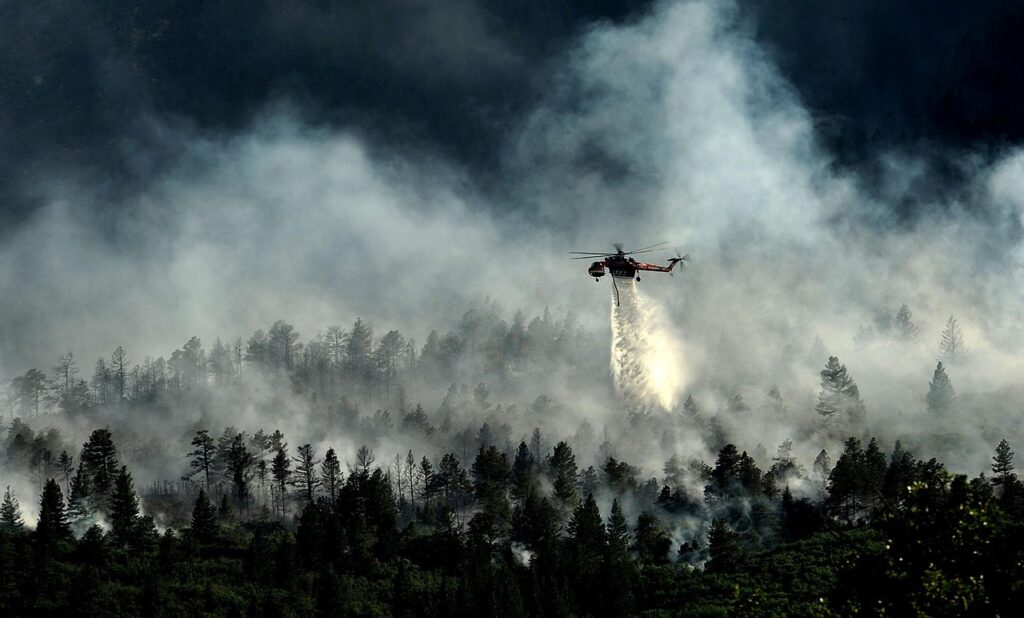

The Aspen Acres Fire has scorched thousands of acres across southern Colorado this week, destroying 55 homes in Custer County and claiming more than 100 structures within Pueblo County. Local emergency management agencies confirmed the extensive property damage on Thursday as crews continue to battle shifting winds and rugged terrain that have hindered containment efforts since the blaze ignited early Tuesday morning.
A History of Increasing Volatility
Southern Colorado has faced a volatile fire season this year, driven by prolonged drought conditions and unseasonably high temperatures. The region’s landscape, characterized by dense pinyon-juniper forests and dry underbrush, has created a tinderbox environment for wildfires to spread with rapid intensity.
Historically, Custer and Pueblo counties have been vulnerable to late-summer fire outbreaks. However, fire behavior analysts note that the speed at which the Aspen Acres Fire moved through residential zones is unprecedented for this time of the season.
Displacement and Emergency Response
State and federal resources, including heavy air tankers and specialized hotshot crews, have been deployed to protect remaining residential clusters. Thousands of residents remain under mandatory evacuation orders as fire officials prioritize life safety over property containment.
The American Red Cross has established multiple shelters in nearby municipalities to support displaced families. Local authorities are currently coordinating with insurance providers and disaster relief organizations to begin the long-term recovery process for those who lost their primary residences.
Expert Perspectives on Fire Behavior
Meteorologists attribute the fire’s explosive growth to a combination of low humidity and high-velocity wind gusts that grounded aerial support during critical hours. According to data from the National Interagency Fire Center, such atmospheric conditions are becoming more frequent, complicating traditional firefighting strategies.
Environmental experts point to the accumulation of forest debris and invasive vegetation as key factors in the fire’s intensity. “We are seeing fires that behave differently than they did even a decade ago,” says wildfire mitigation consultant Dr. Sarah Vance. “The combination of fuel load and extreme weather events is testing the limits of our current response infrastructure.”
Broader Industry Implications
The destruction of over 150 structures highlights the growing risk to rural residential developments in the Wildland-Urban Interface (WUI). Insurance companies are already signaling potential rate adjustments for properties located in high-risk zones, reflecting the rising costs of catastrophic wildfire claims.
For homeowners in similar regions, the event serves as a stark reminder of the importance of fire-resistant building materials and defensible space maintenance. Industry analysts expect that building codes in southern Colorado will face increased scrutiny as officials look for ways to harden infrastructure against future disasters.
Looking ahead, meteorologists are monitoring a cold front expected to move into the region by the weekend, which may provide much-needed moisture and lower temperatures. Residents are advised to stay tuned to local emergency alerts as containment lines are surveyed and the threat to outlying subdivisions is re-evaluated.