



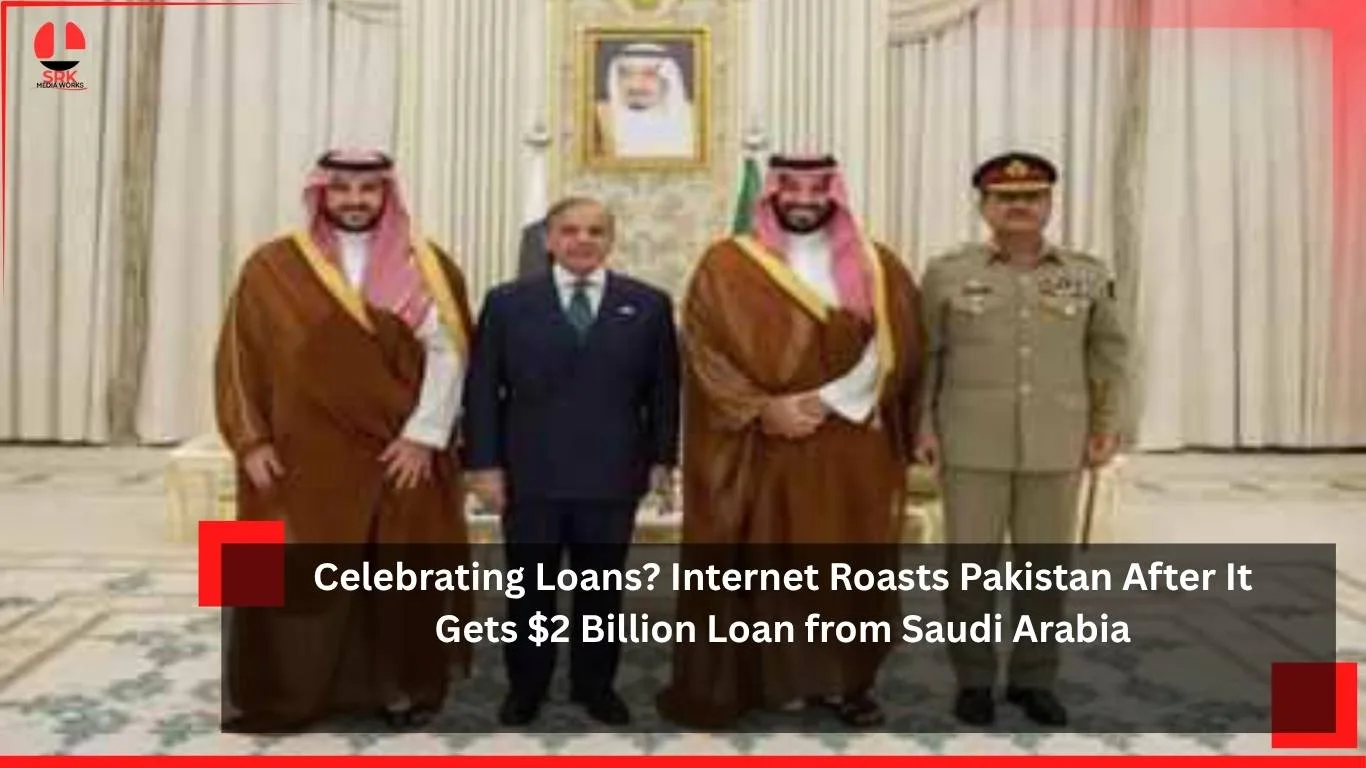
Pakistan has once again found itself at the center of online ridicule after securing a $2 billion loan from Saudi Arabia. While the government hailed the financial support as a lifeline for the struggling economy, social media users across the globe mocked the celebratory tone, questioning why loans are being treated as achievements rather than reminders of economic vulnerability.
The Loan Agreement
Saudi Arabia’s financial assistance comes at a time when Pakistan is grappling with rising inflation, dwindling foreign reserves, and mounting external debt. The $2 billion loan is expected to provide temporary relief, helping stabilize the currency and meet immediate import requirements.
Key Features of the Loan:
- Amount: $2 billion.
- Purpose: Stabilize reserves, support imports, and ease fiscal pressure.
- Terms: Short-term financial support with repayment obligations.
- Source: Saudi Arabia’s financial cooperation with Pakistan.
Government’s Reaction
Pakistani officials celebrated the loan as a major diplomatic and economic success. Statements from government representatives emphasized Saudi Arabia’s continued support and friendship, portraying the loan as a symbol of strong bilateral ties.
Government Highlights:
- Loan seen as proof of Saudi trust in Pakistan.
- Officials claim it will stabilize the economy.
- Emphasis on strengthening bilateral relations.
- Calls for public support of government’s financial strategy.
Internet Backlash
Social media platforms erupted with criticism, with many users mocking the celebratory tone of the government’s announcement. Critics argued that loans should not be celebrated, as they represent financial dependency and long-term repayment burdens.
Online Reactions:
- Memes comparing loans to “begging bowls.”
- Sarcastic comments about celebrating debt.
- Criticism of government’s inability to generate revenue.
- Concerns about Pakistan’s growing reliance on external aid.
| Sentiment Category | Percentage | Remarks |
|---|---|---|
| Critical | 60% | Mockery of loan celebrations |
| Neutral | 25% | Observing developments cautiously |
| Supportive | 15% | Viewing loan as necessary relief |
Economic Context
Pakistan’s economy has been under severe strain, with foreign reserves dropping to precarious levels. The loan from Saudi Arabia provides short-term relief but does not address structural issues such as low exports, high imports, and weak tax collection.
Economic Challenges:
- Rising inflation affecting households.
- Currency depreciation against the dollar.
- Heavy reliance on external borrowing.
- Limited industrial growth and export diversification.
Comparative Loan Assistance
Pakistan has received similar financial support from other countries and institutions in recent years.
| Year | Source of Loan/Assistance | Amount (USD) | Purpose |
|---|---|---|---|
| 2022 | IMF | $6 Billion | Economic stabilization |
| 2023 | China | $4 Billion | Infrastructure and reserves |
| 2024 | UAE | $1 Billion | Balance of payments support |
| 2026 | Saudi Arabia | $2 Billion | Reserve stabilization |
This comparison highlights Pakistan’s recurring reliance on external loans to manage its economy.
Political Implications
The loan has political ramifications, with the government using it to project diplomatic success. However, opposition parties have criticized the move, arguing that celebrating loans reflects poor governance and lack of sustainable economic planning.
Political Outcomes:
- Government claims diplomatic victory.
- Opposition highlights dependency and mismanagement.
- Public debate over long-term economic strategy.
- Increased scrutiny of fiscal policies.
Social Dimensions
Beyond economics and politics, the loan has sparked discussions about national pride and self-reliance. Many citizens expressed frustration over the repeated reliance on external aid, calling for reforms to strengthen domestic industries and reduce dependency.
Social Concerns:
- Loss of national dignity due to repeated borrowing.
- Public frustration with rising living costs.
- Calls for investment in education and industry.
- Demand for accountability in financial management.
Future Outlook
While the $2 billion loan provides temporary relief, Pakistan’s long-term economic stability will depend on structural reforms. Without addressing core issues such as tax collection, industrial growth, and export diversification, reliance on external loans will continue.
Possible Scenarios:
- Short-Term Relief: Loan stabilizes reserves temporarily.
- Continued Dependency: More loans required in future.
- Structural Reforms: Sustainable growth if reforms are implemented.
Disclaimer
This article is a detailed news analysis prepared for informational purposes only. It does not represent official government statements or financial advice. Readers are encouraged to verify details from credible sources before drawing conclusions. The content aims to highlight the economic, political, and social implications of Pakistan celebrating a $2 billion loan from Saudi Arabia.