







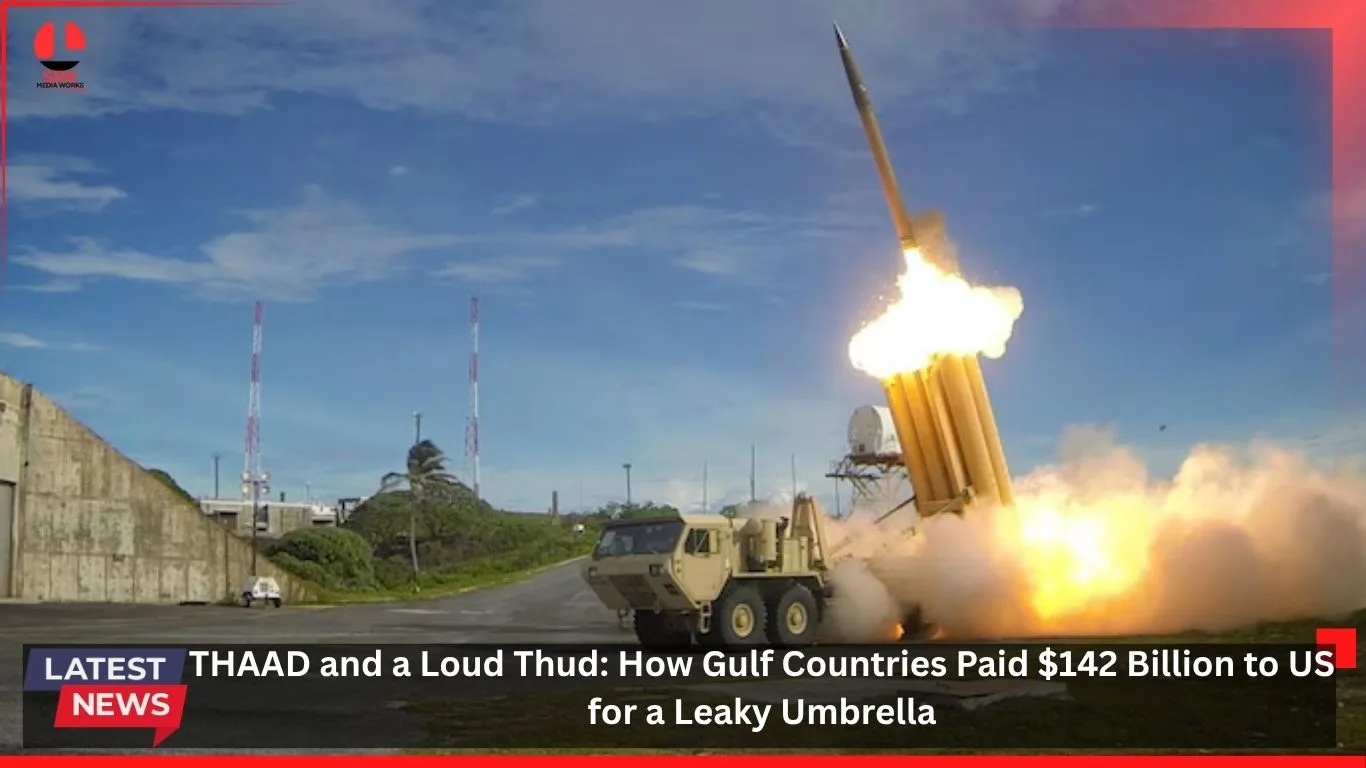
The Terminal High Altitude Area Defense (THAAD) system has long been marketed by the United States as a cutting-edge missile defense shield. Yet, recent developments and military engagements in West Asia have raised serious questions about its effectiveness. Gulf countries, particularly Saudi Arabia and the United Arab Emirates, have invested heavily in THAAD and other U.S. defense systems, reportedly spending around $142 billion over the past decade. Critics argue that despite this massive expenditure, the system has failed to provide the promised level of protection, leaving the region vulnerable to missile and drone attacks.
The Promise of THAAD
THAAD was designed to intercept short, medium, and intermediate-range ballistic missiles during their terminal phase of flight. It is part of the U.S. missile defense architecture and has been deployed in several regions worldwide.
- High-Tech Radar: Capable of tracking multiple targets simultaneously.
- Interceptor Missiles: Designed to destroy incoming threats through kinetic energy.
- Global Deployment: Used in South Korea, Guam, and the Middle East.
Gulf Countries’ Investment
Gulf nations have poured billions into acquiring THAAD and related defense systems, hoping to secure protection against regional threats, particularly from Iran and its allies.
| Country | Estimated Spending | Purpose |
|---|---|---|
| Saudi Arabia | $65 billion | Missile defense, air security |
| UAE | $40 billion | Regional defense, deterrence |
| Qatar | $20 billion | Strategic security |
| Others | $17 billion | Supplementary defense systems |
Analytical Pivot
| Factor | Gulf Countries’ Perspective | Critics’ Perspective |
|---|---|---|
| Security | Essential shield against Iran | Ineffective against drones and low-altitude missiles |
| Investment | Necessary for survival | Wasteful expenditure |
| Technology | Advanced U.S. systems | Overrated, leaky umbrella |
| Geopolitical | Strengthen ties with U.S. | Dependency without guaranteed protection |
The “Leaky Umbrella” Problem
Despite the massive investment, THAAD has struggled to counter evolving threats. Drone swarms, low-altitude cruise missiles, and asymmetric warfare tactics have exposed vulnerabilities in the system.
- Drone Attacks: Recent strikes on oil facilities bypassed THAAD defenses.
- Low-Altitude Missiles: Systems optimized for high-altitude threats failed against short-range attacks.
- Operational Costs: Maintenance and deployment expenses remain extremely high.
Strategic Implications
- For Gulf Nations: The reliance on U.S. defense systems raises questions about sovereignty and long-term sustainability.
- For the U.S.: While lucrative, the credibility of its defense exports is under scrutiny.
- For Regional Rivals: Iran and allied groups see vulnerabilities as opportunities to exploit.
- For Global Security: The limitations of THAAD highlight the challenges of modern missile defense.
Reactions
- Gulf Leaders: Defend the investments as necessary for survival in a hostile region.
- U.S. Officials: Emphasize THAAD’s successes while downplaying failures.
- Analysts: Point to the mismatch between expenditure and actual protection.
- Public Sentiment: Growing frustration over billions spent with limited results.
Broader Context
The Gulf’s defense spending reflects broader geopolitical realities. With tensions rising in West Asia, nations seek advanced systems to deter adversaries. Yet, the evolving nature of warfare—where drones and precision missiles dominate—has exposed the limitations of traditional missile defense.
Challenges Ahead
- Technological Gaps: THAAD was not designed for drone warfare.
- Financial Burden: $142 billion spent with questionable returns.
- Strategic Dependency: Reliance on U.S. systems limits regional autonomy.
- Escalation Risks: Vulnerabilities may embolden adversaries.
Future Outlook
The Gulf nations may need to rethink their defense strategies. Investments in indigenous technologies, drone countermeasures, and regional cooperation could provide more effective solutions. The U.S., meanwhile, faces pressure to upgrade its systems and prove their worth in real-world scenarios.
Conclusion
The story of THAAD in the Gulf is one of high expectations and disappointing realities. Despite spending $142 billion, Gulf countries find themselves under a “leaky umbrella,” vulnerable to modern threats that the system was not designed to counter. The episode underscores the need for adaptive defense strategies in an era where technology and warfare evolve faster than traditional systems can keep up.
Disclaimer
This article is based on publicly available reports and analytical perspectives. It does not represent official government positions. The content is intended for informational purposes only, highlighting defense investments and their implications. Readers are encouraged to consult multiple sources for a comprehensive understanding of the subject matter.