








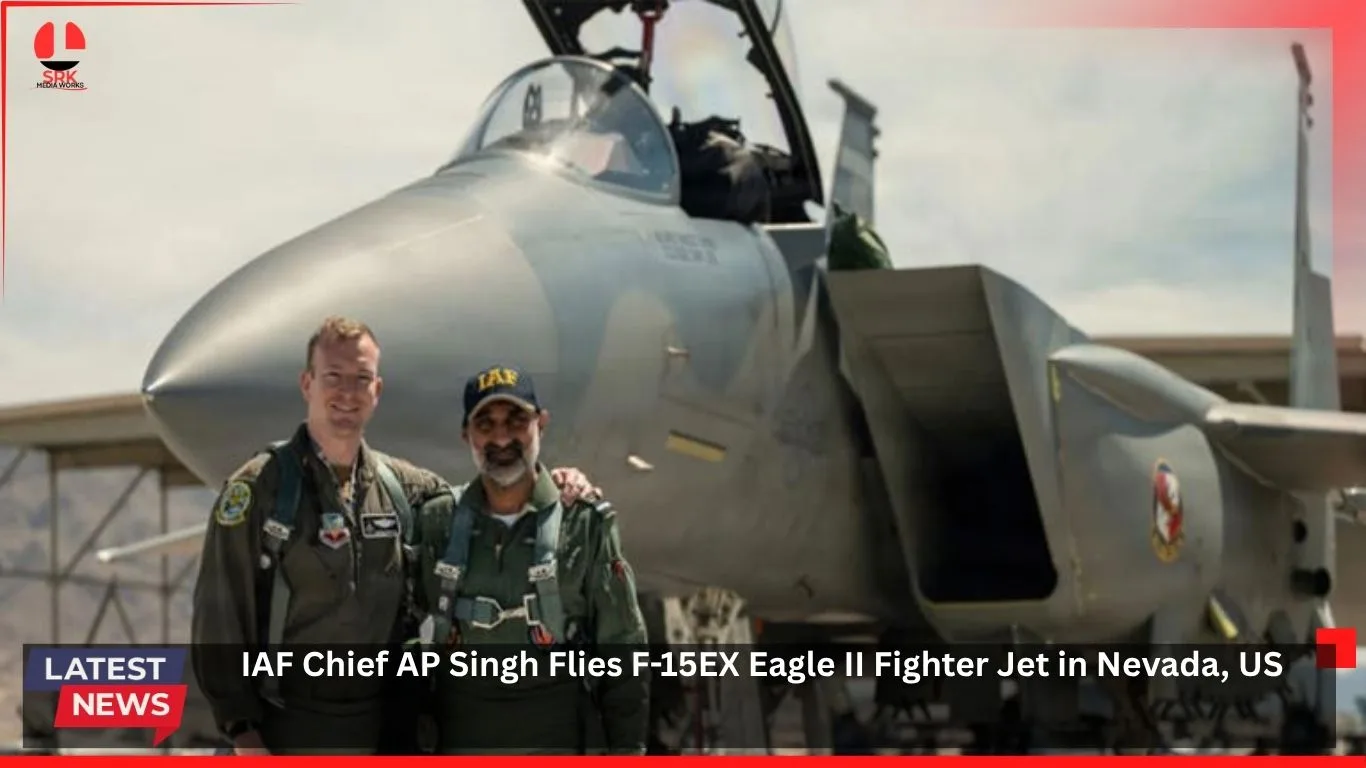
Indian Air Force (IAF) Chief Air Chief Marshal AP Singh recently flew the advanced F-15EX Eagle II fighter jet during his visit to Nevada, United States. This rare flight experience highlights the growing defense cooperation between India and the U.S., while also showcasing India’s interest in evaluating next-generation fighter aircraft for its future air combat needs. The event marks a significant milestone in bilateral military relations, as the IAF chief personally tested one of the most advanced fighter jets currently in service with the U.S. Air Force.
Significance of the Flight
The F-15EX Eagle II is among the most modern fighter jets in the world, equipped with advanced avionics, electronic warfare systems, and enhanced weapons capacity. For India, the opportunity to evaluate such a platform is crucial as the country continues to modernize its air force amid regional security challenges.
- Strengthening Bilateral Ties: The flight symbolizes deepening defense cooperation between India and the U.S.
- Technology Exposure: Provides Indian leadership firsthand experience of advanced U.S. fighter technology.
- Strategic Evaluation: Helps India assess potential options for future acquisitions or collaborations.
Features of the F-15EX Eagle II
| Feature | Description |
|---|---|
| Avionics | Advanced radar and electronic warfare systems |
| Weapons Capacity | Can carry up to 22 air-to-air missiles |
| Speed | Mach 2.5 capability |
| Range | Extended combat radius for long missions |
| Survivability | Enhanced protection against modern threats |
India’s Modernization Drive
India has been actively pursuing modernization of its air force to counter evolving threats in the region. With aging fleets like the MiG-21 being phased out, India is exploring advanced platforms to strengthen its aerial capabilities. The evaluation of the F-15EX aligns with India’s broader strategy of diversifying its defense procurement and enhancing interoperability with global partners.
Strategic Implications
- Regional Security: India’s interest in advanced fighters reflects its need to maintain air superiority in South Asia.
- U.S.-India Defense Cooperation: The flight demonstrates trust and collaboration between the two nations.
- Future Procurement: While India has not announced any immediate plans to purchase the F-15EX, such engagements pave the way for potential acquisitions.
Analytical Pivot
| Factor | India’s Perspective | U.S. Perspective |
|---|---|---|
| Technology Access | Exposure to advanced systems | Showcasing capabilities to allies |
| Strategic Balance | Counter regional threats | Strengthen Indo-Pacific partnerships |
| Defense Cooperation | Enhance bilateral ties | Expand defense exports |
| Future Planning | Evaluate procurement options | Promote U.S. defense industry |
Broader Context
India’s engagement with U.S. defense platforms is part of a larger geopolitical strategy. As tensions rise in the Indo-Pacific, India seeks to strengthen its military capabilities while collaborating with partners like the U.S. The flight of the IAF chief in Nevada is symbolic of this evolving partnership.
Reactions
- Indian Defense Circles: Welcomed the opportunity as a step toward modernization and global cooperation.
- U.S. Officials: Highlighted the flight as evidence of strong bilateral defense ties.
- Global Analysts: Viewed the event as a signal of India’s growing role in the Indo-Pacific security architecture.
Future Outlook
India’s evaluation of advanced fighter jets like the F-15EX will influence its long-term procurement strategy. While the country is already committed to indigenous projects such as the Tejas Mk2 and AMCA, exposure to global platforms ensures that India remains informed about cutting-edge technologies. The collaboration with the U.S. also strengthens India’s position in regional security frameworks.
Conclusion
Air Chief Marshal AP Singh’s flight in the F-15EX Eagle II in Nevada is more than just a symbolic gesture. It represents India’s determination to modernize its air force, deepen defense ties with the U.S., and explore advanced technologies for future combat readiness. As India continues to balance indigenous development with international cooperation, such engagements will play a crucial role in shaping the future of its air power.
Disclaimer
This article is based on publicly available reports and analytical perspectives. It does not represent official government positions. The content is intended for informational purposes only, highlighting defense cooperation and technological evaluation. Readers are encouraged to consult multiple sources for a comprehensive understanding of the subject matter.