







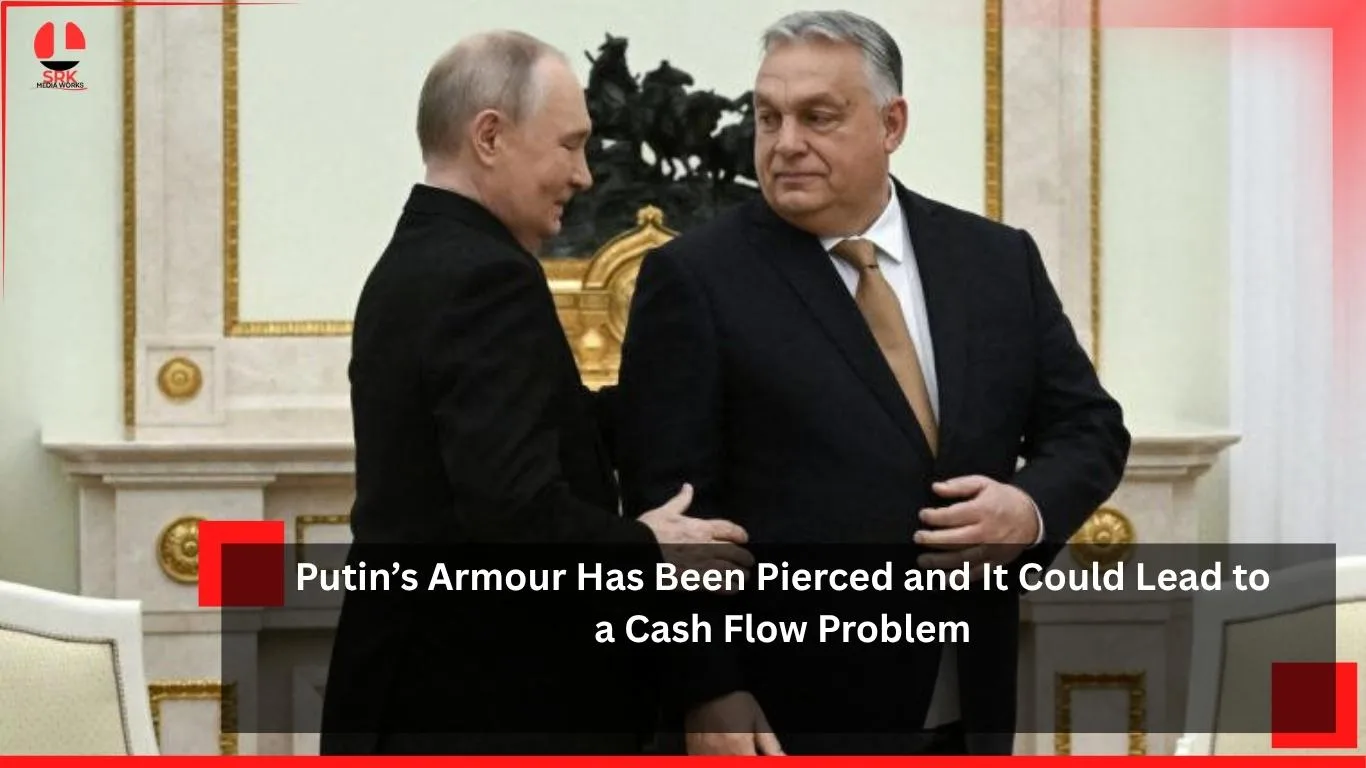
Russia’s economic resilience, often described as President Vladimir Putin’s “armour,” is showing signs of strain as sanctions, war expenditures, and declining energy revenues converge to create potential cash flow problems. Analysts warn that the Kremlin’s ability to sustain prolonged military campaigns and maintain domestic stability could be undermined by tightening financial conditions.
Cracks in Russia’s Economic Armour
- Sanctions Pressure: Western sanctions have restricted Russia’s access to global financial markets, limiting borrowing options.
- Energy Revenue Decline: Oil and gas exports, the backbone of Russia’s economy, face reduced demand due to diversification by Europe and Asia.
- War Expenditure: The ongoing conflicts in Ukraine and Middle East engagements have drained resources, with billions spent monthly on military operations.
- Currency Volatility: The ruble has faced repeated devaluation pressures, impacting imports and domestic purchasing power.
Comparative Overview of Russia’s Economic Position
| Factor | 2022 | 2024 | 2026 |
|---|---|---|---|
| Oil Revenue | High due to global demand | Declining as Europe diversifies | Stabilizing but below peak |
| Military Spending | Rising | Sustained at high levels | Straining budget |
| Sanctions Impact | Initial shock | Adaptation through Asia | Severe restrictions remain |
| Cash Flow Stability | Manageable | Tightening | Risk of deficit |
This comparison shows how Russia’s financial position has weakened over time, with cash flow stability now at risk.
Pivot Analysis: War Spending vs. Domestic Stability
| Scenario | Economic Impact | Political Impact | Social Impact |
|---|---|---|---|
| Continued High War Spending | Budget deficit, inflation | Strong nationalist narrative | Public discontent over rising costs |
| Reduced War Spending | Stabilized finances | Perception of weakness | Relief in domestic economy |
The pivot analysis highlights the trade-off between sustaining military campaigns and maintaining domestic stability.
Global Energy Shifts
Russia’s reliance on energy exports is being challenged by global diversification.
- Europe: Reduced dependence on Russian gas, turning to renewables and LNG.
- Asia: Increased imports but negotiating lower prices, reducing Russia’s margins.
- Middle East Competition: Gulf states expanding production, squeezing Russia’s market share.
Domestic Challenges
- Inflation: Rising costs of goods due to sanctions and currency volatility.
- Public Services: Budget cuts in healthcare and education as funds are diverted to defense.
- Oligarch Pressure: Business elites face asset freezes abroad, limiting their ability to support the Kremlin financially.
International Reactions
- United States & Europe: Continue tightening sanctions, aiming to weaken Russia’s war chest.
- China: Offers limited financial lifelines but avoids overexposure.
- Global Markets: Monitor Russia’s fiscal health as instability could ripple across energy and commodity prices.
Conclusion
Putin’s economic armour, once thought impenetrable, is showing cracks that could lead to a cash flow problem. With sanctions biting harder, energy revenues declining, and war expenditures mounting, Russia faces a critical test of financial resilience. The Kremlin must balance military ambitions with domestic stability, a challenge that could define the trajectory of its political and economic future.
Disclaimer
This article is a journalistic analysis created for informational purposes. It does not represent official government statements or financial records. Readers are encouraged to consult multiple perspectives for updates. The content is intended for educational and news reporting use only, without endorsing any political party or institution.