








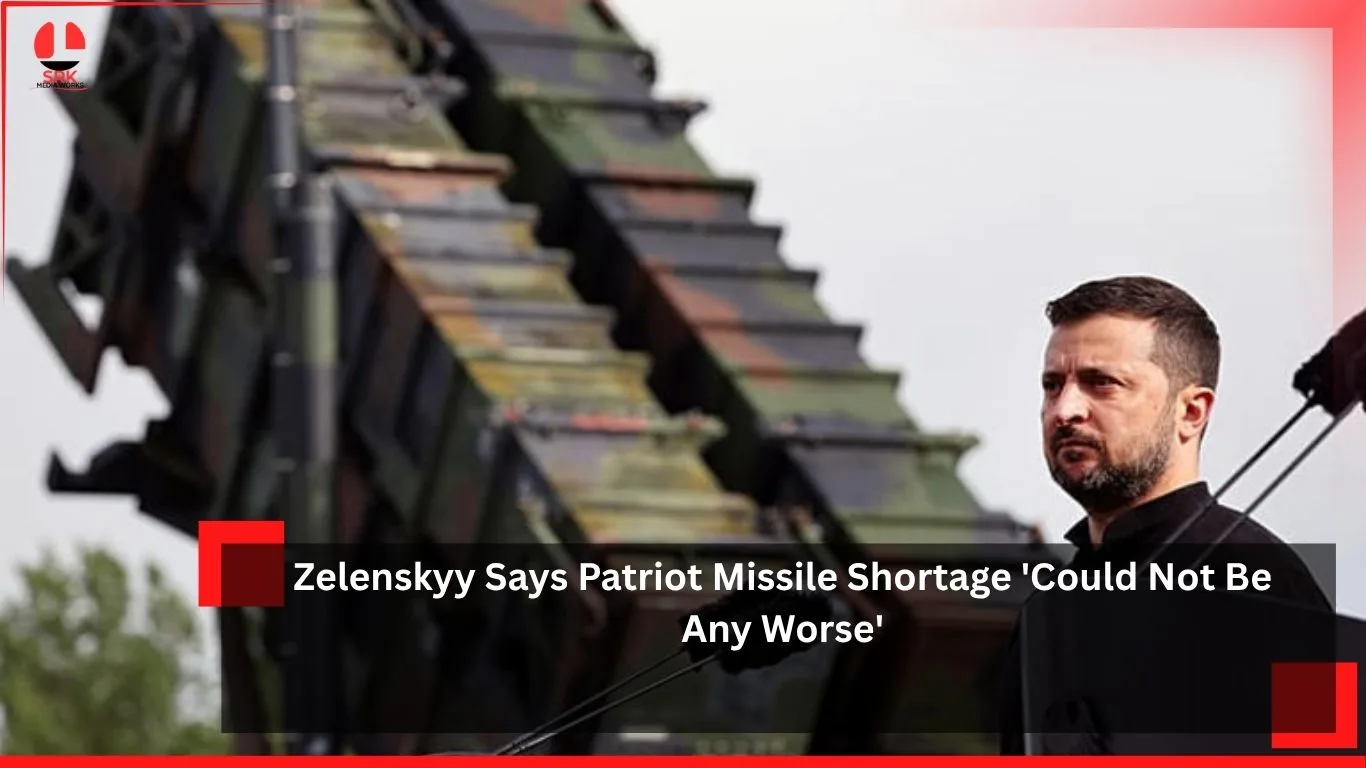
Ukrainian President Volodymyr Zelenskyy has issued a stark warning about the shortage of Patriot missile systems, declaring that the situation “could not be any worse.” His remarks highlight the growing strain on Ukraine’s air defense capabilities as Russian forces intensify missile and drone attacks. The shortage underscores the challenges faced by Kyiv in securing adequate military support from allies, particularly the United States and NATO, amid competing global conflicts.
Zelenskyy’s Statement
- Dire Warning: Zelenskyy emphasized that Ukraine’s air defense is dangerously under-equipped, leaving cities vulnerable.
- Appeal to Allies: He urged Western nations to accelerate deliveries of Patriot systems and other advanced air defense technologies.
- Impact on Civilians: The shortage has led to increased casualties and damage to critical infrastructure.
- Strategic Concern: Without sufficient missile defense, Ukraine risks losing control of key regions under sustained Russian bombardment.
Current State of Ukraine’s Air Defense
Ukraine’s reliance on Patriot systems has grown as Russian forces deploy advanced missiles and drones.
- Patriot Systems: Limited in number, with several batteries already deployed but insufficient to cover all regions.
- Other Systems: Ukraine also uses NASAMS, IRIS-T, and Soviet-era S-300 systems, but these are less effective against modern threats.
- Supply Chain Issues: Delays in production and delivery have worsened the shortage.
Comparative Overview of Air Defense Systems
| System | Origin | Effectiveness | Availability in Ukraine |
|---|---|---|---|
| Patriot | USA | High against ballistic missiles | Critically short |
| NASAMS | USA/Norway | Effective against aircraft & drones | Limited deployment |
| IRIS-T | Germany | Strong against drones | Few units supplied |
| S-300 | Soviet-era | Outdated, limited effectiveness | Still in use |
This comparison shows why Patriot systems are considered vital for Ukraine’s defense.
Pivot Analysis: Shortage vs. Adequate Supply
| Scenario | Military Impact | Civilian Impact | Political Impact |
|---|---|---|---|
| Shortage persists | Increased vulnerability | Rising casualties | Pressure on allies |
| Adequate supply | Stabilized defense | Reduced civilian losses | Strengthened Western unity |
The pivot analysis highlights how resolving the shortage could dramatically alter Ukraine’s defensive posture.
Global Context
The shortage of Patriot systems is not only a Ukrainian issue but also reflects broader geopolitical challenges.
- US Supply Strain: With commitments in Ukraine, the Middle East, and Asia, American stockpiles are stretched thin.
- NATO Coordination: Allies face logistical hurdles in pooling resources for Ukraine.
- Russia’s Strategy: Exploiting shortages by escalating missile attacks to overwhelm defenses.
Reactions
- United States: Officials acknowledge the shortage but stress that production is being ramped up.
- European Allies: Germany and Poland have pledged additional support but face their own defense needs.
- Russia: Sees the shortage as a strategic advantage, intensifying attacks on Ukrainian cities.
- Civil Society: Ukrainian citizens express frustration, calling for faster international action.
Broader Implications
The Patriot missile shortage highlights the limits of Western military support in prolonged conflicts. It raises questions about production capacity, alliance coordination, and the sustainability of aid. For Ukraine, the shortage is not just a military problem but a humanitarian crisis, as civilians bear the brunt of inadequate defenses.
Conclusion
Zelenskyy’s warning that the Patriot missile shortage “could not be any worse” underscores the urgency of Ukraine’s situation. Without sufficient air defense, the country faces escalating risks from Russian attacks. The controversy places pressure on Western allies to accelerate support, expand production, and ensure that Ukraine’s skies remain protected in the months ahead.
Disclaimer
This article is a journalistic analysis created for informational purposes. It does not represent official government statements or military records. Readers are encouraged to consult multiple perspectives for updates. The content is intended for educational and news reporting use only, without endorsing any political party or institution.