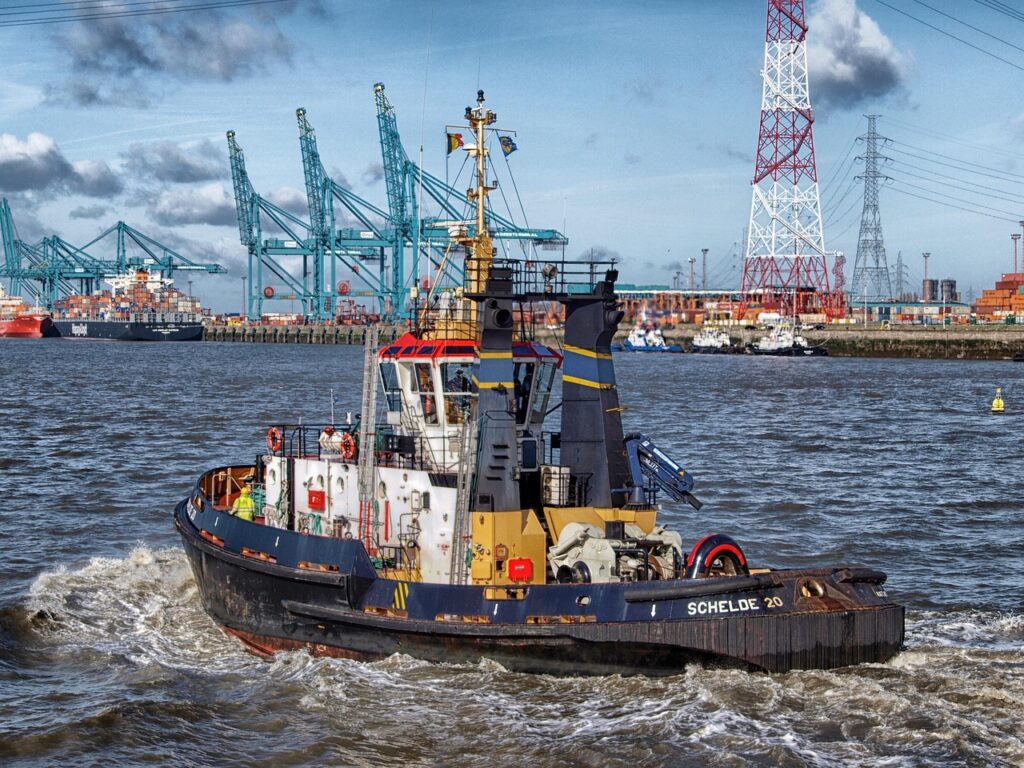

On a bustling Saturday afternoon, as thousands gathered along the Hudson River to witness the majestic spectacle of the annual Tall Ships Parade, a specialized crew aboard a modest tugboat performed the critical, often overlooked task of maritime traffic management. While spectators marveled at the billowing sails and historic rigging of the visiting vessels, the tugboat team worked quietly in the background to ensure that the high-traffic waterway remained safe for both the historic ships and the surrounding commercial and recreational vessels.
The Logistics of Maritime Spectacle
Organizing a parade of sail in one of the world’s busiest harbors requires a level of coordination that rivals major air traffic control operations. The Hudson River, a primary artery for regional commerce, does not close entirely for such events; instead, it becomes a complex dance of massive, wind-dependent vessels and time-sensitive cargo ships.
The tugboat crew functioned as the frontline monitors of this aquatic choreography. By maintaining a constant presence in the river’s transit lanes, they provided real-time guidance to smaller vessels that might have accidentally drifted into the path of the tall ships. Their role is to provide the necessary buffer that prevents accidents in a confined, high-stakes environment.
The Challenge of Wind and Current
Navigating historic ships—some built centuries ago—is inherently difficult because these vessels lack the maneuverability of modern, engine-powered craft. They rely heavily on the Hudson’s complex tidal currents and unpredictable wind gusts, which can shift rapidly near the river’s high-rise corridors.
Maritime experts note that tugboats act as the ‘safety net’ for these events. According to harbor safety protocols, every major sailing event in the region requires support vessels to manage the ‘exclusion zones’ that keep the parade route clear. Without these small, powerful workhorses, the risk of collision or grounding would increase exponentially, particularly when amateur boaters attempt to get too close for a better view.
Industry Implications and Safety Standards
The presence of these tugs highlights the evolving nature of maritime safety in an era of increasing harbor congestion. As more cities look to celebrate their nautical heritage, the demand for professional harbor masters and tug support has grown significantly. Industry data suggests that event organizers are now allocating nearly 30 percent more of their budgets toward safety and logistics than they did a decade ago.
For the average spectator, the tugboat is merely a functional vessel in a sea of beauty, but for harbor authorities, they are the essential infrastructure that makes such events possible. Their presence allows the public to enjoy the aesthetics of history while maintaining the rigorous standards of modern maritime law.
Future Trends in Harbor Management
As the maritime industry continues to embrace automation, the role of human-operated tugboats remains irreplaceable in high-traffic, multi-vessel events. Looking ahead, maritime authorities are exploring the integration of AI-driven traffic monitoring systems to assist these crews. These systems could provide predictive analytics on wind and current speeds, allowing tugboats to position themselves more effectively before congestion points arise. Observers should watch for new regulations regarding spectator vessel distancing, which are expected to tighten in the coming years as the popularity of large-scale maritime parades continues to climb.