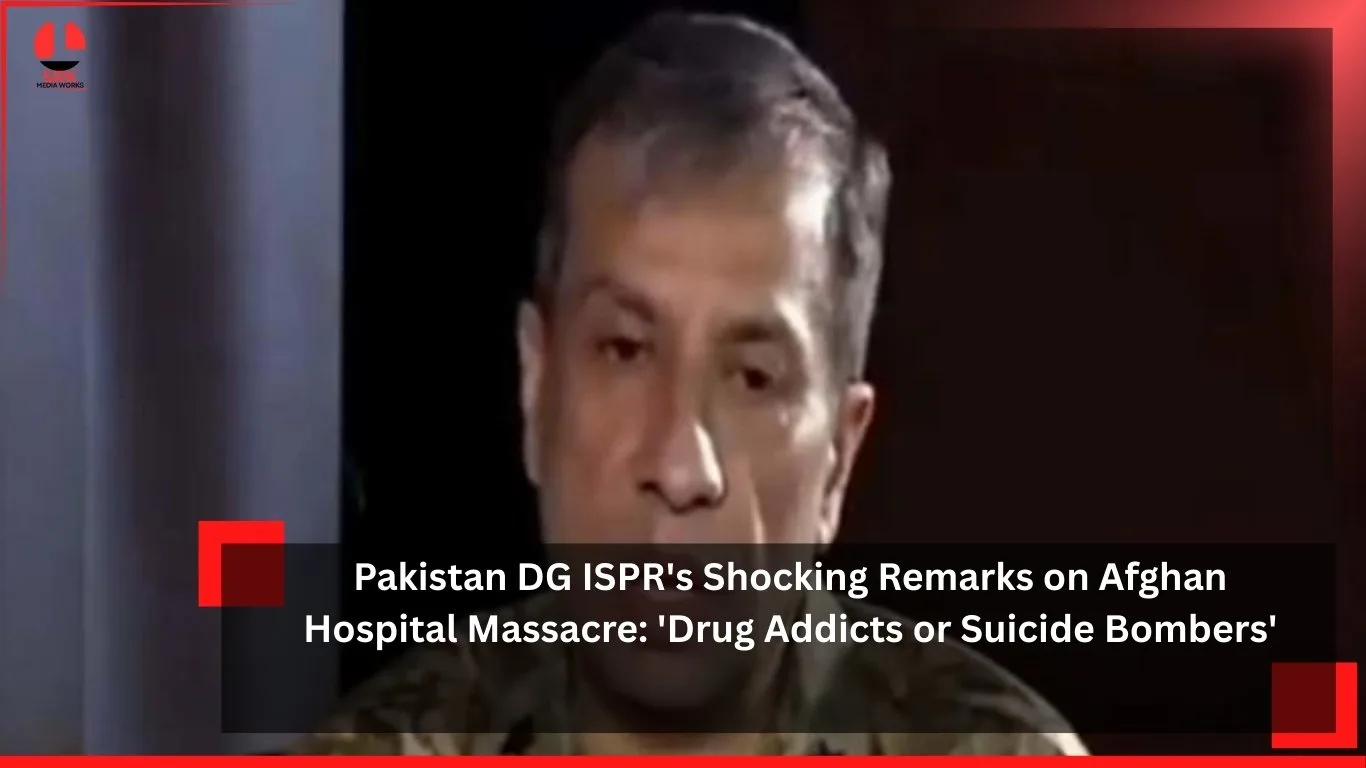
Pakistan’s Director General of Inter-Services Public Relations (DG ISPR) has made shocking remarks regarding the recent Afghan hospital massacre, suggesting that those responsible were either “drug addicts or suicide bombers.” The statement has sparked widespread debate across South Asia, drawing attention to the fragile security situation in Afghanistan and its impact on regional stability.
Context of the Hospital Massacre
The massacre occurred in a hospital in Afghanistan, leaving dozens dead and many injured. The attack has been condemned globally, with humanitarian organizations calling it one of the most brutal assaults on civilians in recent years. Pakistan’s DG ISPR’s comments have added a controversial dimension to the discourse, raising questions about the nature of militancy and the role of extremist groups.
Key Highlights of DG ISPR’s Remarks
- Attackers described as “drug addicts or suicide bombers.”
- Pakistan expressed concern over rising instability in Afghanistan.
- Call for regional cooperation to prevent cross-border militancy.
- Emphasis on humanitarian tragedy and need for accountability.
Reactions to the Statement
The remarks have triggered strong responses from political leaders, analysts, and the public.
| Stakeholder | Reaction | Implication |
|---|---|---|
| Afghan Govt | Condemned remarks | Viewed as insensitive |
| Pakistan Govt | Defended DG ISPR | Claimed remarks highlight militant reality |
| Analysts | Divided | Some see truth, others see provocation |
| Public | Shocked | Concerns over regional tensions |
Regional Security Concerns
The massacre and subsequent remarks highlight the fragile security environment in South Asia.
| Factor | Impact |
|---|---|
| Afghan Instability | Spillover risks for Pakistan |
| Militancy | Cross-border infiltration concerns |
| Drug Trade | Fuels extremist networks |
| Regional Tensions | Strains diplomatic relations |
Comparative Analysis of Militant Attacks on Healthcare Facilities
| Year | Location | Incident | Outcome |
|---|---|---|---|
| 2014 | Pakistan (Peshawar) | School massacre | 150+ killed |
| 2020 | Afghanistan (Kabul) | Maternity hospital attack | Dozens killed |
| 2026 | Afghanistan (Hospital) | Massacre | Global condemnation |
Broader Implications
The DG ISPR’s remarks underscore the complexity of militancy in the region:
- Drug Addiction and Militancy: Suggests overlap between narcotics and extremism.
- Suicide Bombing Culture: Highlights persistence of radical ideologies.
- Humanitarian Crisis: Civilians remain the primary victims.
- Diplomatic Fallout: Remarks may strain Pakistan-Afghanistan relations further.
Public Sentiment
Citizens across South Asia have expressed outrage over the massacre and concern about the DG ISPR’s remarks. Many fear that such statements could deepen mistrust between Pakistan and Afghanistan, complicating efforts for peace.
Future Outlook
Experts believe that unless regional powers cooperate to address militancy and drug trafficking, such tragedies will continue. Pakistan’s military leadership is expected to maintain its tough stance, while Afghanistan seeks international support to strengthen its security apparatus.
Conclusion
The Afghan hospital massacre has once again exposed the vulnerabilities of conflict-ridden regions. Pakistan’s DG ISPR’s shocking remarks about the attackers being “drug addicts or suicide bombers” have added controversy to an already tense situation. As regional tensions rise, the focus must remain on humanitarian protection, counter-terrorism cooperation, and long-term stability.
Disclaimer: This article is intended for informational purposes only. It provides an overview of the DG ISPR’s remarks on the Afghan hospital massacre and its implications for regional security. The content does not represent official government communication, and readers are advised to consult verified reports for precise details.