




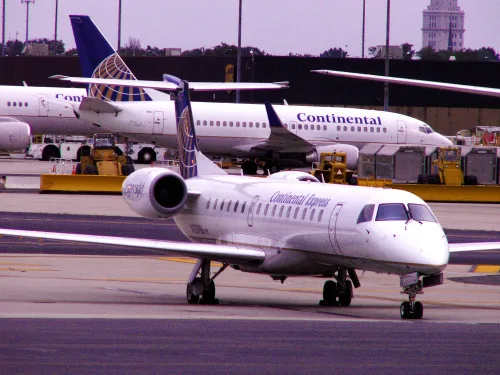
A United Airlines Boeing 757-200 sustained structural damage after its landing gear and underside collided with a light pole and a tractor-trailer while maneuvering near a runway at Newark Liberty International Airport on Tuesday. No injuries were reported among the 166 passengers and six crew members on board, as the aircraft successfully completed its taxi to the gate following the incident.
Context and Incident Details
The incident occurred as the aircraft was navigating the airport’s complex taxiway system, an area frequently congested with ground support equipment and service vehicles. Newark Liberty is one of the busiest aviation hubs in the United States, managing thousands of movements daily across a relatively confined footprint.
Federal Aviation Administration (FAA) officials confirmed that the Boeing 757 was in the process of reaching its designated gate when the collision occurred. The contact with the airport infrastructure caused visible damage to the aircraft’s landing gear assembly and the fuselage, prompting an immediate investigation by both the airline and federal regulators.
Operational Impact and Investigation
United Airlines released a statement confirming that the flight, which had arrived from a domestic destination, was taxied to its gate under its own power. Passengers were deplaned normally, though the aircraft was immediately removed from service for a comprehensive engineering assessment.
Industry experts note that taxiway collisions are rare but highlight the inherent risks of ground operations in high-density environments. “Ground movement is a precise dance between pilots, air traffic control, and ground crews,” said aviation safety consultant Dr. Marcus Thorne. “When you combine aging infrastructure with the tight tolerances of modern wide-body aircraft, the margin for error becomes razor-thin.”
Safety Standards and Industry Oversight
According to Bureau of Transportation Statistics data, ground incidents have remained a focal point for the FAA’s Runway Safety Program. The agency utilizes advanced surface movement radar and strict lighting protocols to mitigate the risk of ground-based collisions.
The current investigation will likely focus on whether the collision resulted from a navigational error, mechanical failure of the aircraft’s steering system, or a breakdown in communication between the flight deck and ground controllers. The National Transportation Safety Board (NTSB) often monitors such incidents to determine if systemic changes to airport taxiway layouts are required to enhance safety.
Future Implications for Aviation Safety
As airports continue to face increased traffic volume, the integration of autonomous ground support vehicles and enhanced radar monitoring remains a top priority for aviation authorities. The industry is closely watching how the findings from this investigation might influence future training requirements for pilots operating at Newark and other major metropolitan airports.
Aviation analysts suggest that this event will likely accelerate the adoption of advanced surface guidance systems that provide real-time alerts to pilots regarding proximity to stationary objects. Stakeholders will be monitoring the NTSB’s final report to see if specific recommendations are issued regarding taxiway clearance zones and the placement of lighting infrastructure near active taxi routes.