


The Controversy Unfolds
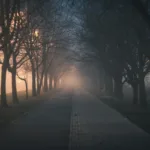
German artist Boris Eldagsen made international headlines this week by declining a prestigious award from the Sony World Photography Awards, revealing that his winning submission, ‘PSEUDOMNESIA: The Electrician,’ was entirely generated by artificial intelligence. The announcement, delivered during the ceremony in London, has ignited a fierce debate regarding the definition of photography and the role of human creativity in an era of rapid technological advancement.
Eldagsen stated that he entered the competition as a ‘cheeky monkey’ to test whether the jury would recognize AI-generated imagery as distinct from traditional photography. His victory in the creative category underscores the blurring lines between digital manipulation and machine-generated art.
The Evolution of the Digital Image
The Sony World Photography Awards represent one of the most respected platforms in the industry, traditionally honoring works captured through lenses and light-sensitive sensors. For decades, the competition has set the standard for professional photojournalism and fine art photography.
However, the rise of generative AI tools like DALL-E, Midjourney, and Stable Diffusion has fundamentally altered the creation of visual media. These platforms allow users to synthesize complex, high-resolution images from simple text prompts, bypassing the physical requirements of traditional camera equipment.
Industry Reactions and Expert Perspectives
The incident has forced competition organizers and professional organizations to address the lack of clear guidelines regarding AI. Critics argue that allowing AI-generated work to compete against authentic photography devalues the effort, technical skill, and lived experience of human photographers.
Dr. Elena Rossi, an expert in digital aesthetics, notes that the problem lies in the categorization. ‘We are seeing a paradigm shift where the prompt engineer is replacing the operator, but the fundamental ethics of authorship remain in flux,’ Rossi stated. Many industry experts suggest that future competitions must implement a clear ‘AI-disclosed’ category to prevent misleading audiences.
Implications for the Creative Sector
For professional photographers, the implications are profound. The ability to produce hyper-realistic imagery in seconds threatens the commercial viability of stock photography and editorial illustration. Legal challenges regarding copyright ownership of AI-generated images are already winding through courts in the United States and Europe.
Publishing houses and media agencies are now scrambling to draft internal policies that distinguish between human-captured content and synthetic media. The pressure is mounting on competition bodies to adopt rigorous verification processes to ensure that submitted works align with the medium they claim to represent.
Future Outlook
Observers should watch for how major photography competitions adjust their submission criteria in the coming year. Increased transparency, such as mandatory metadata labeling for AI-assisted works, appears to be the most likely path forward. As technology continues to evolve, the distinction between a ‘photographer’ and an ‘image generator’ will likely become a centerpiece of legal and ethical discourse in the visual arts.