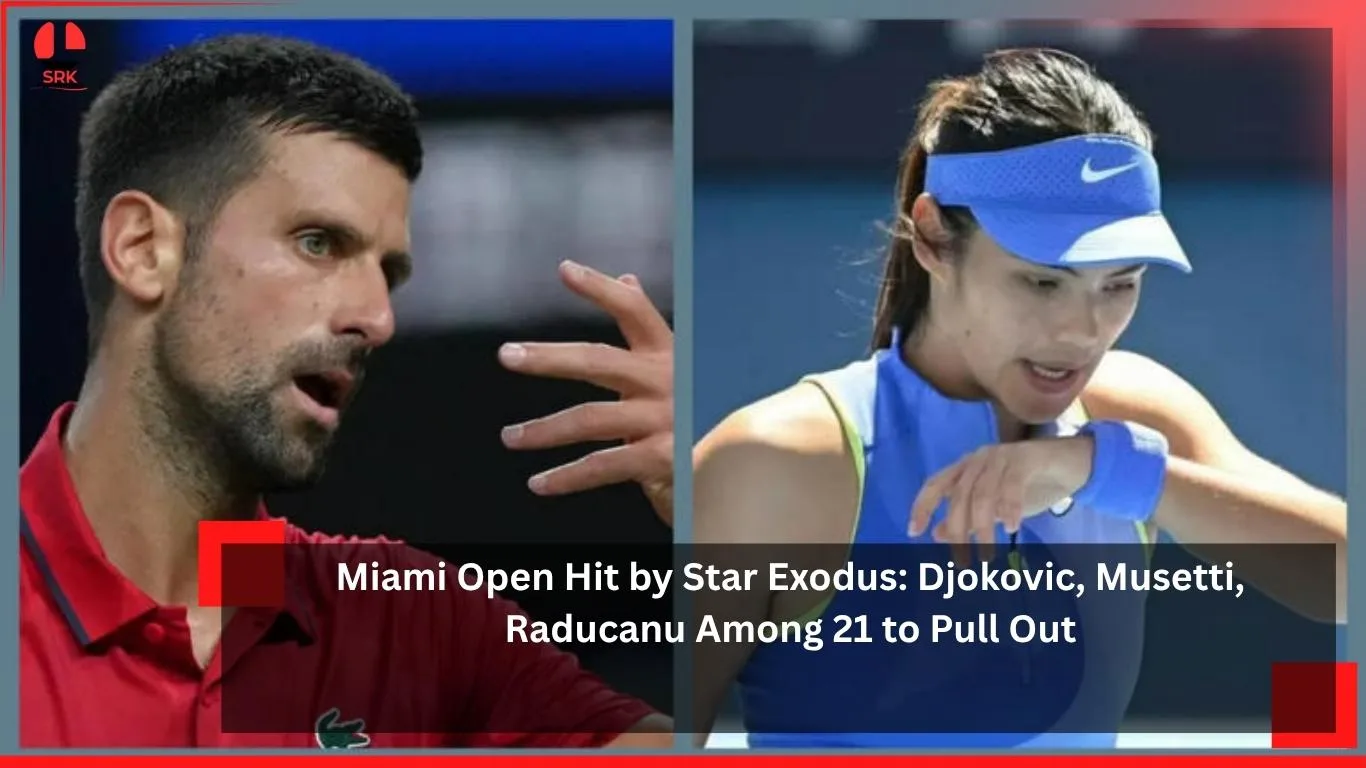
The Miami Open, one of the most prestigious tournaments on the ATP and WTA tours, has been rocked by an unprecedented wave of withdrawals. A total of 21 players, including global stars Novak Djokovic, Lorenzo Musetti, and Emma Raducanu, have pulled out of the tournament, leaving fans and organizers grappling with disappointment and uncertainty. The exodus has raised questions about player fitness, scheduling pressures, and the future of tennis tournaments that rely heavily on star power to attract audiences.
Background of the Withdrawals
The Miami Open has traditionally been a showcase of elite talent, drawing top-ranked players from around the world. However, this year’s edition has been marred by a string of withdrawals. While reasons vary from injuries to scheduling conflicts, the sheer number of absentees has cast a shadow over the event.
Key Players Who Withdrew
- Novak Djokovic: The world number one cited health concerns and scheduling priorities.
- Lorenzo Musetti: Pulled out due to injury management.
- Emma Raducanu: Withdrew citing fitness issues and recovery needs.
- Other notable names: Several rising stars and established players also opted out, totaling 21 withdrawals.
Impact on the Tournament
The absence of so many stars has significant consequences:
- Fan disappointment: Ticket holders expected to see marquee matchups.
- Broadcast challenges: Networks rely on star appeal for ratings.
- Competitive balance: Opens opportunities for lower-ranked players to shine.
Comparative Analysis of Withdrawals
| Player | Reason for Withdrawal | Impact on Tournament |
|---|---|---|
| Novak Djokovic | Health/scheduling | Major blow to ATP draw |
| Lorenzo Musetti | Injury | Weakens Italian representation |
| Emma Raducanu | Fitness recovery | Reduces WTA star appeal |
| Other 18 players | Mixed reasons | Overall decline in star power |
Scheduling Pressures in Tennis
The withdrawals highlight the growing strain on players due to packed schedules. With tournaments spread across continents, athletes face:
- Travel fatigue
- Injury risks
- Mental health challenges
This has sparked calls for reforms in the tennis calendar to prioritize player well-being.
Fan and Media Reactions
Fans have expressed frustration on social media, lamenting the absence of their favorite stars. Media outlets have debated whether the Miami Open can retain its prestige without top-tier participation. Some argue that the withdrawals present an opportunity for emerging players to gain recognition.
Economic Consequences
| Factor | Short-Term Impact | Long-Term Risk |
|---|---|---|
| Ticket sales | Reduced attendance | Decline in fan loyalty |
| Sponsorships | Lower visibility | Potential renegotiations |
| Broadcasting | Ratings drop | Loss of global appeal |
| Local economy | Fewer visitors | Reduced tourism revenue |
Opportunities for Rising Stars
While the withdrawals are a setback, they also create openings for younger players. With fewer established names in the draw, rising talents have a chance to make deep runs and capture global attention.
Analytical Summary
The Miami Open’s star exodus underscores the challenges facing modern tennis. Player health, scheduling pressures, and the demands of global competition have converged to create a situation where even prestigious tournaments struggle to retain top talent. While disappointing for fans, the withdrawals may pave the way for new stars to emerge, reshaping the future of the sport.
Disclaimer
This article is based on publicly available reports and analytical perspectives. It does not represent official statements from tournament organizers, players, or governing bodies. The content is intended for informational purposes only and should not be construed as definitive or authoritative on sensitive sporting matters.