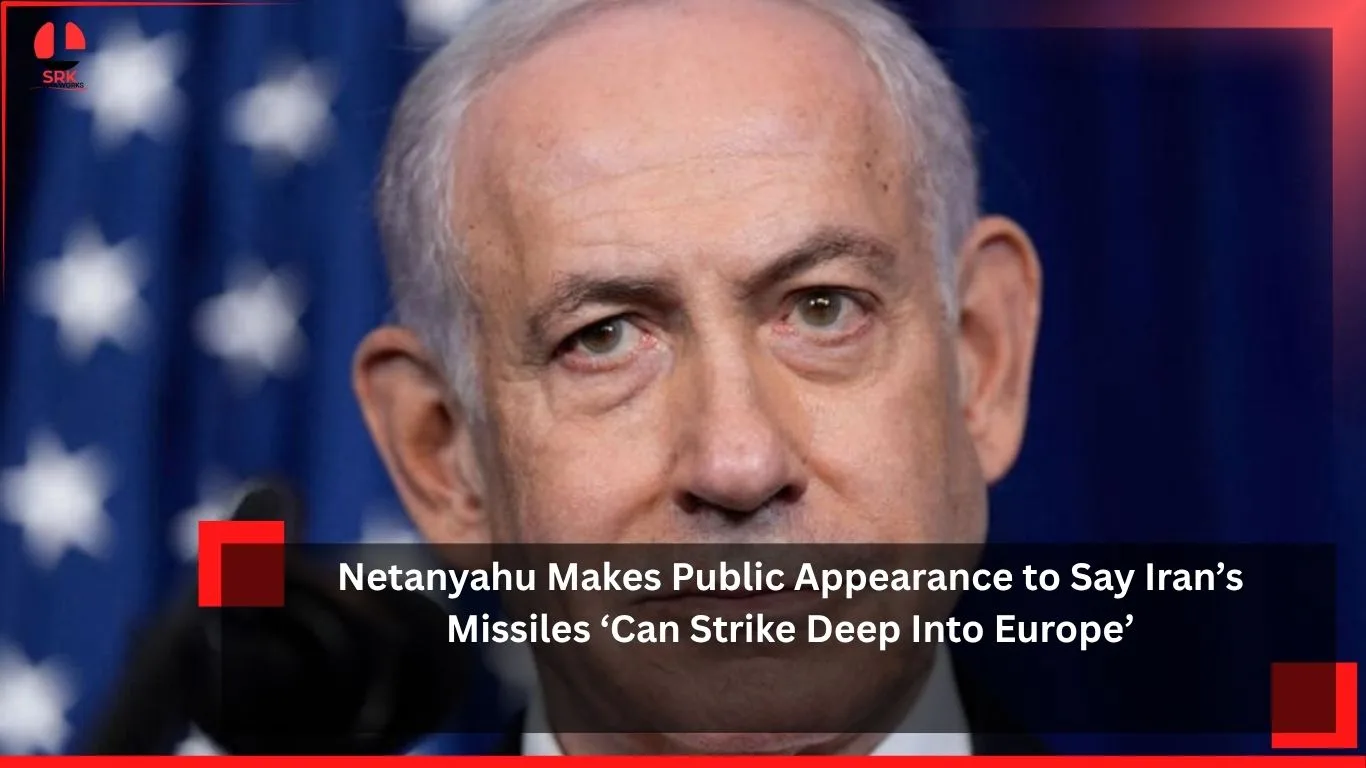
Israeli Prime Minister Benjamin Netanyahu has made a high-profile public appearance warning that Iran’s missile capabilities now extend far beyond the Middle East, claiming they can “strike deep into Europe.” His remarks have reignited global concerns about regional security, NATO’s preparedness, and the broader implications of Iran’s expanding military technology.
Netanyahu’s Statement
Speaking at a defense briefing, Netanyahu stressed that Iran’s missile program is no longer a threat confined to Israel or the Gulf region. He argued that the latest advancements in Iran’s arsenal put European capitals at risk, urging Western nations to take the threat seriously.
Netanyahu’s words were aimed at galvanizing international support, particularly from NATO allies, to counter what he described as Iran’s “aggressive ambitions.”
Why This Matters
- Regional Security: Israel sees Iran’s missile program as an existential threat.
- European Vulnerability: Capitals such as Rome, Berlin, Paris, and Warsaw could potentially fall within range.
- Global Diplomacy: Netanyahu’s remarks are likely to intensify calls for coordinated sanctions and defense strategies.
Comparative Analysis of Missile Range
| Missile Type | Estimated Range | Potential Targets | Strategic Impact |
|---|---|---|---|
| Short-Range Missiles | 500–1,000 km | Gulf states, Israel | Regional threat |
| Medium-Range Missiles | 2,000–2,500 km | Eastern Europe, Turkey | Expanded reach |
| Long-Range Missiles | 3,500–4,000 km | Central & Western Europe | Global concern |
This comparison highlights the growing reach of Iran’s missile program, aligning with Netanyahu’s warning.
Pivot Analysis: Stakeholders Affected
| Stakeholder | Impact Type | Strategic Consequence |
|---|---|---|
| Israel | Direct existential threat | Heightened defense posture |
| Europe | Vulnerability to strikes | NATO pressure to respond |
| United States | Diplomatic and military role | Increased involvement |
| Middle East Nations | Regional instability | Arms race escalation |
NATO’s Dilemma
Netanyahu’s remarks place NATO in a difficult position. While the alliance has focused heavily on Eastern Europe and Russia, Iran’s missile reach forces a reconsideration of defense priorities. European nations may now need to invest more in missile defense systems and regional cooperation with Israel.
Broader Geopolitical Implications
- For Israel: Netanyahu’s statement reinforces Israel’s push for stronger alliances and military aid.
- For Iran: The claims highlight Iran’s growing technological capabilities, which it frames as deterrence.
- For Europe: Vulnerability to long-range missiles could reshape defense budgets and strategies.
- For Global Security: The expansion of missile ranges blurs traditional geographic boundaries of conflict.
Possible Outcomes
- Increased Sanctions: Western nations may impose stricter economic measures on Iran.
- Defense Cooperation: NATO could expand missile defense collaboration with Israel.
- Escalation: Heightened rhetoric may lead to military standoffs in the region.
- Diplomatic Engagement: Some nations may push for renewed negotiations to limit Iran’s missile program.
Conclusion
The announcement that Iran’s missiles “can strike deep into Europe,” as stated publicly by Netanyahu, underscores the growing global concern over Iran’s military advancements. While Israel has long warned of Iran’s capabilities, the extension of missile range into Europe elevates the issue to a broader international crisis.
As NATO and European nations weigh their responses, the geopolitical landscape is set for heightened tension. Netanyahu’s remarks serve as both a warning and a call to action, urging the world to recognize the far-reaching implications of Iran’s missile program.
Disclaimer: This article is based on reported statements and geopolitical analysis. It does not represent classified intelligence or official government positions. The content is intended for informational purposes only and should not be interpreted as definitive military assessment.