




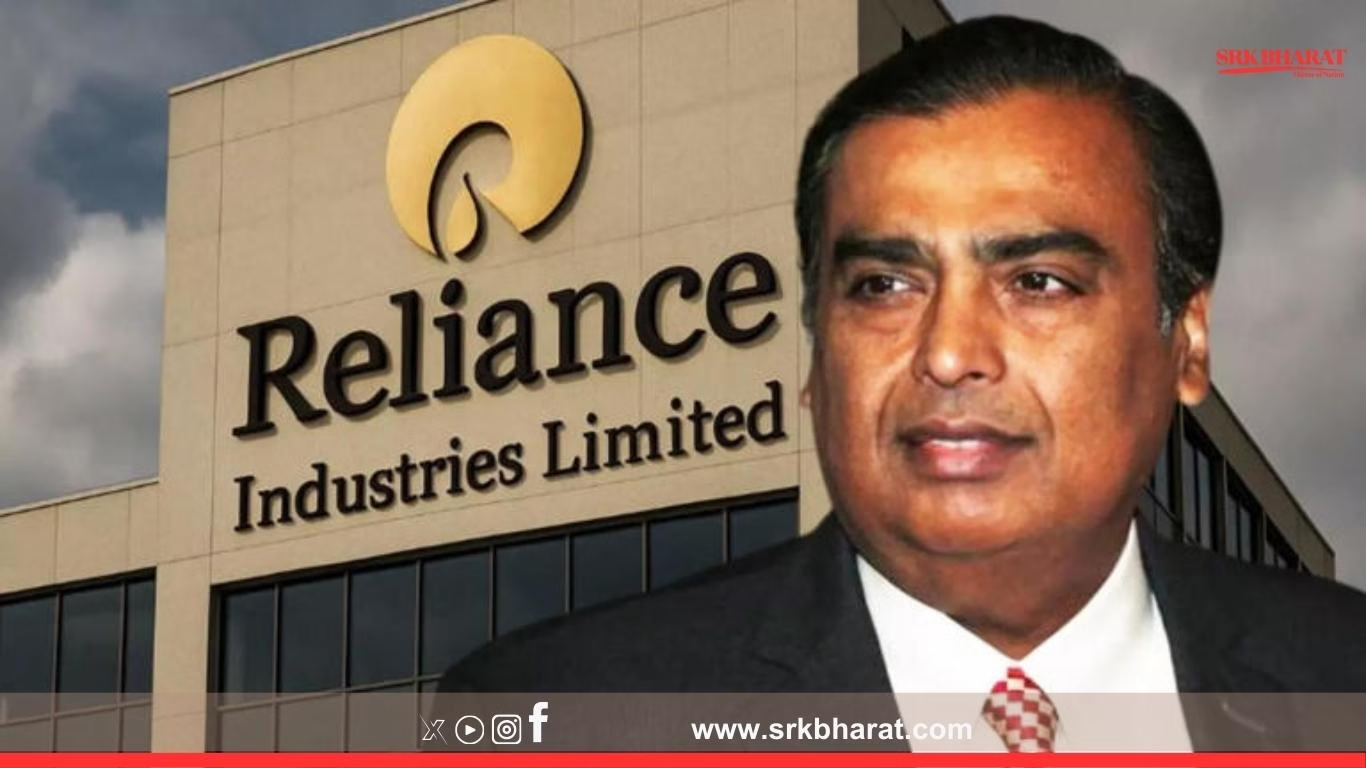
Reliance Industries Limited (RIL), India’s largest private-sector conglomerate, once again placed its oil-to-chemicals (O2C) business at the center of attention during its Annual General Meeting (AGM). The spotlight comes amid rising global scrutiny of India’s crude imports from Russia, as well as the company’s evolving strategy to balance its traditional energy operations with its ambitious green energy, telecom, and retail expansions.
At the AGM, RIL Chairman Mukesh Ambani highlighted the resilience of the company’s O2C business while also reaffirming the group’s commitment to diversify into future-ready sectors. However, analysts noted that the company’s Russian crude purchases, which have grown substantially since Western sanctions on Moscow, make the O2C segment a strategic as well as political talking point.
Reliance Oil-to-Chemicals Business: Still the Backbone
The O2C vertical, which includes refining, petrochemicals, and fuel marketing, remains the largest revenue contributor for Reliance despite the group’s rapid diversification into Jio and retail. Ambani reminded shareholders that the Jamnagar refinery — the world’s largest refining complex — continues to play a central role in India’s energy supply and global fuel exports.
While Reliance Jio and Reliance Retail are viewed as the company’s fastest-growing engines, the O2C business acts as the profit cushion during global economic shifts. In FY24, the O2C segment contributed over 55% of consolidated revenue, underlining its centrality.
The Russian Factor
Since 2022, when Western sanctions hit Moscow after the Ukraine war, India has emerged as a major buyer of discounted Russian crude. Reliance, along with state-run refiners, has been a top beneficiary, sourcing large volumes of cheaper crude to maintain refinery margins.
However, this has invited global attention, particularly from Western governments concerned about India’s role in indirectly supporting Russian oil revenues. Ambani, while not explicitly mentioning Russia at the AGM, stressed that Reliance remains committed to energy security, competitiveness, and market-driven procurement policies.
Industry observers believe that the company will continue leveraging cost-competitive imports, especially from Russia, as long as they do not directly violate international norms or trigger sanctions.
Financial Performance Snapshot
Reliance’s consolidated performance reflects the balancing act between traditional energy and new-age sectors.
RIL Segment-Wise Contribution (FY24)
| Business Segment | Contribution to Revenue | Growth Trend | Strategic Focus |
|---|---|---|---|
| Oil-to-Chemicals (O2C) | 55% | Stable with global volatility | Energy security, exports |
| Telecom (Jio) | 22% | Strong growth | 5G rollout, digital platforms |
| Retail | 18% | Rapid expansion | Omni-channel retail, FMCG |
| Green Energy & Others | 5% | High growth potential | Solar, hydrogen, battery storage |
Balancing Traditional and Green Energy
Mukesh Ambani used the AGM platform to reaffirm Reliance’s dual commitment: strengthening the O2C business while making aggressive investments in renewable energy.
- Oil-to-Chemicals: Continued refinery optimization, strategic crude sourcing, and expansion of downstream petrochemicals.
- Green Energy: ₹75,000 crore already earmarked for investments in solar PV manufacturing, green hydrogen, and battery giga-factories.
- Integration Strategy: Over time, Reliance plans to transform its O2C into an O2C+O2G (oil-to-green) model, ensuring long-term sustainability.
This approach is being seen as a hedging strategy — maintaining the profitability of fossil fuels while preparing for the global shift towards cleaner energy.
Political and Market Implications
Reliance’s heavy reliance on Russian crude is not just a business matter but also a diplomatic balancing act.
- For India: Reliance’s procurement strategy helps India maintain low fuel inflation, making it politically valuable for the government.
- For Global Markets: Reliance’s refining exports influence fuel availability in Europe, Africa, and Asia, making the company a global price stabilizer.
- For Investors: Analysts see the Russian crude sourcing as a short- to medium-term margin booster, though long-term risks remain if sanctions tighten.
Shareholder Perspective
At the AGM, investors expressed keen interest in three aspects:
- O2C Profitability: How long can Reliance maintain high refining margins given global volatility?
- Russian Oil Risks: Could stricter sanctions or geopolitical shifts hurt the supply chain?
- Green Transition: How soon will Reliance’s renewable investments start yielding significant returns?
Ambani assured shareholders that Reliance’s financial robustness and diversified portfolio make it resilient against external shocks.
Global Oil Market Context
Reliance’s Russian crude imports must also be seen in the context of global oil realignments.
Changing Crude Import Dynamics (2021–2024)
| Supplier Country | Share in India’s Imports (2021) | Share in India’s Imports (2024) | Change |
|---|---|---|---|
| Middle East | 63% | 47% | -16% |
| Russia | 2% | 34% | +32% |
| Africa | 12% | 8% | -4% |
| Others | 23% | 11% | -12% |
The pivot towards Russia has significantly reduced India’s reliance on traditional Middle Eastern suppliers, giving refiners like Reliance cost advantages but also raising geopolitical risks.
Reliance’s Strategic Roadmap
Looking ahead, the company’s roadmap combines energy dominance with futuristic diversification.
- Refining Expansion: Investments in efficiency upgrades and petrochemical integration.
- Green Energy Projects: Gigafactories in Jamnagar for solar and hydrogen.
- Digital Transformation: Leveraging Jio for AI, cloud, and 5G-driven businesses.
- Retail Scale-up: Expanding into FMCG, fresh foods, and online-to-offline retail models.
The message is clear: Reliance does not see its O2C business as a sunset industry but as a profit engine to finance its green and digital ambitions.
Conclusion
The Reliance AGM 2025 highlighted the strategic centrality of the O2C segment while acknowledging the opportunities and risks tied to Russian crude deals. Mukesh Ambani’s address reaffirmed a balancing strategy — consolidating Reliance’s dominance in refining while preparing for a renewable-led future.
As the world watches India’s role in global energy markets, Reliance’s decisions will continue to shape not just its own profitability but also India’s diplomatic standing and global energy security.
The Russian oil connection, while lucrative, is also a test of Reliance’s ability to navigate global complexities while securing long-term shareholder value.
Disclaimer: This news content is based on corporate announcements, market analysis, and global energy trends. It is intended for informational purposes only and does not represent investment, political, or legal advice. Readers are encouraged to consult multiple sources before drawing conclusions.