

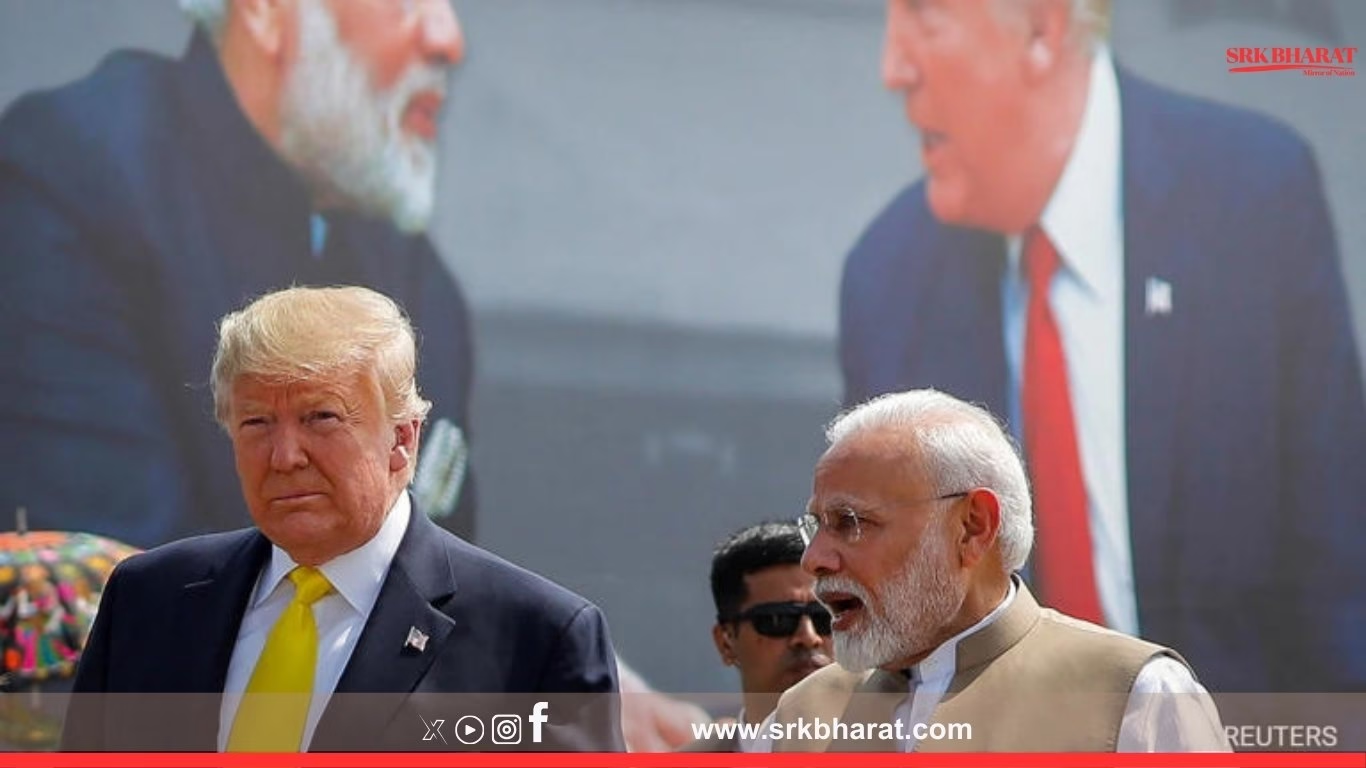
Prime Minister Narendra Modi has reaffirmed India’s economic resilience, citing a robust 7.8% GDP growth in the first quarter of FY 2025–26 despite mounting global trade barriers and protectionist policies. Speaking at the G20 Trade and Investment Ministers’ Meeting in Bengaluru on September 1, 2025, PM Modi took a veiled dig at rising tariffs and unilateral trade restrictions imposed by some developed nations, calling them acts of “economic selfishness” that threaten global recovery and equitable growth.
The Prime Minister’s remarks come at a time when India is navigating a complex global trade environment, marked by supply chain disruptions, tariff hikes on Indian goods, and tightening export norms in key markets. Despite these challenges, India has emerged as one of the fastest-growing major economies, driven by domestic consumption, infrastructure investment, and digital transformation.
🧭 India’s Q1 FY 2025–26 Economic Performance
| Indicator | Value / Status | Year-on-Year Change |
|---|---|---|
| GDP Growth Rate | 7.8% | +0.6% from Q1 FY25 |
| Manufacturing Sector | 9.2% growth | +1.1% |
| Services Sector | 7.5% growth | +0.8% |
| Agriculture Sector | 3.1% growth | -0.4% |
| Inflation (CPI) | 4.6% | Stable |
| Unemployment Rate | 6.2% | -0.3% |
The data, released by the Ministry of Statistics and Programme Implementation, underscores India’s broad-based recovery and resilience against external shocks.
🔍 PM Modi’s Key Remarks at G20 Trade Meet
Addressing ministers and delegates from over 40 countries, PM Modi said:
“India’s 7.8% growth is not just a number—it’s a reflection of our people’s resilience and our government’s commitment to reform. Even as some nations resort to economic selfishness through tariffs and trade barriers, India continues to champion inclusive growth and global cooperation.”
| Theme / Issue Addressed | PM Modi’s Position | Strategic Implication |
|---|---|---|
| Global Tariff Regime | Criticized unilateral hikes | Call for WTO-led multilateralism |
| Supply Chain Fragmentation | Urged diversification and trust-based trade | Push for India as reliable partner |
| Digital Trade | Advocated open data flows | Support for cross-border innovation |
| MSME Inclusion | Highlighted India’s digital MSME model | Blueprint for developing economies |
The Prime Minister also emphasized India’s role in shaping a “human-centric global economy” and invited G20 nations to collaborate on sustainable trade frameworks.
📉 Impact of Global Tariffs on Indian Trade
India has faced increased tariffs and non-tariff barriers in recent months, particularly in sectors like textiles, pharmaceuticals, and electronics.
| Sector | Affected Markets | Tariff Impact (%) | Export Decline (Q1 FY26) |
|---|---|---|---|
| Textiles | EU, US | +12–18% | -6.5% |
| Pharmaceuticals | Canada, UK | +8–10% | -4.2% |
| Electronics | ASEAN, Australia | +5–7% | -3.8% |
| Auto Components | Brazil, South Africa | +10% | -5.1% |
Despite these headwinds, India’s overall exports grew by 2.3% in Q1, buoyed by services and agricultural shipments.
🔥 Domestic Drivers of Growth
India’s economic momentum has been sustained by strong domestic fundamentals, including infrastructure spending, digital adoption, and policy reforms.
| Growth Driver | Contribution to GDP Growth (%) | Key Initiatives / Programs |
|---|---|---|
| Infrastructure Investment | 2.1% | PM Gati Shakti, NIP |
| Digital Economy | 1.8% | ONDC, UPI, BharatNet |
| Consumption Recovery | 2.3% | Rural demand, urban retail boom |
| Manufacturing Push | 1.6% | PLI schemes, Make in India |
The government’s focus on self-reliance and innovation has helped cushion the impact of global trade disruptions.
🧠 Expert Reactions and Global Commentary
| Expert Name | Role | Comment |
|---|---|---|
| Dr. Rakesh Mohan | Former RBI Deputy Governor | “India’s growth amidst tariff pressure is commendable.” |
| Prof. Meera Iyer | Trade Policy Analyst | “PM Modi’s remarks reflect a shift toward assertive diplomacy.” |
| Rajiv Bansal | Global Trade Consultant | “India must leverage its G20 presidency to push for fair trade.” |
Global media outlets have noted India’s balancing act between domestic growth and global trade advocacy.
📦 India’s Trade Diplomacy Roadmap
India is expected to intensify its trade diplomacy in the coming months, focusing on bilateral agreements, WTO reforms, and regional partnerships.
| Initiative / Strategy | Objective | Timeline / Status |
|---|---|---|
| India-EU FTA | Reduce tariff barriers | Final round in October 2025 |
| Indo-Pacific Economic Forum | Strengthen regional supply chains | Ongoing negotiations |
| WTO Reform Proposal | Push for tariff transparency | To be tabled in Geneva |
| BRICS Trade Council | Promote South-South cooperation | India to host summit in Nov |
India’s G20 presidency offers a strategic platform to shape global trade norms and advocate for developing economies.
📌 Conclusion
Prime Minister Narendra Modi’s pointed remarks on “economic selfishness” and tariffs at the G20 Trade Summit underscore India’s evolving role as a global economic voice. With a solid 7.8% growth rate despite external pressures, India is not only weathering the storm but charting a path of inclusive, resilient, and reform-driven progress. As trade tensions rise globally, India’s call for cooperation, fairness, and multilateralism resonates louder than ever.
—
Disclaimer: This article is based on publicly available government statements and economic data as of September 2, 2025. It is intended for informational purposes only and does not constitute financial, political, or trade advice.