





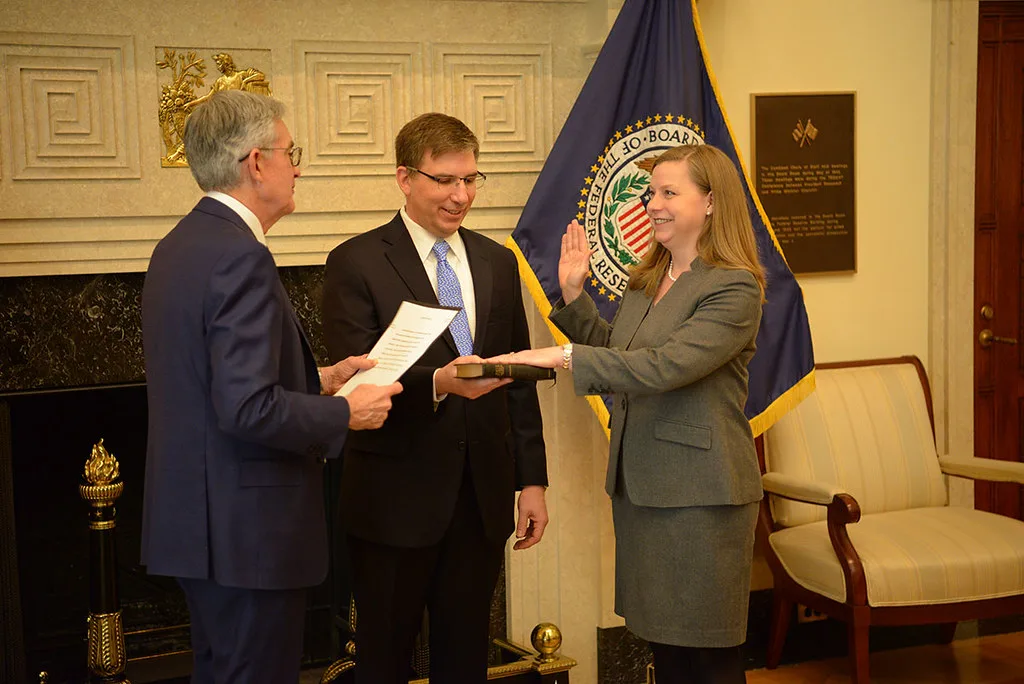
The End of an Unprecedented Tenure
Jerome Powell has officially concluded his eight-year tenure as Chair of the Federal Reserve in Washington, D.C., marking the end of a period defined by extreme economic volatility, global health crises, and intense political scrutiny. Appointed by Donald Trump and re-nominated by Joe Biden, Powell navigated the central bank through the most significant financial shifts since the Great Recession, ultimately leaving behind a legacy defined by his aggressive response to COVID-19 and the subsequent battle against historic inflation.
Contextualizing the Economic Storm
To understand Powell’s impact, one must look at the unique pressures placed upon the Federal Reserve during his term. The central bank shifted from a period of low-interest rates and subdued inflation to a sudden, pandemic-induced economic shutdown that necessitated emergency stimulus measures. As the economy reopened, the Fed faced supply chain disruptions and a labor market imbalance that forced a rapid pivot toward monetary tightening.
Navigating Political and Financial Pressure
Powell’s leadership was characterized by a constant balancing act between maintaining institutional independence and responding to political demands. Throughout his tenure, he faced frequent public criticism from the executive branch, testing the Fed’s traditional firewall between monetary policy and partisan politics. Despite this, he maintained a focus on the ‘dual mandate’—the pursuit of maximum employment and stable prices—even as the tools required to achieve these goals became increasingly controversial.
Expert Analysis of Policy Shifts
Economists note that Powell’s decision to transition from ‘transitory’ inflation rhetoric to aggressive interest rate hikes remains a point of intense academic debate. Jason Furman, a prominent economist and former advisor to the Obama administration, has highlighted that the Fed’s ability to engineer a ‘soft landing’—curbing inflation without triggering a deep recession—will likely be the primary metric by which history judges Powell’s efficacy. Data from the Bureau of Labor Statistics shows that while inflation peaked at 9.1% in June 2022, the subsequent policy maneuvers saw a steady decline toward target levels, though not without significant strain on household borrowing costs.
Industry Implications and Future Outlook
The implications for the financial industry are profound, as markets have become accustomed to Powell’s communication style and his data-dependent approach to interest rate adjustments. Financial institutions are now bracing for a transition period under new leadership, where the focus will likely shift toward long-term stabilization rather than crisis management. Analysts suggest that the next chair will inherit a labor market that remains resilient but sensitive to the ‘higher for longer’ interest rate environment established during the tail end of the Powell era.
Moving forward, market participants should monitor the Federal Open Market Committee (FOMC) for signs of how the central bank will manage the unwinding of its massive balance sheet. The incoming leadership’s commitment to transparency regarding future rate paths will be the next major test for the institution’s credibility. Observers should specifically watch for shifts in the Fed’s stance on digital currencies and the potential integration of new climate-risk stress tests into the banking supervision framework.