
-
58% of Indians plan to travel abroad more in 2027
-
Skyscanner’s Travel Trends 2027 report reveals seven emerging trends shaping Indian travel, including Signal Severance, Pilgra-merch, Sten Do Surge, Grand Odysseys, Gymcation, Sound Bound and Currency Chasers
-
Indian travellers are putting their own spin on travel, with 91% drawn to wellness-focused stays, 89% inspired by history and mythology, and 67% having changed a destination because another offered better value
-
Skyscanner’s Travel Trends 2027 report combines proprietary search insights with research into 2,000 Indian traveller behaviour across travel intent, AI, wellness, music, history, exclusive finds and value
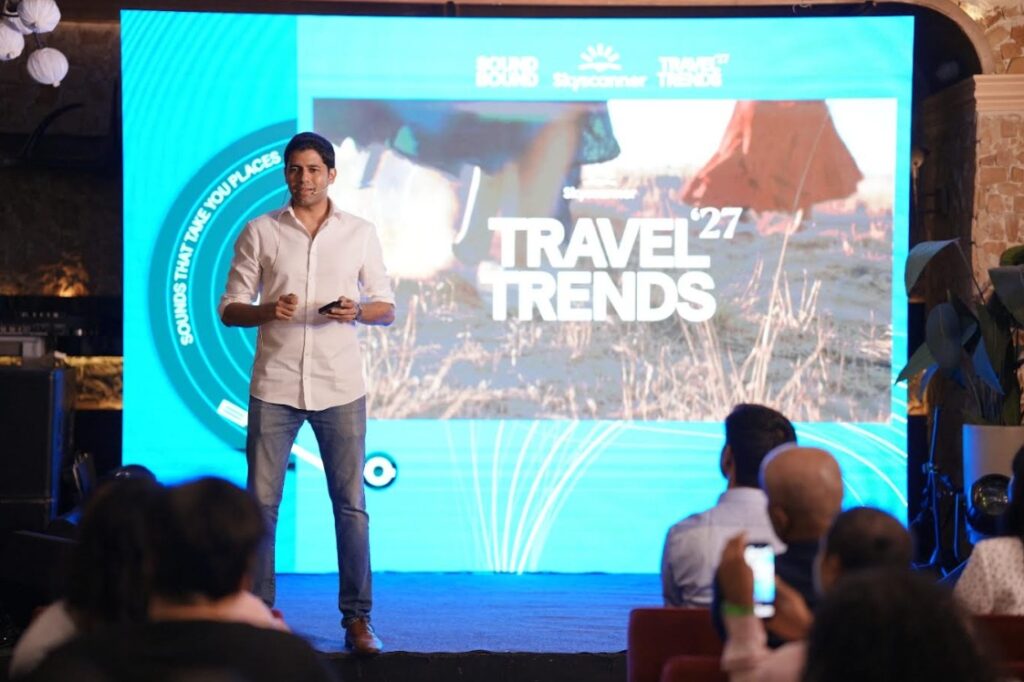
Leading global travel app Skyscanner has officially launched its Travel Trends 2027 report, revealing next year’s top trending and best value destinations as well as showcasing the seven key trends influencing traveller behaviour and key shifts in the travel industry in the coming year.
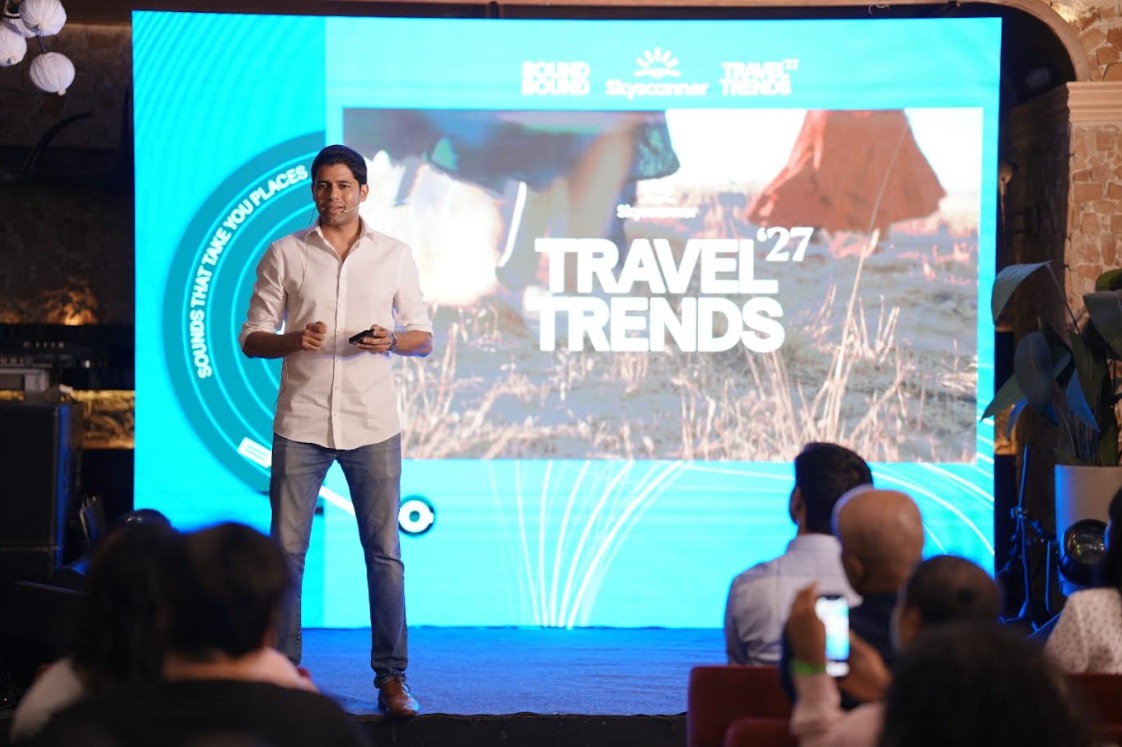 |
Neel Ghose, Travel Trends and Destinations Expert
In a fragmented and often overstimulating world, Indian travellers are increasingly seeking value not just in what they spend but what they gain. Whether that means unplugging completely, travelling for an exclusive purchase, maintaining a wellness routine on the road, celebrating together, following music and culture, or tracing history and mythology – getaways are increasingly reflecting how Indians choose to live.
And despite broader consumer spending slowing and global economic tides shifting, travel appetite remains strong – with 58% of Indians planning to travel abroad more in 2027. Instead of giving up on travel, Indians are adapting how they spend, with 56% planning to spend more on flights and 44% on accommodation. At the same time, value remains central, with 67% having changed a holiday destination or considered doing so because an alternative offered better value.
Neel Ghose, Travel Trends and Destinations Expert, Skyscanner India, said, “Indian travellers are entering 2027 with a stronger appetite to explore, but they are also becoming more considered about how they spend their time and money. We’re seeing a shift from simply choosing where to go towards thinking more carefully about the experience they want from a trip, whether that is switching off, discovering something new, staying active or getting better value.
With 87% of Indians now confident using AI to plan and book travel, technology is also becoming an important part of this decision-making journey. Tools such as Skyscanner’s Explore with AI can help travellers turn an idea into a trip, while features like Price Alerts and Drops can help them stay on top of fares and spot opportunities to travel for less. The opportunity for travellers in 2027 is to use these tools to be more flexible and intentional, without compromising on the experiences that matter most.”
Combining exclusive Skyscanner proprietary data with insights into 2,000 Indian travelles and supporting data from trusted partner, the seven trends shaping travel in 2027 include:
1. Sound Bound – Music is taking Indian travellers beyond traditional concert halls, with 43% choosing carnival experiences and 38% preferring unique venues such as volcanoes, pyramids and caves for music-based experiences while on holiday. While genre leads as the biggest consideration at 27%, cultural immersion (20%) and seeing a new venue (19%) also shape music-led travel.
2. Signal Severance – Switching off is easier said than done for Indian travellers, with 43% saying it takes a little time to clear their head and stop checking their phone, while only 23% switch off immediately at the start of their journey. Yet going off-grid could help them reconnect with what matters, with 75% saying they would feel more connected to nature and 73% to themselves without their phones. In response, destinations offering a chance to slow down and switch off are seeing rising demand, with Pokhara (+166% YoY), Agatti (+157% YoY) and Phu Quoc (+133% YoY) emerging as top destinations for digital disconnection.
3. Gymcation – Health and fitness travel is inspiring Indian travellers to seek out destinations where staying active and prioritising nutritious choices is as easy as sightseeing. 91% are likely to book a hotel offering nutritional-performance breakfast options, while 53% actively look for fitness facilities and are willing to choose one hotel over another if its fitness offering is better.
Deepak Raj, Country Head, HYROX India, said, “Our registration data shows that fitness is no longer something Indians pause when they travel – it’s becoming a reason to travel. Nearly half the athletes at our Delhi, Mumbai and Bengaluru events this year travelled from another city, sometimes another state, just to compete. That tells us the ‘gym-cation’ isn’t a niche behaviour anymore; for a growing number of Indian travellers, a workout event is now as legitimate a reason to book a trip as a concert or a marathon.”
4. Pilgra-merch – The best keepsakes are the ones you have to travel for. 80% of Indians have visited a specific destination or store to purchase a location-exclusive item, with Gen Z (84%) and Millennials (82%) particularly likely to have travelled for an exclusive purchase. Nearly half (49%) would even fly for up to three to six hours to buy something they cannot get elsewhere.
5. Sten Do Surge – As couples marry later in life and move away from traditionally gendered celebrations, the classic ‘stag’ or ‘hen’ trip is giving way to a more inclusive era of joint travel – the ‘Sten Do’. 73% Indian travellers prefer either a shared celebration or a mix of shared and separate celebrations. Fun (64%), more time together before the wedding (53%), convenience (49%) and cost savings (48%) are driving the shift.
6. Grand Odysseys – In a fast-paced world, history and mythology offer context, grounding travellers in timeless human stories. For Indian travellers, the past is inspiring the present, with 89% having had their travel plans inspired by a historic event, a classical story or myth, or both. Historical figures (61%), architectural wonders (57%) and mythological legends (52%) are among the strongest sources of inspiration.
7. Currency Chasers – Savvy Indian travellers are actively matching destinations to better value. 69% always or often consider a destination’s currency strength when booking holidays, while 67% have actually changed a holiday destination because another offered better value. Among Gen Z, that rises to 77% when including those who have changed or considered changing destination.
Trending & Best Value Destinations
Skyscanner’s experts have highlighted the key travel behaviours and destinations shaping Indian travel in 2027, with international travel appetite remaining strong and travellers increasingly seeking experiences that offer better value, wellness, culture and discovery.
For Indian travellers looking to make the most of their holiday budgets in 2027, value is a key consideration.
Top 10 Trending Destinations List
|
Trending Destinations* |
% Increase In Searches |
|
Bishkek, Kyrgyzstan |
+748% |
|
Rupsi, India |
+502% |
|
Okinawa, Japan |
+279% |
|
Malvan, India |
+258% |
|
Tirana, Albania |
+237% |
|
Podgorica, Montenegro |
+236% |
|
Sandakan, Malaysia |
+189% |
|
Pokhara, Nepal |
+166% |
|
Bandar Seri Begawan, Brunei |
+139% |
|
Phu Quoc, Vietnam |
+133% |
Top 10 Best Value Destinations List
|
Best Value Destinations** |
% Price Drop |
|
Jaisalmer, India |
-43% |
|
Tashkent, Uzbekistan |
-30% |
|
Kozhikode, India |
-29% |
|
Jodhpur, India |
-25% |
|
Baku, Azerbaijan |
-17% |
|
Cebu, Philippines |
-17% |
|
Krabi, Thailand |
-17% |
|
Gaya, India |
-15% |
|
Phuket, Thailand |
-11% |
|
Christchurch, New Zealand |
-8% |
Travel Trends 2027 research suggests that rising costs are not stopping Indians from getting away, but they are making for smarter spenders. A strong 58% plan to travel abroad more in 2027, while 56% plan to spend more on flights and 44% on accommodation. Value is also reshaping destination choices, with 67% having changed a destination because an alternative offered better value.
AI is becoming a travel companion for Indians, with more than half planning to turn to AI for destination research, 1 in 2 using it to compare flights, accommodation and prices, and almost 2 in 5 using it to book flights. At the same time, accuracy remains a key consideration for more than half of travellers.
When it comes to trip inspiration, screens are playing an increasingly important role for Indian travellers, with YouTube (78%) and Instagram (69%) leading, while 30% are already turning to AI chatbots and tools for travel inspiration.
To read more about the Travel Trends 2027 please click here.
Notes to editors
Data comes from the OnePoll survey commissioned by Skyscanner. It took place in July 2026 with and involved 2,000 respondents from India.
*Destinations seeing increase in flight searches between 1 January and 17 June 2026, for travel throughout 2026, compared to the same period in 2025. The list was then curated by considering additional factors such as suitability for leisure travel, ensuring the results are both data-driven and relevant for holidaymakers.
**Based on % price drop for economy class return flight booked between 1 January and 17 June 2026, for travel throughout 2026, compared to the same period in 2025. The list was then curated by considering additional factors such as suitability for leisure travel, ensuring the results are both data-driven and relevant for holidaymakers.
The report draws on Skyscanner’s proprietary data and research into Indian traveller behaviour to reveal the key trends shaping travel in 2027. Indian destination trend and best-value destination data to be added, subject to availability.
About Skyscanner
Skyscanner is a global leader in travel that helps travellers plan and book their trip with ease and confidence. Every month, Skyscanner connects millions of travellers, in 52 countries and 37 languages, to more than 1,400 trusted travel partners so they can find flight, hotel or car hire options.
Founded in 2003, Skyscanner has offices worldwide, in Europe, Asia-Pacific and North America where traveller-first innovations are developed and powered by data and insights. Making use of the latest technology, Skyscanner simplifies the complexity of travel and provides honest and transparent solutions, searching billions of prices every day so travellers can be sure they’ve seen some of the best possible options, all in one place.