




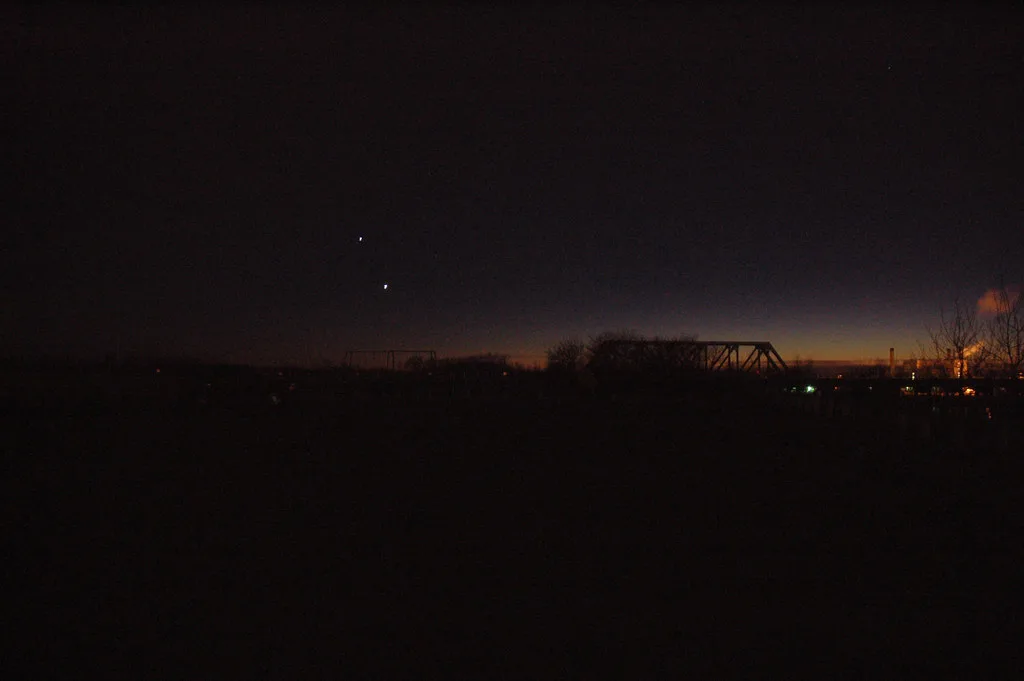
A Rare Celestial Gathering
Stargazers across the Northern Hemisphere are turning their attention to the western horizon this week, from May 15 to May 22, as the Moon enters a striking alignment with the two brightest planets in the night sky, Jupiter and Venus. This rare celestial configuration offers a high-visibility event for amateur astronomers and casual observers alike, providing a clear window to witness planetary motion without the need for specialized equipment.
Understanding the Planetary Conjunction
Planetary conjunctions occur when two or more celestial bodies appear close together in the sky from the perspective of an observer on Earth. While these objects appear near each other, they remain millions of miles apart in space, separated by their respective orbits around the Sun. This week’s event is particularly notable due to the increased luminosity of Venus and Jupiter, which currently rank as the third and fourth brightest objects in the sky after the Sun and the Moon.
The Dynamics of the May Alignment
As the lunar cycle progresses, the crescent Moon serves as a visual guide, moving through the field of view shared by the two planets. By mid-week, the Moon will sit comfortably between the two, creating a triangular formation that changes its geometry nightly. Astronomers note that the relative positions shift due to the Earth’s own orbital velocity, making each evening a slightly different viewing experience.
According to data from the International Astronomical Union, such alignments are periodic but rarely feature such high levels of brightness. The lack of significant light pollution in rural areas will maximize the visibility of the planetary glow, while even urban observers should be able to identify the two bright ‘stars’ flanking the moon. Experts recommend using binoculars to observe the moons of Jupiter, which may be faintly visible if atmospheric conditions remain stable.
Implications for Astronomy and Public Interest
This week’s celestial display serves as a reminder of the increasing public engagement with space science. Observatories and astronomical societies often see a surge in website traffic and inquiries during these weeks, as the visual spectacle encourages interest in physics and orbital mechanics. For the industry, these events act as a catalyst for educational outreach, bridging the gap between complex orbital data and the average citizen’s daily experience.
What to Watch Next
Observers should monitor the western horizon closely in the coming days as the Moon continues its eastward migration, eventually moving away from the planetary duo. As the week concludes, watch for the subtle changes in the angular distance between Venus and Jupiter, which will provide clues regarding their future paths through the constellations. Future planetary movements will include a series of occultations later this year, which will offer even more detailed data for researchers studying planetary atmospheres and orbital stability.