





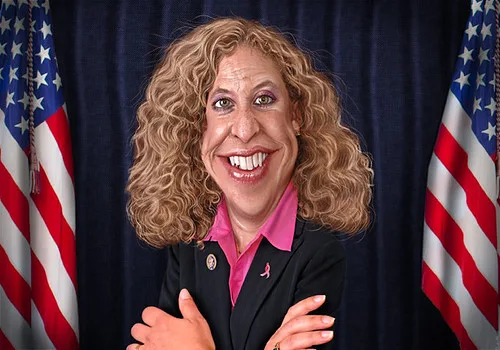
Representative Debbie Wasserman Schultz, a prominent figure and former Democratic National Committee (DNC) chairwoman, announced this week her intention to run for Florida’s 20th Congressional District in the upcoming election. This move comes after Republican redistricting efforts aimed to push her out of her long-held seat, but her decision to compete in a majority-Black district has ignited tensions with established Black Democratic leaders in South Florida.
Gerrymandering and the Redistricting Chess Match
The political landscape in Florida has been significantly reshaped by the recent redistricting process, a once-a-decade event following the U.S. Census. Governor Ron DeSantis championed a map that, according to critics and many Democrats, intentionally diluted minority voting strength and created more Republican-leaning districts. Wasserman Schultz’s 23rd Congressional District, which she has represented since 2001, was significantly altered, making it a more challenging, though not impossible, seat for a Democrat to hold.
Faced with this altered district, Wasserman Schultz identified Florida’s 20th Congressional District as a viable alternative. This district, which includes parts of Broward and Palm Beach counties, is a majority-Black constituency with a strong Democratic voting history. The incumbent for this seat, Representative Alcee Hastings, passed away in April 2021, creating an open seat that has attracted considerable attention.
Internal Democratic Opposition Emerges
Wasserman Schultz’s decision to enter the race for Florida’s 20th Congressional District has not been met with universal acclaim within the Democratic Party. Several prominent Black community leaders and aspiring candidates in South Florida have expressed disappointment and concern. They argue that the seat should be reserved for a Black representative, reflecting the district’s demographic makeup and historical underrepresentation.
“This is a Black district, and it should be represented by a Black person,” stated one local community organizer who preferred to remain anonymous to avoid political repercussions. This sentiment is echoed by others who feel Wasserman Schultz, who is white, is circumventing the spirit of representation by seeking a seat in a district where she does not share the racial identity of the majority of constituents.
The political calculus is complex. While Wasserman Schultz is a well-known figure with significant fundraising capabilities, potential challengers from within the Black community possess deep roots and established support networks in the district. This creates a potential primary battle that could divide the Democratic vote and weaken the party’s chances in the general election.
Historical Context and Representation
The debate touches upon broader national conversations about representation and the legacy of gerrymandering. Historically, majority-minority districts were created to ensure that Black voters and other minority groups had a fair chance to elect candidates of their choice, often overcoming systemic barriers. The current situation raises questions about whether such districts should be exclusively reserved for candidates from the represented demographic group.
Supporters of Wasserman Schultz point to her long record of public service and her ability to win elections in diverse districts. They argue that her experience as DNC chair and her legislative record make her a strong candidate capable of serving all constituents effectively. Her campaign is expected to emphasize her commitment to Democratic values and her ability to fight for the district’s needs in Washington.
Implications for South Florida Democrats
The unfolding situation has significant implications for the Democratic Party in South Florida. A contentious primary could weaken the eventual nominee, regardless of who emerges victorious. It also risks alienating segments of the Democratic base, particularly within the Black community, which is a crucial voting bloc.
Furthermore, the intra-party conflict could distract from the broader goal of defeating Republican candidates in the general election. The energy and resources spent on internal squabbles might be better utilized in unified opposition to the opposing party. The outcome of this race will likely serve as a barometer for the internal dynamics and priorities within the Florida Democratic Party.
What to Watch Next
All eyes will be on the candidate filing deadline and the subsequent primary election. The field of candidates for Florida’s 20th Congressional District is expected to become clearer in the coming weeks. Observers will be closely monitoring Wasserman Schultz’s campaign strategy and the responses from potential Black challengers. The way this primary unfolds could set precedents for future redistricting battles and discussions around representation within the Democratic Party.