



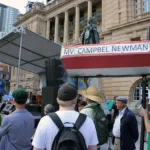

British Labour Party lawmaker Josh Simons officially resigned his seat as the Member of Parliament for Makerfield on May 14, a move that provides a strategic opening for Greater Manchester Mayor Andy Burnham to potentially challenge Prime Minister Keir Starmer. The resignation, announced via a post on X, is widely viewed as a coordinated effort to facilitate Burnham’s return to the House of Commons, positioning him as a high-profile alternative to the current party leadership.
A Shifting Political Landscape
The resignation follows a period of mounting instability for the Labour Party, characterized by poor performance in recent local elections. Prime Minister Keir Starmer has faced increasing scrutiny from within his own ranks as the party struggles to maintain its electoral coalition while contending with a significant surge in support for Nigel Farage’s Reform UK party.
Andy Burnham, who has served as the Mayor of Greater Manchester since 2017, remains one of the most popular figures within the Labour movement. His potential return to Parliament has long been a subject of speculation among political analysts who argue that his regional success and populist appeal could offer a necessary course correction for a party currently polling poorly.
The Mechanics of a Leadership Challenge
Simons’ decision to vacate the Makerfield seat serves as the catalyst for a potential leadership contest. By stepping aside, he provides a pathway for a prominent internal critic to re-enter the legislative arena. According to internal party sentiment, Burnham is currently favored by a significant portion of the party membership to replace Starmer should the Prime Minister’s position become untenable.
Political analyst Sarah Jenkins notes that the timing of this move is critical. “The Labour Party is currently at a crossroads where the internal dissatisfaction with Starmer’s policy direction is colliding with external electoral pressures,” Jenkins observed. Data from recent YouGov polling suggests that voters are increasingly looking for a leadership style that emphasizes regional autonomy and tangible economic reform—areas where Burnham has historically performed well.
Industry Implications and Future Outlook
For the Labour Party, this development signals a deepening divide regarding the future of its platform. The potential for a leadership bid by a figure as established as Burnham would force an immediate debate on the party’s ideological trajectory and its ability to retain working-class voters in the North of England.
The coming months will be defined by how Downing Street responds to this internal maneuvering and whether Burnham officially declares his candidacy for the Makerfield by-election. Observers should monitor the upcoming party conference for signs of formal alliances forming around a potential leadership challenge. The stability of Starmer’s premiership will likely depend on whether he can consolidate support in the wake of this high-profile resignation or if the momentum behind the “Burnham for Leader” movement continues to accelerate.