



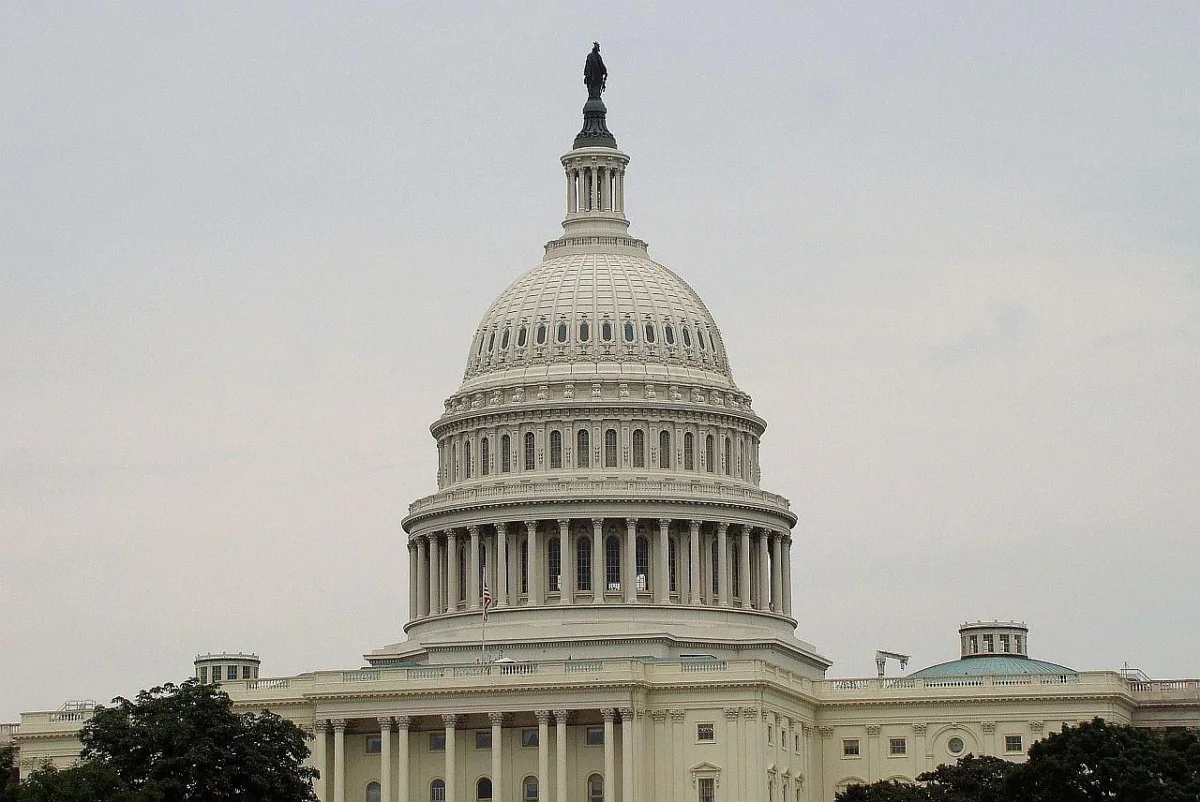
The U.S. Senate recently advanced a bipartisan resolution aimed at limiting President Trump’s authority to engage in military conflict with Iran without explicit congressional approval, marking a significant reassertion of legislative war powers. The measure moved forward following a crucial vote where four Republican senators, including Louisiana’s Bill Cassidy for the first time, joined nearly all Democrats to overcome procedural hurdles, reflecting growing bipartisan concern over the executive branch’s unchecked military actions.
Reasserting Congressional Authority
This legislative maneuver comes amidst heightened tensions between the United States and Iran, which have simmered for years but escalated significantly with recent military actions. The Constitution grants Congress the sole power to declare war, a prerogative that has increasingly been challenged by presidential actions in modern history. The War Powers Resolution of 1973 was enacted to curb presidential authority to commit U.S. armed forces to armed conflict without congressional consent, a law often debated and sometimes circumvented by various administrations.
Recent events, such as the drone strike that killed Iranian General Qassem Soleimani earlier this year, reignited the debate over presidential war powers. Critics argued that the administration acted without proper consultation or authorization from Congress, raising fears of a broader conflict in the Middle East. This resolution is a direct response to those concerns, seeking to clarify and enforce the constitutional balance of power regarding military engagement.
The Bipartisan Push for Oversight
The Senate vote, a 55-45 tally, demonstrated a notable bipartisan alignment against what many lawmakers perceive as an overreach of executive power. Four Republican senators—Rand Paul of Kentucky, Mike Lee of Utah, Todd Young of Indiana, and Bill Cassidy of Louisiana—broke ranks to support the measure. Senator Cassidy’s vote was particularly significant, marking a new defection from the Republican majority and signaling a broader discomfort within the party regarding the administration’s foreign policy approach to Iran.
Proponents of the resolution, primarily led by Democrats but gaining traction among a segment of Republicans, argue that it is essential for preventing unauthorized military conflict. Senator Tim Kaine (D-VA), a leading voice on the issue, emphasized that the resolution does not prevent the President from defending U.S. troops but ensures that any offensive military action against Iran requires congressional approval. They assert that ceding war-making authority to the executive branch undermines democratic principles and risks entangling the nation in prolonged, costly conflicts without adequate debate or public consensus.
Executive Power and National Security Debates
Conversely, opponents of the resolution, largely aligned with the White House, contend that it would unduly restrict the President’s ability to act swiftly and decisively as Commander-in-Chief. They argue that such limitations could send a signal of weakness to adversaries like Iran, potentially emboldening them. Republican leaders and administration officials maintain that the President needs flexibility to protect national security interests and respond to threats effectively, especially in rapidly evolving geopolitical landscapes.
Some critics also argue that the resolution is a politically motivated attempt to undermine the current administration’s foreign policy. They suggest that it could complicate efforts to deter Iranian aggression and protect U.S. personnel and interests in the region. The debate highlights a fundamental tension between the need for executive agility in foreign policy and the constitutional demand for legislative checks and balances on the use of military force.
Expert Perspectives and Historical Precedent
Constitutional scholars widely agree that the power to declare war rests with Congress, as explicitly stated in Article I, Section 8 of the U.S. Constitution. However, the interpretation and application of this power have evolved since World War II, with presidents increasingly deploying military force without formal declarations of war. Dr. Sarah Jenkins, a professor of constitutional law at Georgetown University, noted, “This Senate vote represents a critical moment where Congress is attempting to reclaim its constitutional mandate. It’s a pushback against decades of executive creep in foreign policy.”
Historical data reveals numerous instances where presidents have engaged in significant military actions without explicit congressional authorization, often citing inherent executive powers or previous broad authorizations. This resolution, if enacted, would serve as a specific legislative directive tailored to the current situation with Iran, potentially setting a precedent for future congressional oversight on military engagements.
Implications for Foreign Policy and Future Actions
The Senate’s advancement of this resolution carries significant implications for U.S. foreign policy and the balance of power within the federal government. Should the measure ultimately pass both chambers of Congress and survive a potential presidential veto, it would significantly constrain the President’s ability to initiate offensive military action against Iran without a direct vote from lawmakers. This could lead to a more deliberative and publicly scrutinized approach to potential conflicts, fostering greater accountability.
Looking ahead, the resolution’s journey through the House of Representatives will be closely watched, where it is expected to face similar debates. Even if passed by Congress, President Trump has indicated he would veto such a measure, setting up a potential showdown that would require a two-thirds majority in both chambers to override. This legislative challenge signals a growing intent by Congress to reassert its constitutional role in matters of war and peace, prompting a reevaluation of executive authority in an increasingly volatile global environment. The outcome will shape not only U.S.-Iran relations but also the future dynamic between the executive and legislative branches on military interventions.