



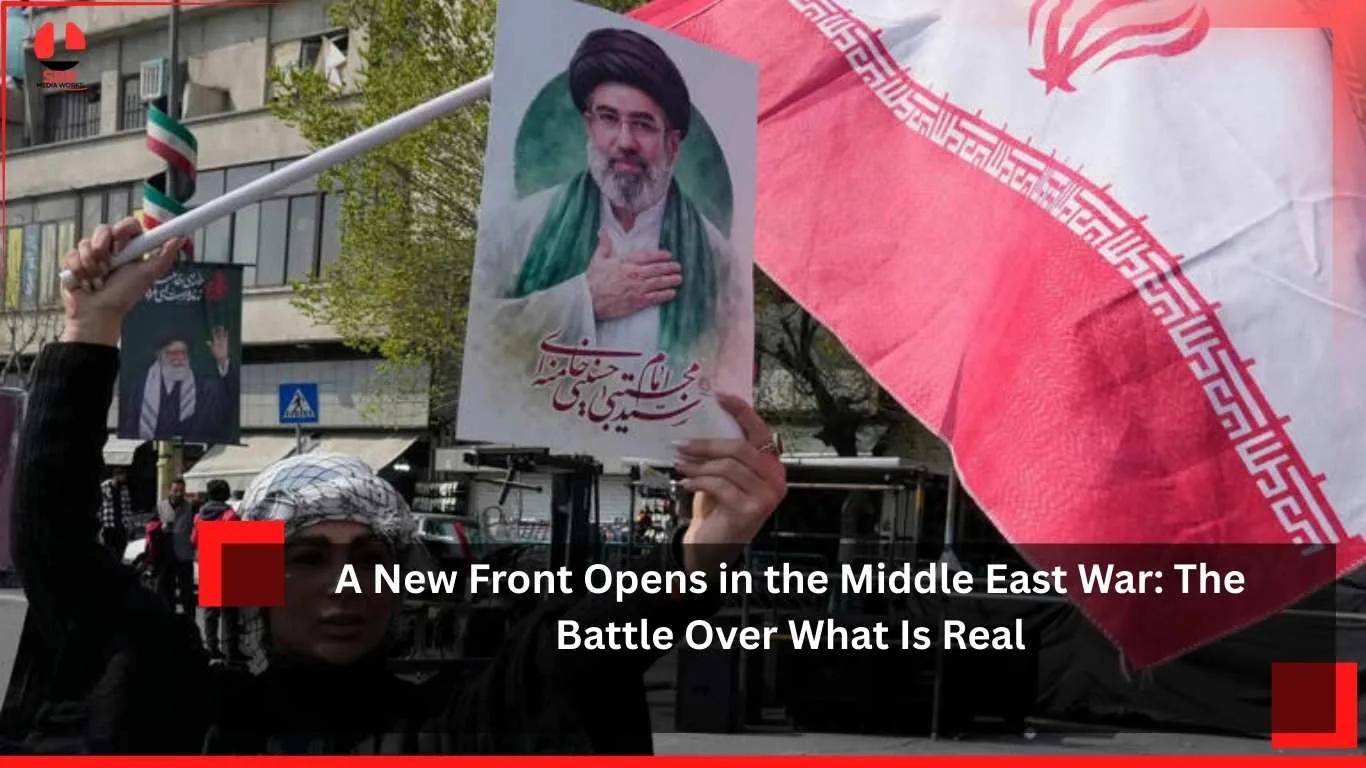
The Middle East war has entered a new phase, not just on the battlefield but in the realm of perception and truth. Analysts describe this as a “battle over what is real,” where narratives, propaganda, and information warfare are proving as decisive as missiles and drones. Governments, media outlets, and social platforms are all engaged in shaping how the conflict is understood globally.
The Nature of the New Front
Unlike traditional warfare, this front is fought through information, disinformation, and competing narratives.
- Propaganda Campaigns: Both sides are using media to portray victories and downplay losses.
- Social Media Influence: Platforms amplify conflicting accounts, making it harder to discern facts.
- Global Audiences: International observers struggle to separate truth from manipulation.
Why Information Matters
In modern conflicts, perception often shapes outcomes as much as military strength.
- Public Opinion: Citizens form views based on what they see and hear, influencing political pressure.
- Diplomatic Leverage: Nations use narratives to justify actions and gain allies.
- Psychological Impact: Misinformation can demoralize opponents or embolden supporters.
Comparative Analysis of Traditional vs. Information Warfare
| Aspect | Traditional Warfare | Information Warfare |
|---|---|---|
| Tools | Weapons, troops, logistics | Media, social platforms, narratives |
| Objective | Territorial control | Perception control |
| Impact | Physical destruction | Psychological and diplomatic influence |
| Audience | Combatants, local populations | Global citizens, policymakers |
This table shows how the battlefield has expanded into the digital and psychological domain.
Political Reactions
The emergence of this new front has triggered varied responses:
| Stakeholder Group | Reaction Type | Key Observations |
|---|---|---|
| Governments | Strategic | Invest heavily in media campaigns |
| Opposition Groups | Critical | Accuse rivals of spreading falsehoods |
| Analysts | Neutral | Highlight difficulty in verifying facts |
| Citizens | Confused | Struggle to discern truth from propaganda |
This distribution reflects the complexity of the information war.
Historical Parallels
Information warfare is not new, but its scale in the Middle East conflict is unprecedented.
| Year | Conflict/Event | Information Strategy |
|---|---|---|
| 1991 | Gulf War | CNN coverage shaped global perception |
| 2003 | Iraq War | Narratives about weapons of mass destruction |
| 2011 | Arab Spring | Social media mobilized protests |
| 2026 | Middle East War | Competing realities dominate discourse |
This comparison shows how information has increasingly become a decisive factor in conflicts.
Global Implications
The battle over what is real has far-reaching consequences:
- Diplomatic Relations: Nations align based on perceived truths.
- Economic Stability: Markets react to narratives about energy and security.
- Security Risks: Misinformation can escalate tensions and trigger miscalculations.
Public Sentiment
Public opinion reflects frustration and confusion:
- Supporters of Each Side: Share narratives that reinforce their beliefs.
- Neutral Observers: Struggle to find reliable information.
- Global Citizens: Demand transparency and accountability from governments and media.
Future Outlook
The trajectory of the information war remains uncertain. Possible scenarios include:
| Scenario | Description | Potential Impact |
|---|---|---|
| Transparency Efforts | Governments and media prioritize accuracy | Reduced misinformation, restored trust |
| Escalation | Propaganda intensifies, truth harder to find | Greater confusion, prolonged conflict |
| Multilateral Action | International bodies regulate narratives | Balanced discourse, improved accountability |
The future will depend on whether truth can prevail over manipulation.
Conclusion
The Middle East war has opened a new front—the battle over what is real. With propaganda, social media, and competing narratives shaping perceptions, the conflict is as much about information as it is about territory. The challenge for global citizens, policymakers, and analysts is to discern fact from fiction in a war where reality itself is contested.
Disclaimer
This article is based on analytical perspectives and available information. It does not confirm or deny confidential military or diplomatic details and should not be interpreted as official government policy. Readers are encouraged to follow verified international reports for authoritative updates.