





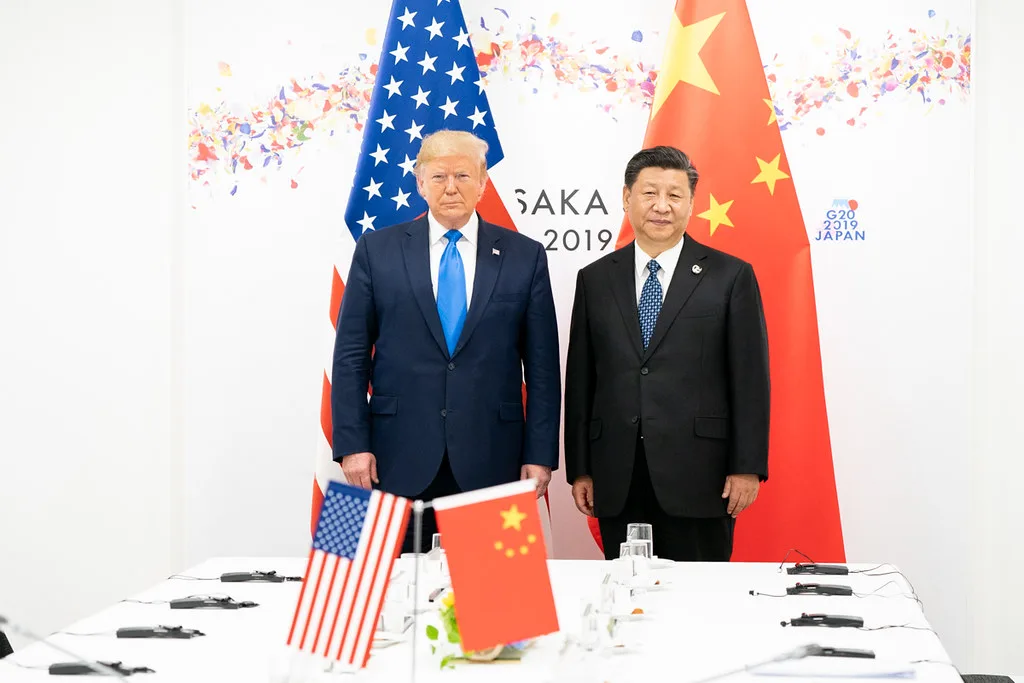
A Strategic Welcome in Beijing
Chinese President Xi Jinping hosted President Donald Trump in Beijing this week, orchestrating a high-profile state visit designed to pivot the U.S.-China relationship toward economic collaboration while simultaneously issuing a firm, unambiguous warning regarding the status of Taiwan. The summit, characterized by lavish ceremonies and personal rapport between the two leaders, sought to establish a new framework for bilateral ties that prioritizes trade stability over the geopolitical friction that has historically defined the world’s most significant power dynamic.
Setting the Stage for Cooperation
The visit comes at a pivotal moment for global trade, as both nations grapple with domestic economic pressures and shifting supply chains. President Trump, emphasizing a vision of unity, framed the meeting as a potential turning point for global markets. By focusing on shared prosperity, the administration aims to secure concessions on market access and intellectual property rights that have long been points of contention.
Historically, U.S.-China relations have oscillated between strategic partnership and systemic rivalry. Recent years have seen an escalation in military posturing and technological competition, forcing global stakeholders to navigate a volatile landscape. The current diplomatic effort reflects an attempt to de-escalate these tensions, at least in the short term, to provide a predictable environment for international business.
The Taiwan Flashpoint
Despite the rhetoric of unity, the underlying tensions surrounding Taiwan remain the most volatile element of the U.S.-China dialogue. During the proceedings, President Xi reiterated that Taiwan constitutes the core of China’s national interest, delivering a stark warning to the American delegation against any interference in what Beijing considers internal affairs.
The issue of Taiwan remains a non-negotiable pillar of Chinese foreign policy, representing a direct clash with the long-standing American commitment to the Taiwan Relations Act. Analysts suggest that while trade deals may provide a veneer of stability, the fundamental disagreement over the island’s sovereignty ensures that the relationship will remain inherently fragile.
Expert Perspectives on Global Stability
International relations experts note that the summit serves as a high-stakes balancing act. Data from the Peterson Institute for International Economics suggests that while trade negotiations can yield immediate fiscal benefits, the structural decoupling of the two economies continues at a steady pace. This suggests that the current diplomatic warmth may be tactical rather than transformative.
“The challenge for both leaders is to manage domestic political expectations while preventing a total collapse of diplomatic communication channels,” says Dr. Elena Vance, a senior fellow at the Center for Strategic and International Studies. “They are essentially trying to build a floor under a relationship that has been trending toward a basement for years.”
Future Implications for Global Markets
For the business community and global investors, the implications of this summit are twofold. In the immediate future, market observers should watch for concrete agreements on tariffs and export controls, which would signal a genuine shift in trade policy. These agreements will act as a bellwether for whether the ‘new vision’ of relations is substantive or merely performative.
Looking ahead, the primary concern remains the potential for miscalculation in the Taiwan Strait. As both nations continue to modernize their military capabilities, the diplomatic window for conflict resolution may narrow. Stakeholders should monitor upcoming ministerial-level meetings to determine if the personal rapport established between Xi and Trump can successfully insulate the broader relationship from the escalating geopolitical realities of the Indo-Pacific region.