




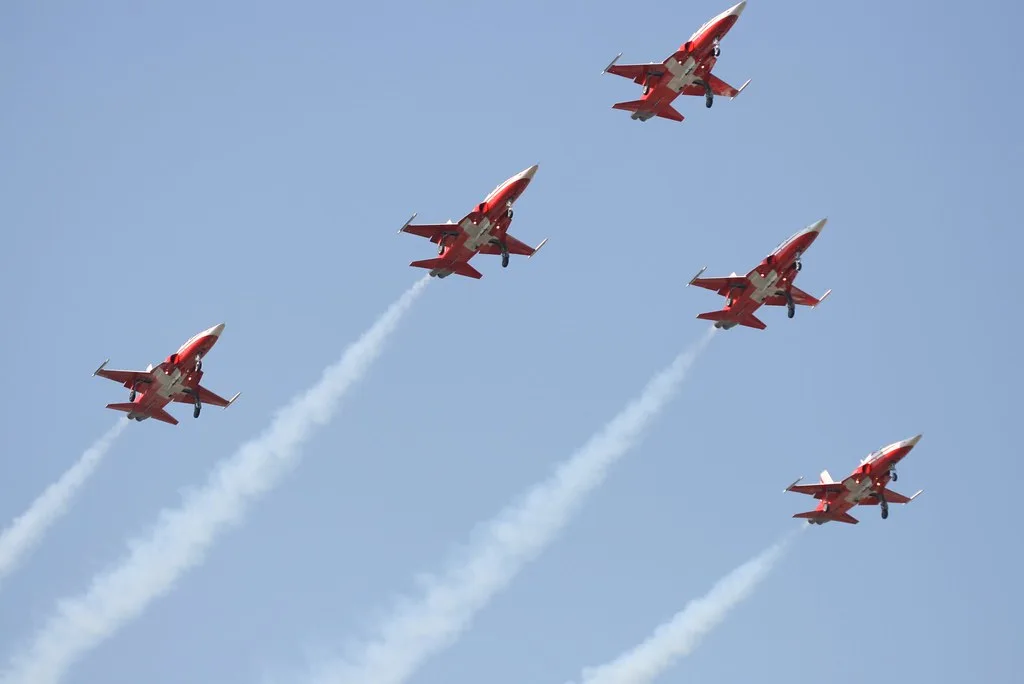
Two United States Navy aircraft collided mid-air on Saturday during an aerial demonstration at the Mountain Home Air Force Base in Idaho, prompting an immediate emergency response and a suspension of the scheduled events. Military officials confirmed that the incident occurred during a high-speed formation flight, drawing thousands of spectators who had gathered for the base’s annual public air show.
Context of the Aerial Maneuver
Air shows are complex, highly choreographed events that require months of rigorous training and strict adherence to safety protocols. Pilots perform precise maneuvers at high velocities, often within close proximity to one another to demonstrate the capabilities of modern military aviation.
Mountain Home Air Force Base, located approximately 45 miles southeast of Boise, serves as a major hub for the 366th Fighter Wing. The base frequently hosts public exhibitions to foster community engagement and showcase the operational readiness of the U.S. armed forces.
Details of the Incident
Eyewitness reports from the flight line describe a sudden impact followed by debris falling from the sky as the jets veered off their flight path. Emergency crews stationed at the airfield were deployed instantly to the crash site to secure the area and provide assistance.
According to base public affairs officers, the incident triggered an automatic safety review of all ongoing flight operations at the facility. While the specific cause of the collision remains under investigation, military aviation experts note that even minor deviations in timing or spatial orientation during high-performance maneuvers can lead to catastrophic mechanical or structural failure.
Expert Perspectives on Aviation Safety
Aviation safety analysts emphasize that mid-air collisions involving high-performance military jets are statistically rare but carry significant risks. Data from the Naval Safety Command indicates that the majority of aviation mishaps occur due to a combination of environmental factors and human performance variables during complex flight regimes.
“The margin for error in formation flying is measured in fractions of a second and inches of distance,” said a former military flight instructor familiar with air show logistics. “Investigations will focus heavily on telemetry data and cockpit voice recordings to determine if the collision was the result of a mechanical malfunction or a miscalculation during the demonstration sequence.”
Broader Implications for the Industry
The incident at Mountain Home is expected to impact how the Department of Defense manages future public aerial demonstrations. Industry observers suggest that the Navy may implement more stringent distance requirements or adjust the complexity of maneuvers allowed at low altitudes during civilian-facing events.
For the aviation community, this collision serves as a reminder of the inherent dangers associated with aerial performance. Future air shows across the country are likely to face increased scrutiny from regulatory bodies and base commanders concerned with public safety and asset management.
Looking ahead, investigators will continue to analyze the wreckage and flight data to provide a comprehensive report on the cause of the crash. Observers should monitor upcoming updates from the Navy’s investigation board, which will dictate whether existing flight safety protocols require immediate revision or if current standards remain sufficient for future operations.