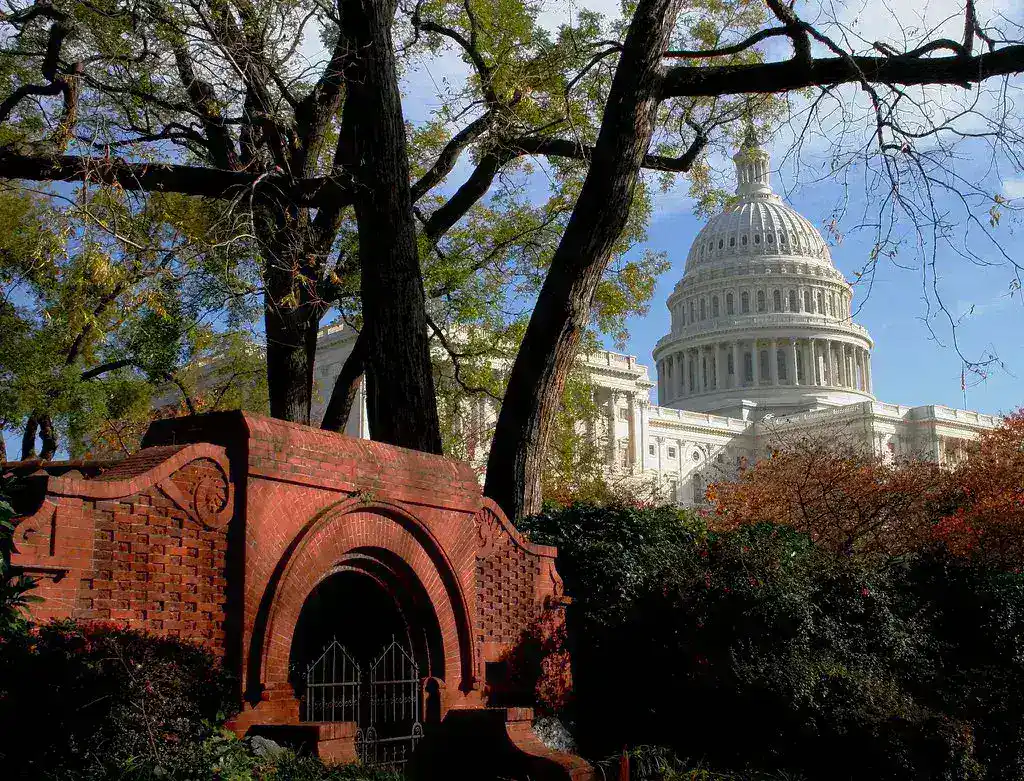
Congressional Funding Standoff
Senate Republicans are moving forward with a $72 billion immigration enforcement package that includes controversial security funding allocated for President Trump’s Mar-a-Lago estate. The legislation, which moved through committee this week, remains a flashpoint in Washington as Democrats intensify efforts to block the specific earmark, citing ethical concerns and potential conflicts of interest.
The Context of Federal Protective Services
The funding in question is part of a broader budgetary request intended to bolster the Secret Service and other federal law enforcement agencies tasked with protecting the President and his private properties. Because the President frequently hosts official business and international dignitaries at his Florida resort, the federal government has historically provided supplemental security funds to ensure the site meets federal protection standards.
Critics argue that the frequency of these expenditures at a personal business property sets a problematic precedent for the use of taxpayer funds. Supporters of the bill maintain that the funding is a non-negotiable requirement for national security, regardless of the property’s private ownership status.
The Legislative Battleground
Democrats have launched a concerted campaign to strip the provision from the larger immigration bill, arguing that the $72 billion total package is already bloated with unnecessary spending. Minority leaders claim that the inclusion of the Mar-a-Lago security funds is a political maneuver designed to force a partisan showdown.
“This is about accountability in government spending,” said a spokesperson for the Senate Budget Committee. “We believe that federal protection costs should be transparent and strictly audited, rather than buried within massive immigration enforcement legislation.”
Senate Republicans, however, hold a narrow majority and have signaled they will not allow the provision to be severed from the bill. Leadership argues that the immigration crackdown is a top priority for the administration, and they are unwilling to jeopardize the entire package by negotiating over specific security line items.
Expert Perspectives and Data
Non-partisan budget watchdogs have noted that while security costs for presidential properties are standard, the intensity of the debate this cycle is unprecedented. According to recent data from the Government Accountability Office (GAO), federal spending on protective details has seen a 14% increase since the beginning of the current administration’s term.
Legal scholars suggest that the constitutionality of these payments has been debated in various courts, yet no definitive ruling has prohibited the executive branch from securing private sites used for official functions. The primary issue remains the intersection of private profit and public expenditure, a topic that continues to stir public debate.
Future Implications for Federal Oversight
As the bill heads toward a floor vote, the political stakes remain high. If the legislation passes in its current form, it may cement a standard for federal funding of private assets that could be challenged in the next election cycle.
Observers are now watching to see if a small group of moderate Republican senators will break ranks to demand more oversight into these expenditures. The outcome of this vote will likely serve as a bellwether for how the Senate approaches executive protection costs for the remainder of the term and how much leverage the opposition party can exert on administrative budget priorities.