





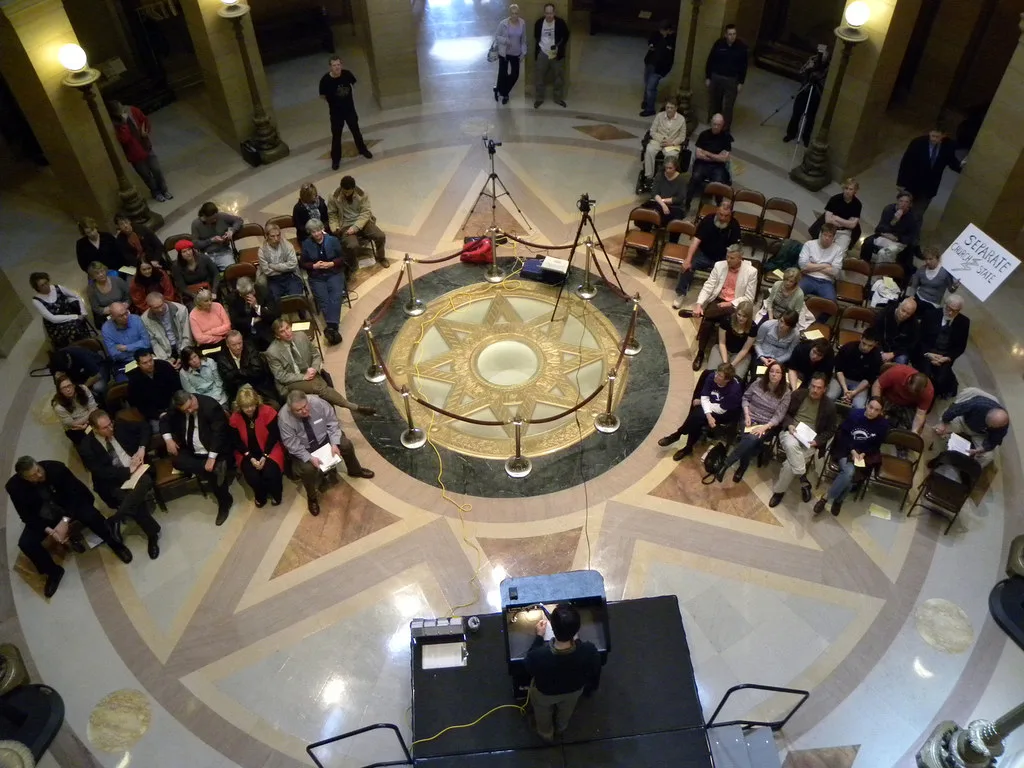
A Public Intersection of Faith and Governance
Senior members of the Trump administration gathered at a day-long prayer rally in Washington, D.C., this week to frame the United States as a fundamentally Christian nation. The event, which drew thousands of participants to the National Mall, featured high-ranking officials who explicitly linked the country’s founding principles to biblical teachings and divine providence.
The rally serves as a focal point for an ongoing debate regarding the separation of church and state. By utilizing the federal capital as a backdrop for a religiously-themed gathering, organizers aimed to reinforce the narrative that American identity is inextricably tied to Christian heritage.
Historical Context and Modern Political Strategy
The relationship between American governance and religious expression has long been a subject of intense legal and cultural debate. While the First Amendment prohibits the establishment of a state religion, historical arguments regarding the ‘Christian nation’ concept have persisted throughout American political history.
Recent years have seen a marked increase in the integration of religious language into official administration rhetoric. Political analysts note that this strategy is designed to energize a core segment of the electorate that views traditional religious values as essential to the nation’s moral and political stability.
Arguments and Perspectives on the Narrative
Proponents of the gathering argue that the event was a necessary affirmation of the country’s spiritual roots. Speakers emphasized that the founding documents were drafted with a reliance on Judeo-Christian ethics, suggesting that secularism poses a threat to the nation’s long-term prosperity.
Conversely, legal scholars and civil rights organizations have raised concerns about the optics of such an event. They argue that the state’s endorsement of a specific religious worldview alienates citizens of other faiths or those who hold secular beliefs, potentially undermining the principle of religious neutrality in government.
Data and Public Sentiment
Data from the Pew Research Center indicates that while the United States remains a majority-Christian nation, the demographics are shifting. The number of Americans who identify as religiously unaffiliated has grown significantly over the last two decades, creating a complex landscape for political messaging.
Despite these demographic trends, political scientists observe that religious identity remains a primary driver for voter turnout in conservative districts. The rally in D.C. functions as a tactical mobilization effort, utilizing cultural identity to solidify support ahead of upcoming electoral cycles.
Future Implications for the Public Square
The implications of this rhetoric extend beyond the immediate political climate. As the administration continues to lean into these themes, observers expect to see further challenges in the judicial system regarding the boundaries of religious expression in public spaces.
Moving forward, the focus will shift to how these messaging strategies impact broader social cohesion. Watchers should monitor upcoming judicial appointments and legislative proposals that may attempt to codify these religious perspectives into public policy, as these actions will serve as the next barometer for the evolving relationship between faith and governance in the United States.