




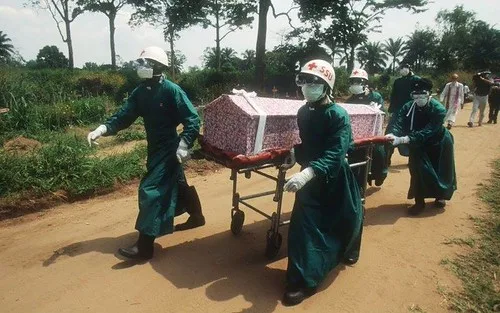
The World Health Organization (WHO) declared a public health emergency of international concern on Sunday, following a rapidly escalating Ebola outbreak centered in the Democratic Republic of Congo and spilling into neighboring Uganda. As of Saturday, health officials have documented 336 suspected cases and 88 deaths, marking a significant rise in transmission rates since the initial discovery of the virus in Ituri province last Friday.
Context of the Crisis
This declaration serves as a formal alert to the international community, signaling that the outbreak requires a coordinated global response to prevent further cross-border spread. Ebola, a severe viral hemorrhagic fever, remains one of the world’s most lethal pathogens, characterized by high fatality rates and the potential for rapid transmission in densely populated or underserved regions.
The current situation is complicated by the porous nature of the border between the Democratic Republic of Congo and Uganda. With two confirmed cases already recorded in Uganda, the potential for regional destabilization has forced health authorities to implement aggressive containment strategies, including contact tracing and the establishment of isolation wards.
Operational Challenges and Containment
Containment efforts currently face significant logistical hurdles, including the geographical isolation of affected villages in Ituri province and the ongoing challenges of monitoring mobile populations. Medical teams on the ground are prioritizing the rapid identification of symptomatic individuals to break the chain of transmission.
Data provided by the Africa Centres for Disease Control and Prevention indicates that the mortality rate remains a primary concern for local responders. The speed at which the virus has moved from the initial detection point to neighboring territories has prompted the WHO to mobilize emergency resources and personnel to bolster local diagnostic capabilities.
Expert Perspectives
Epidemiologists warn that the success of containment hinges on community trust and the swift deployment of vaccines in high-risk zones. “The primary objective is to surround the outbreak with a ring of immunity,” noted a lead health advisor involved in the regional response, emphasizing that public cooperation is as vital as medical intervention.
Financial analysts monitoring the situation suggest that the economic impact could be substantial if trade routes are restricted for an extended period. Beyond the immediate health toll, the disruption of local markets in the affected provinces threatens the livelihoods of thousands, potentially exacerbating existing food insecurity in the region.
Future Implications and Outlook
The international health community is now shifting its focus toward scaling up vaccine supplies and improving cross-border surveillance infrastructure. Observers are closely watching the effectiveness of the current containment measures to see if the spread can be halted before reaching urban centers where population density could facilitate a faster surge.
Moving forward, the primary metric for success will be the stabilization of case numbers within the next fourteen days, which covers the typical incubation period of the virus. International donors are expected to announce additional funding packages in the coming week to sustain medical operations and support the families of those affected by the crisis.